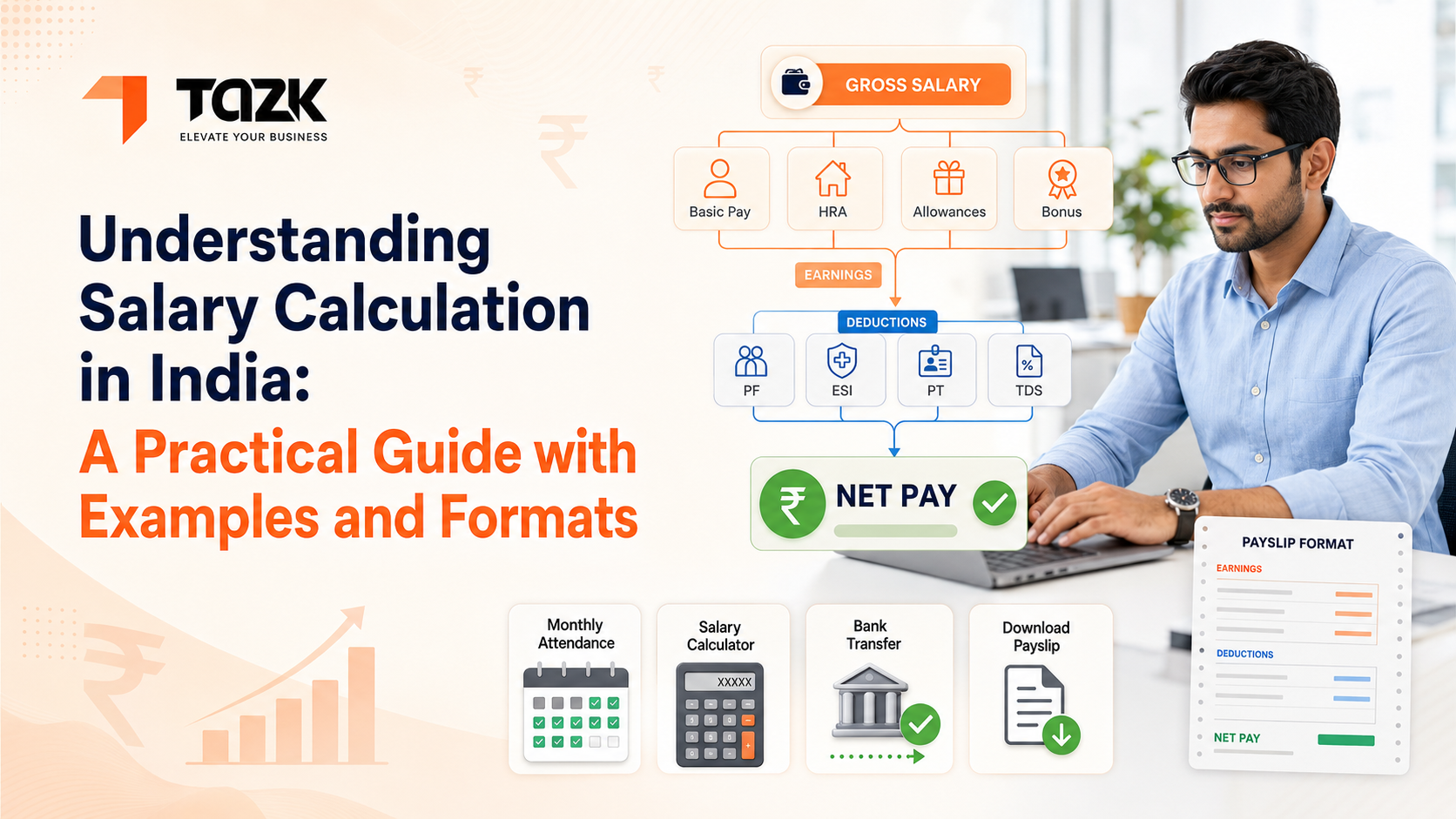
Night Shift & Rotational Attendance: How to Configure Biometric SystemsWithout Breaking PF, ESI & Payroll Compliance
13 mins read | By Lokesh
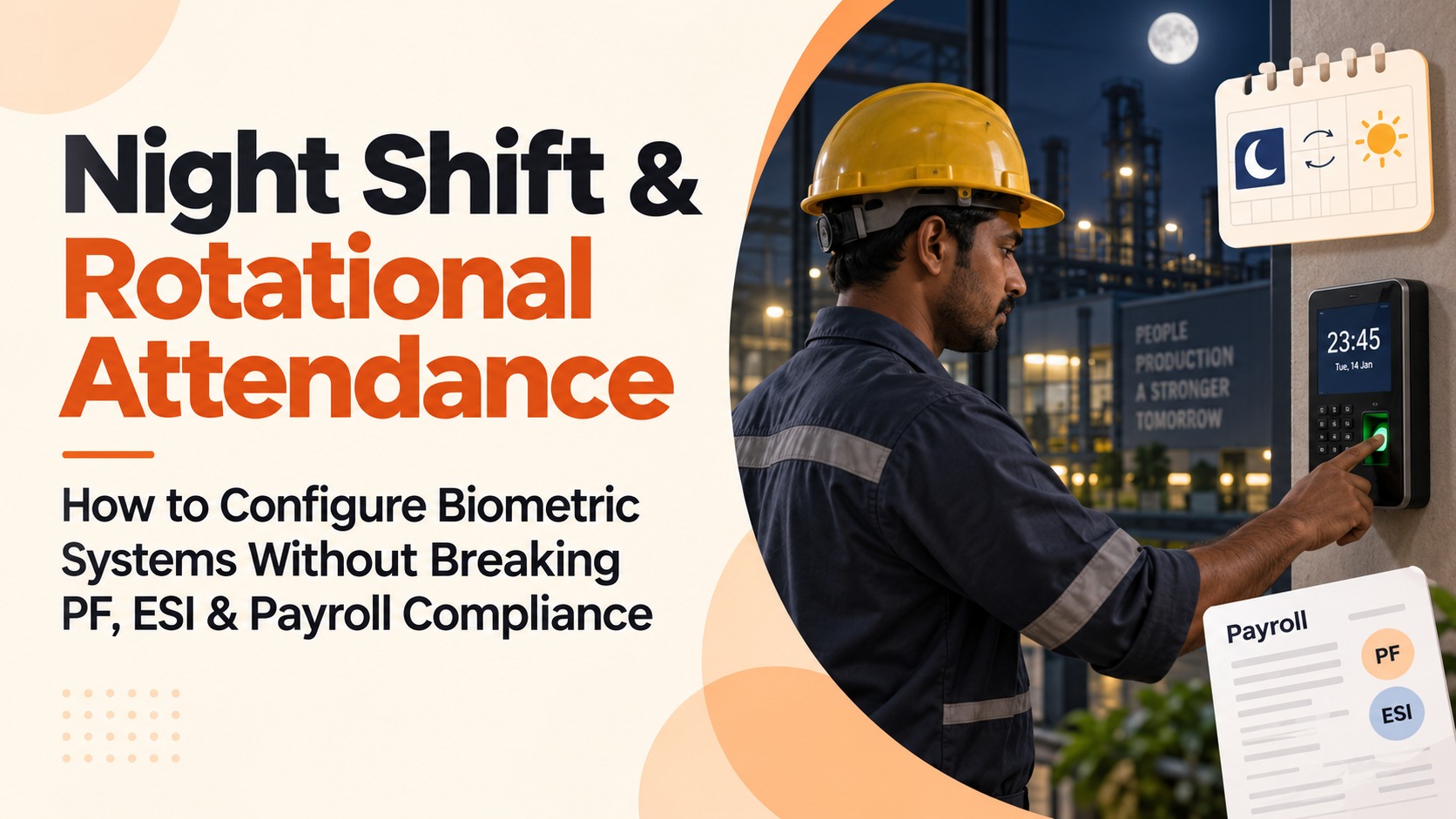
Table Of Contents
Social Media




A story you might already know
It's the end of the month. Priya, an HR manager at a mid sized packaging factory near Chennai, is closing payroll. Everything looks fine until she checks the night shift team. Three workers show 31 days of "present," even though the month only has 30 days. One worker's overtime hours don't match her shift roster. And one employee, who recently got a raise, has quietly crossed the PF wage limit but nobody told the payroll system.
Three workers show 31 days of "present," even though the month only has 30 days. One worker's overtime hours don't match her shift roster. And one employee, who recently got a raise, has quietly crossed the PF wage limit but nobody told the payroll system.
Now Priya has three choices. Guess the numbers. Spend two days fixing them by hand. Or find out, too late, from a labour inspector
If this sounds familiar, you are not alone. This happens in thousands of Indian factories, warehouses, and hospitals every single month. The reason is simple, most attendance systems are built for a 9-to-5 world. Night shifts and rotating shifts break them.
This guide explains exactly why that happens — and exactly how to fix it, in plain language, step by step.
What Are PF and ESI?
Before we go further, let's make sure these two words are crystal clear. No jargon.
PF stands for Provident Fund. Think of it as a savings box for your employee's retirement. Every month, a small part of their salary goes into this box. You, the employer, also add money into the same box. Nobody can touch this money until the employee retires, resigns, or has an emergency the rules allow for.
ESI stands for Employees' State Insurance. Think of it as a low-cost health insurance plan run by the government. If an employee earning below a certain amount gets sick, hurt, or needs to see a doctor, ESI helps pay for it
Both PF and ESI are compulsory for most businesses in India once you cross a certain number of employees. You do not get to choose whether to follow these rules. You only get to choose whether you follow them correctly, or find out the hard way that you didn't.
Here is the part that trips up almost everyone: both PF and ESI only apply below certain salary levels called wage ceilings.
- The PF wage ceiling is currently ₹15,000 per month (basic pay + dearness allowance). This number hasn't changed since 2014. As of late 2026, the Finance Ministry has cleared a proposal to raise it to ₹25,000. But it's still just a proposal. No official notification has been issued yet. So ₹15,000 remains the legal number today (source: SGCMS regulatory update).
- The ESI wage ceiling is currently ₹21,000 per month in gross wages (₹25,000 for employees with disabilities). This has been unchanged since 2017, though a hike to ₹25,000–30,000 is also under review (source: FutureX Solutions, ESI Salary Limit 2026).
Why does this matter for night shifts? Because overtime pay, night allowances, and shift bonuses all add to an employee's monthly wage. Add enough of them, and an employee can silently cross one of these ceilings. Your attendance and payroll systems need to catch that moment. Otherwise you keep deducting the wrong amount or stop deducting when you shouldn't without anyone noticing.
Why Night Shifts Break Normal Attendance Systems
A regular attendance system is simple: clock in at 9, clock out at 6, done. A night shift breaks that simple picture in at least four ways.
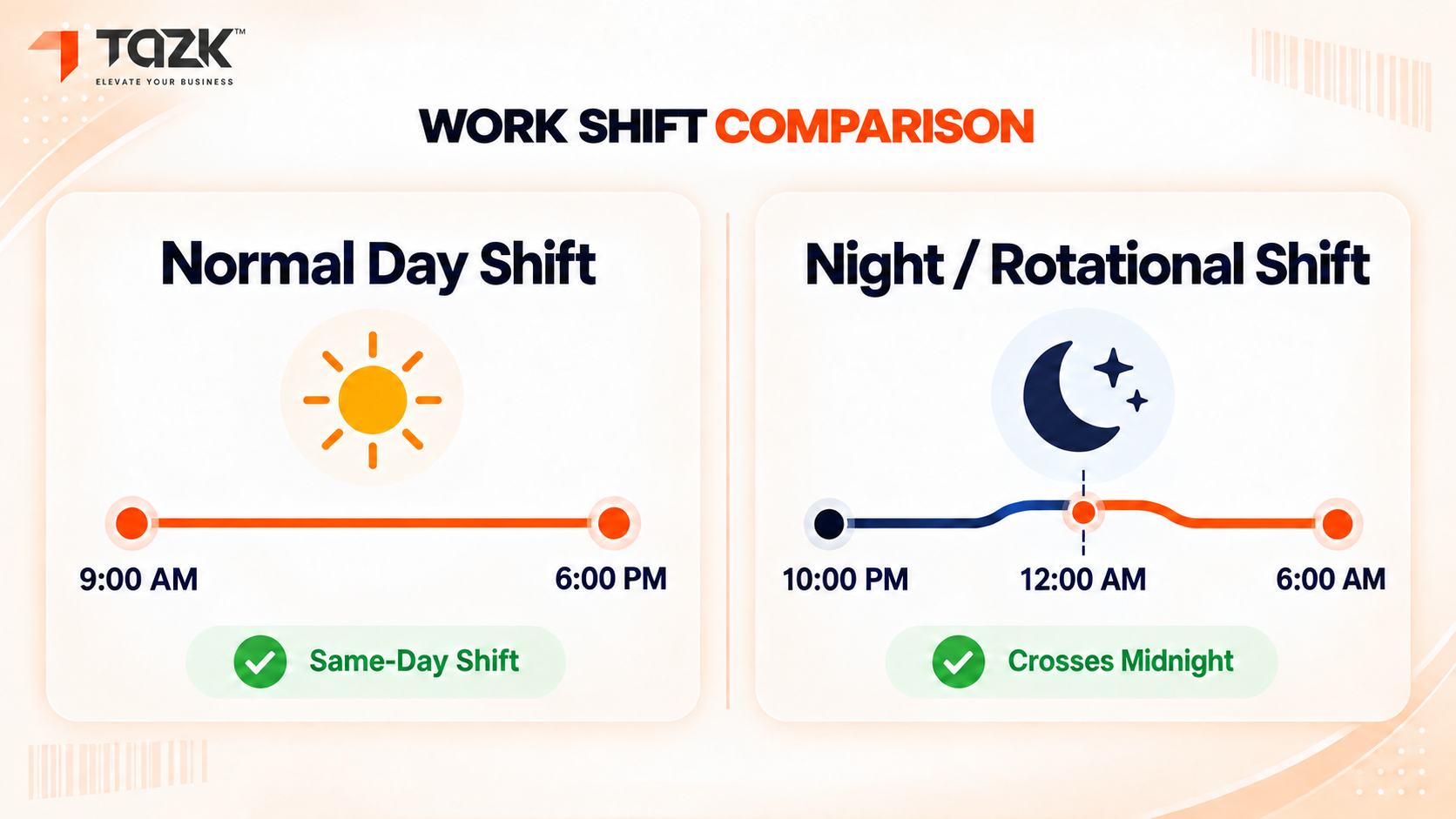
- The "day" doesn't match the calendar day. If someone clocks in at 10 PM on the 5th and clocks out at 7 AM on the 6th, which date does that shift belong to? Many basic systems get this wrong, splitting one shift into two half-days, or worse, missing it completely.
- Overtime becomes harder to calculate. A rotational shift worker might do 8 hours one week and 10 the next. If the system doesn't track this properly, overtime pay and the PF/ESI contribution on top of it gets calculated wrong.
- Old biometric devices don't "talk" to new payroll software. Many factories still use biometric devices bought 5–8 years ago. These older machines often store data in a format that doesn't automatically match newer, cloud-based payroll software someone ends up exporting to Excel and re-entering data by hand.
- The law itself has changed recently. This is the part almost nobody has updated their system for yet. Let's look at it properly.
What the LawActually Says About Night Shifts Now
For decades, Indian law made this simple by mostly saying "no" — Section 66(1)(b) of the Factories Act, 1948 stopped women from working factory night shifts at all.
That has now changed, and it changed recently enough that most businesses haven't fully caught up.
On 21 November 2025, the Government of India brought four new Labour Codes into force nationally. These four codes are: the Code on Wages, the Industrial Relations Code, the Code on Social Security, and the OSH Code — short for Occupational Safety, Health and Working Conditions (source: DLA Piper, "New Labour Codes usher in a new era of compliance").
Under Section 43 of the OSH Code, women can now legally work night shifts before 6 AM and after 7 PM. This applies in every kind of establishment, not just offices. But it comes with real conditions, not a free pass:
- The woman must give her written consent.
- The employer must provide safe transport, usually GPS-tracked, from home to work and back.
- There must be proper lighting, CCTV coverage, and often a female security guard on site during night hours.
- Many states now require at least a minimum group size of women working together on a night shift, not just one or two isolated workers (source: Salarybox, "Night Shift Allowance & Rules in India: Employer's Complete Guide 2026").
Here's the catch that matters most for a business owner reading this: the four labour codes are law, but the detailed rules under them are still being finalised state by state. Some states — like Gujarat, Haryana, Madhya Pradesh, and Karnataka — have already notified their final rules. Others, including Tamil Nadu, had only published draft rules as of early-tomid 2026. Finalisation is expected to follow soon (source: Beacon Filing, India Labour Code Tracker).
What this means practically: if you run night shifts or you're thinking about starting them you need a flexible system. It should adjust quickly once your state's final rules land. It should not be stuck on old assumptions from the Factories Act era.
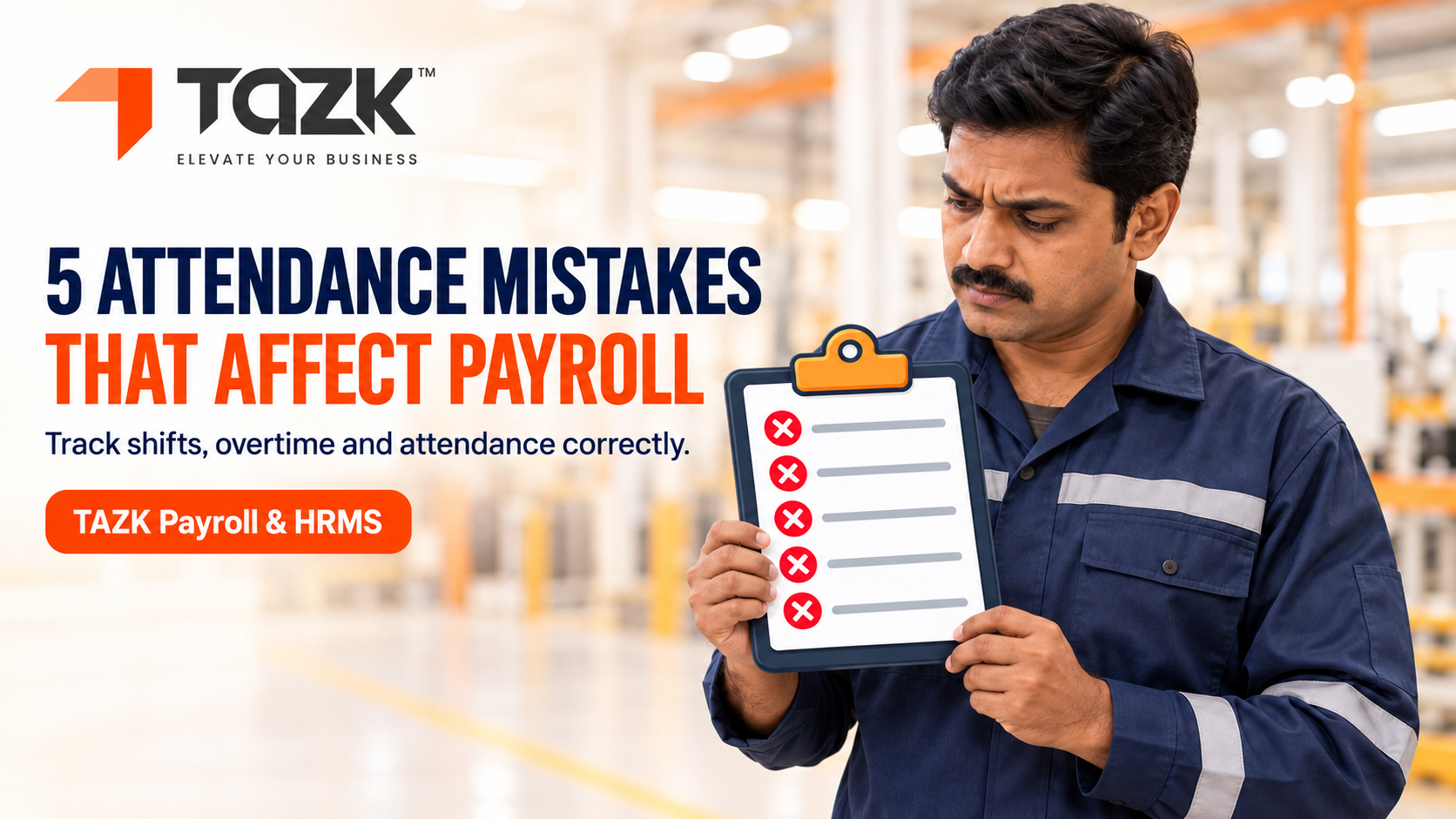
The Biggest Mistakes Businesses Make With Night Shift Attendance
Based on patterns we see across Indian factories, warehouses, and retail chains, these are the mistakes that come up again and again.
Mistake 1: Treating overtime as a manual, end of month task. When someone works extra hours on a night shift, that overtime pay usually counts toward PF and ESI wage calculations. If your attendance system doesn't calculate this automatically, HR ends up guessing or skipping it.
Mistake 2: Not tracking who has crossed the PF wage ceiling. An employee earning ₹14,200 basic pay is under the PF ceiling. Give them a ₹1,000 raise, and they've likely crossed it. PF doesn't always stop automatically just because someone crosses the limit. Existing members usually keep contributing above ₹15,000, unless specific conditions apply. The real risk is the opposite one: new or promoted employees who should be enrolled, but aren't, because nobody flagged the crossing.
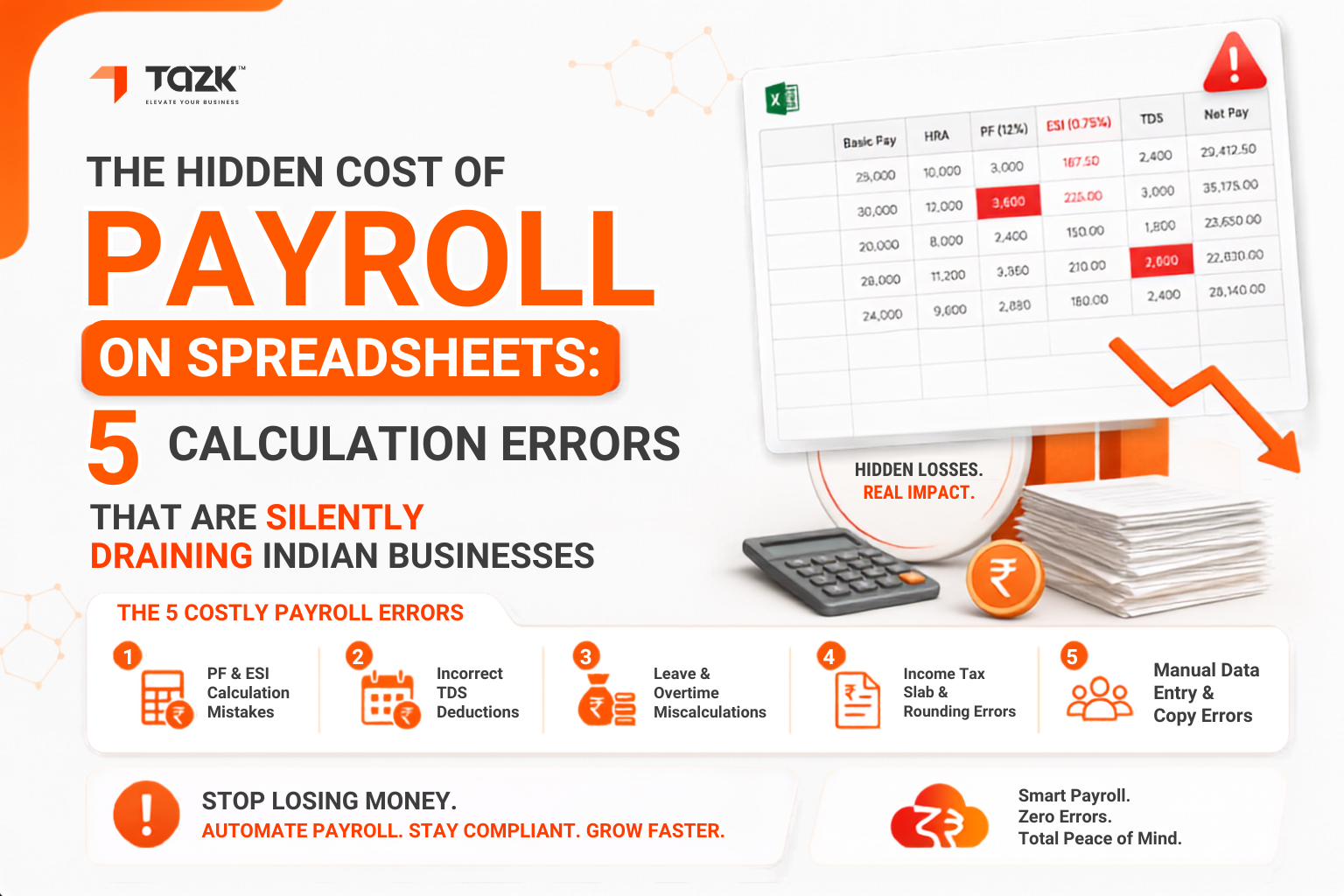
Mistake 3: Assuming the old biometric machine and the new payroll software are already synced. They often aren't. Maybe your fingerprint device is old. Maybe it's from a different company than your payroll software. If so, someone in your office is probably copying attendance data into Excel by hand every month. Small copy-paste mistakes there turn into wrong salaries.
Mistake 4: No system for night-shift-specific rules. Written consent forms for women employees, transport logs, and safety checklists are often kept on paper. They sit separate from the attendance system. That makes them easy to lose and hard to prove during an audit.
Mistake 5: Rotational shift patterns aren't mapped in the software at all. Say your team rotates between morning, evening, and night shifts every week. If your software only has one fixed shift setting, attendance and overtime numbers will be wrong nearly every week.
How to Configure Your Biometric System the Right Way
Here is a practical, step-by-step way to set this up properly. You don't need to be a technical person to follow this.
Step 1: Define your shifts clearly in the system including the midnight crossover. Every shift needs a start time, an end time, and a clear rule for which calendar date it belongs to. A shift from 10 PM to 6 AM should count as one shift, dated to the day it started, not split in two.
Step 2: Set your overtime rules once, so the system applies them automatically. Decide your overtime policy (for example, anything beyond 8 hours in a shift, or beyond 48 hours a week) and enter it once. From then on, the system should calculate overtime pay by itself no manual math each month.
Step 3: Link your PF and ESI wage ceiling rules directly to attendance. Your system should track each employee's monthly gross pay including overtime and night allowance and flag anyone approaching or crossing the ₹15,000 PF or ₹21,000 ESI thresholds. This single feature alone prevents most compliance surprises.
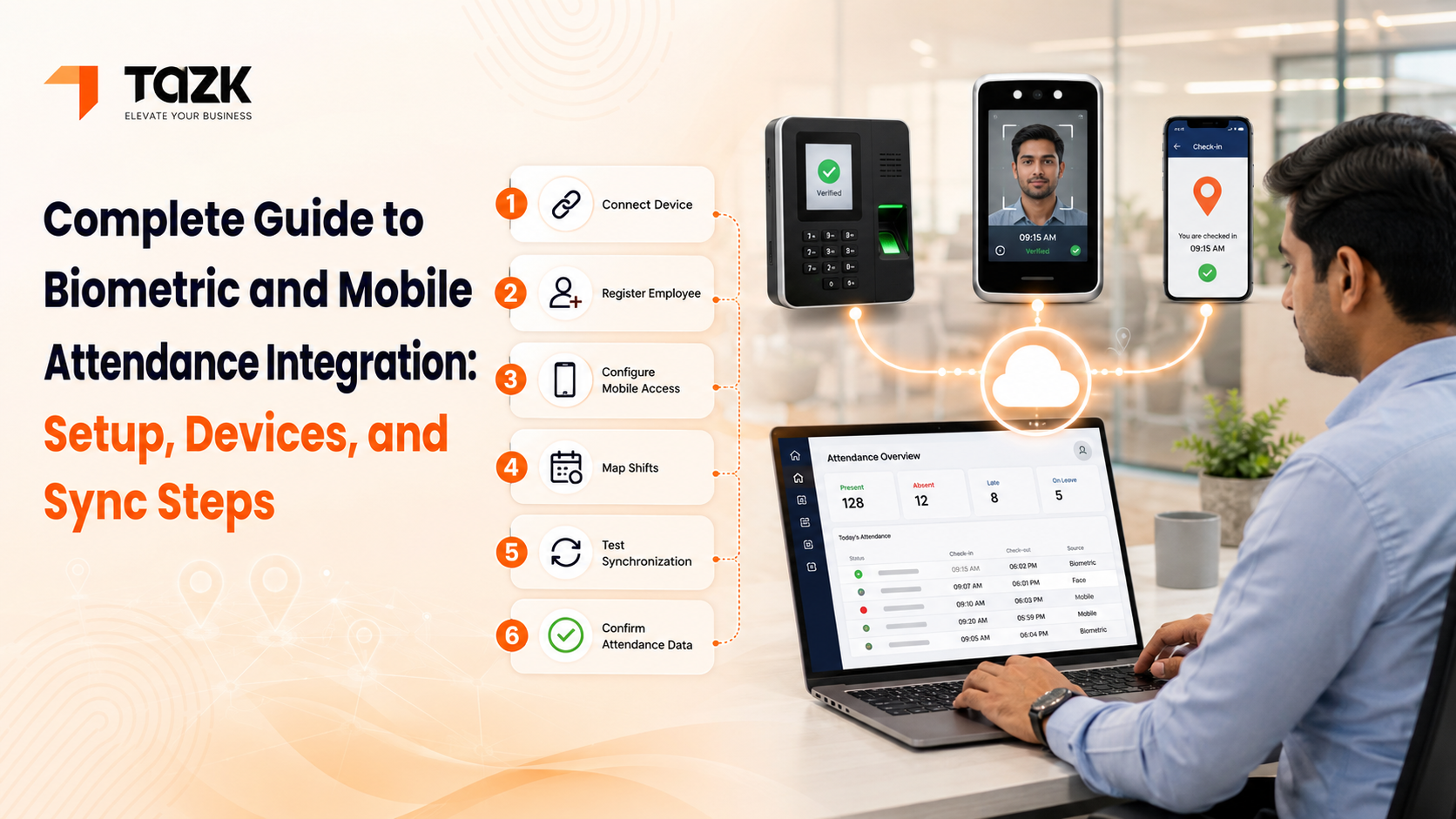
Step 4: Connect your existing biometric device, don't necessarily replace it. Most facerecognition and fingerprint devices (including common brands like ZKTeco and eSSL) can be integrated with modern cloud payroll software, even if they're a few years old. You usually don't need to throw out working hardware you need the software layer that reads its data correctly.
Step 5: Build night-shift safety records into the same system. Store written consent, transport logs, and safety checklists digitally, attached to each employee's profile not on a separate piece of paper that can go missing.
Step 6: Set up rotational shift patterns as templates. If your team rotates through a 3-shift pattern, create it once as a repeating template. The system should then automatically assign the correct shift to the correct person on the correct day, every week, without HR reentering it.
For a deeper look at connecting biometric hardware to your payroll system step by step, see our detailed guide on biometric and mobile attendance integration setup.
Turning Attendance Data Into Automatic Compliance
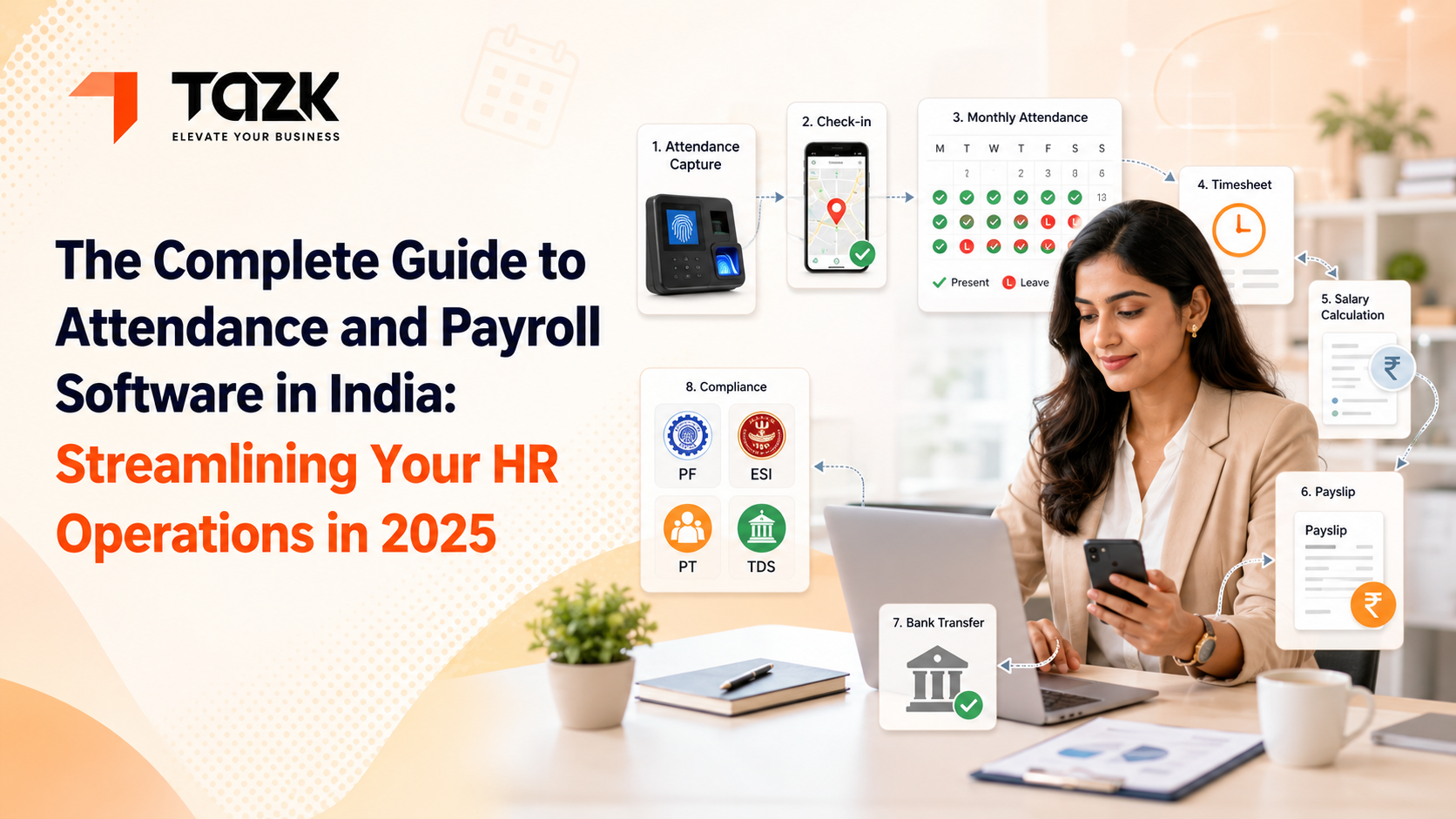
Here's the real goal: attendance shouldn't just tell you who came to work. It should automatically tell your payroll system how much PF, ESI, and overtime pay is correct without anyone doing manual maths.
This is exactly what Tazk's Payroll & HRMS module is built to do:
- GPS and face-recognition attendance that correctly understands shifts crossing midnight, so a night shift is never split or duplicated.
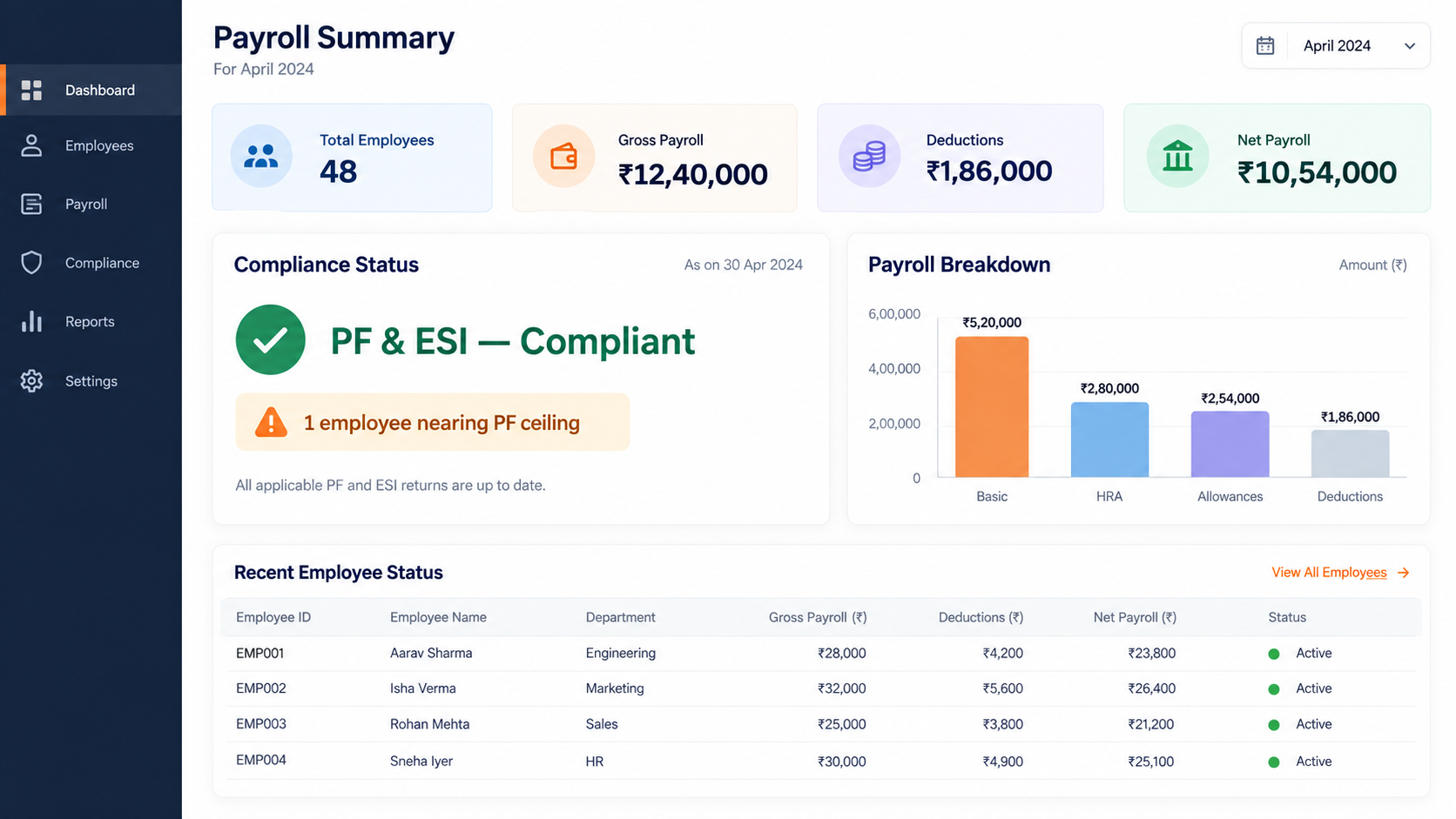
- Automatic PF and ESI wage-ceiling tracking, so you get a clear alert the moment an employee's monthly wages approach ₹15,000 or ₹21,000 — instead of finding out during an audit.
- One-click payroll generation that pulls overtime, night allowance, and shift data straight from attendance, with no re-typing.
- Works with your existing biometric devices, including older ZKTeco and eSSL machines, so you don't need to rip and replace hardware that already works.
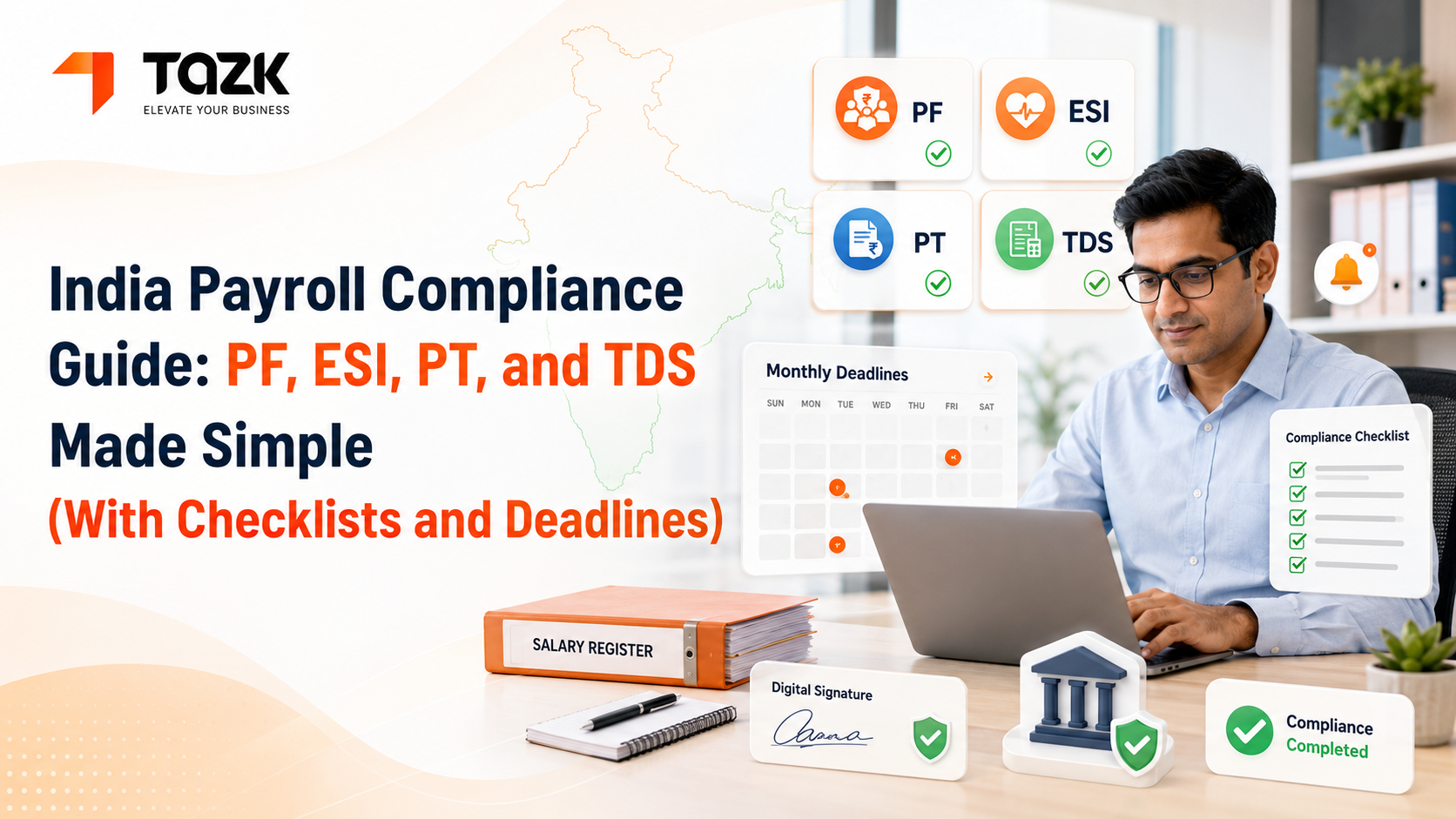
If you're currently juggling PF, ESI, and TDS calculations across spreadsheets and a separate biometric machine, our complete guide to India payroll compliance — PF, ESI, PT and TDS, with due dates is a good companion read alongside this one.
A Realistic Example
Picture a garment unit in Tiruppur running three rotating shifts to keep machines running around the clock a common setup in Tamil Nadu's textile belt.
Before fixing their attendance system, their HR team lost close to two full days every month. They checked night shift records by hand. They cross-checked overtime by hand too. And they simply hoped nobody had quietly crossed the PF wage limit.
After switching to a system built for rotational shifts, that two-day task became a same-day check. Overtime calculated itself. PF alerts appeared automatically when a promotion pushed someone past the ceiling. And because women employees' written consent and transport records were stored digitally, a routine labour inspection took twenty minutes instead of an afternoon of searching through files.
This is not an unusual result it's simply what happens when the software actually understands how shifts really work, instead of assuming everyone clocks in at 9 AM.
What's Changing Next (2026 and Beyond)
A few things worth watching, because they will affect how you run night shifts going forward:
The PF wage ceiling may rise to ₹25,000. This has cleared an internal government approval stage as of mid 2026, but still needs Cabinet sign off and an official notification before it becomes law. If and when it happens, far more employees will fall under mandatory PF including many who currently don't (source: SGCMS).
State-level OSH Code rules are still being finalised. Tamil Nadu, Maharashtra, and several other states are in different stages of notifying their final rules. Whatever your state finalises, your attendance and safety record system needs to be flexible enough to adjust without a complete rebuild.
Biometric and AI-based attendance is only getting more common not less because it directly solves the exact problems this guide describes: shift confusion, buddy punching, and manual errors. Businesses that set this up correctly now will have a much easier time adapting to whatever rules come next.
Digital proof will matter more, not less. Labour enforcement is becoming more datadriven. Keeping consent forms, safety checklists, and wage records in a searchable digital system is quickly becoming the practical standard not just a nice to have. A drawer full of paper won't cut it for much longer.
Night shifts and rotational shifts aren't going away they're how modern manufacturing, retail, and logistics in India actually run. The law has caught up to that reality, opening the door for more flexible, round-the-clock staffing. Your attendance and payroll system needs to catch up too.
Get this right once, and PF, ESI, and overtime compliance stop being a monthly scramble — they just happen correctly, every time, in the background.