Table Of Contents
Social Media


Will Your Take-Home Fall? The ₹25,000 PF Ceiling and the 50% Wage Rule, Worked Out With Real Salary Examples
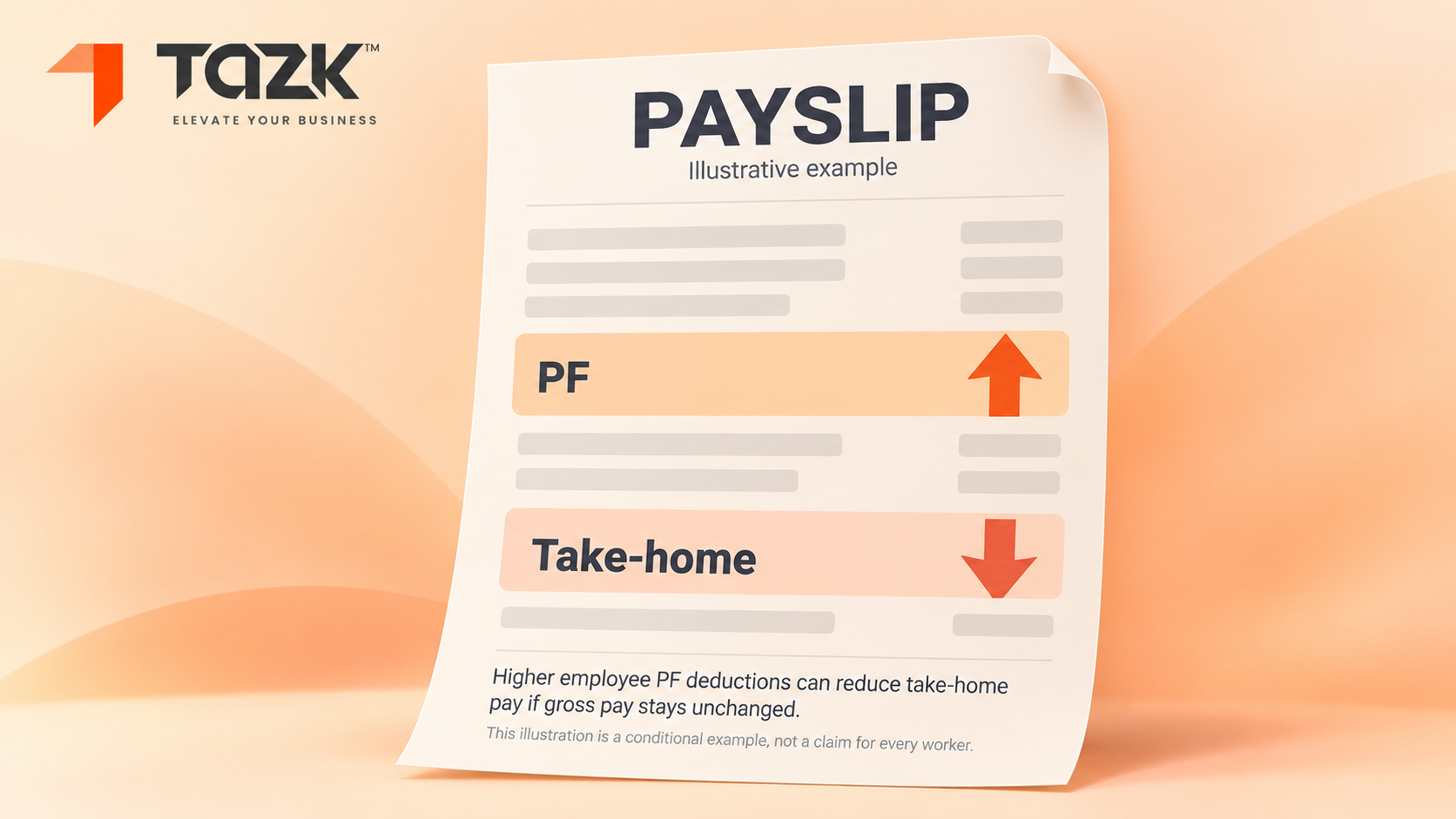
You open your payslip and one line looks bigger: PF. Another looks smaller: your take home. Nobody told you why.
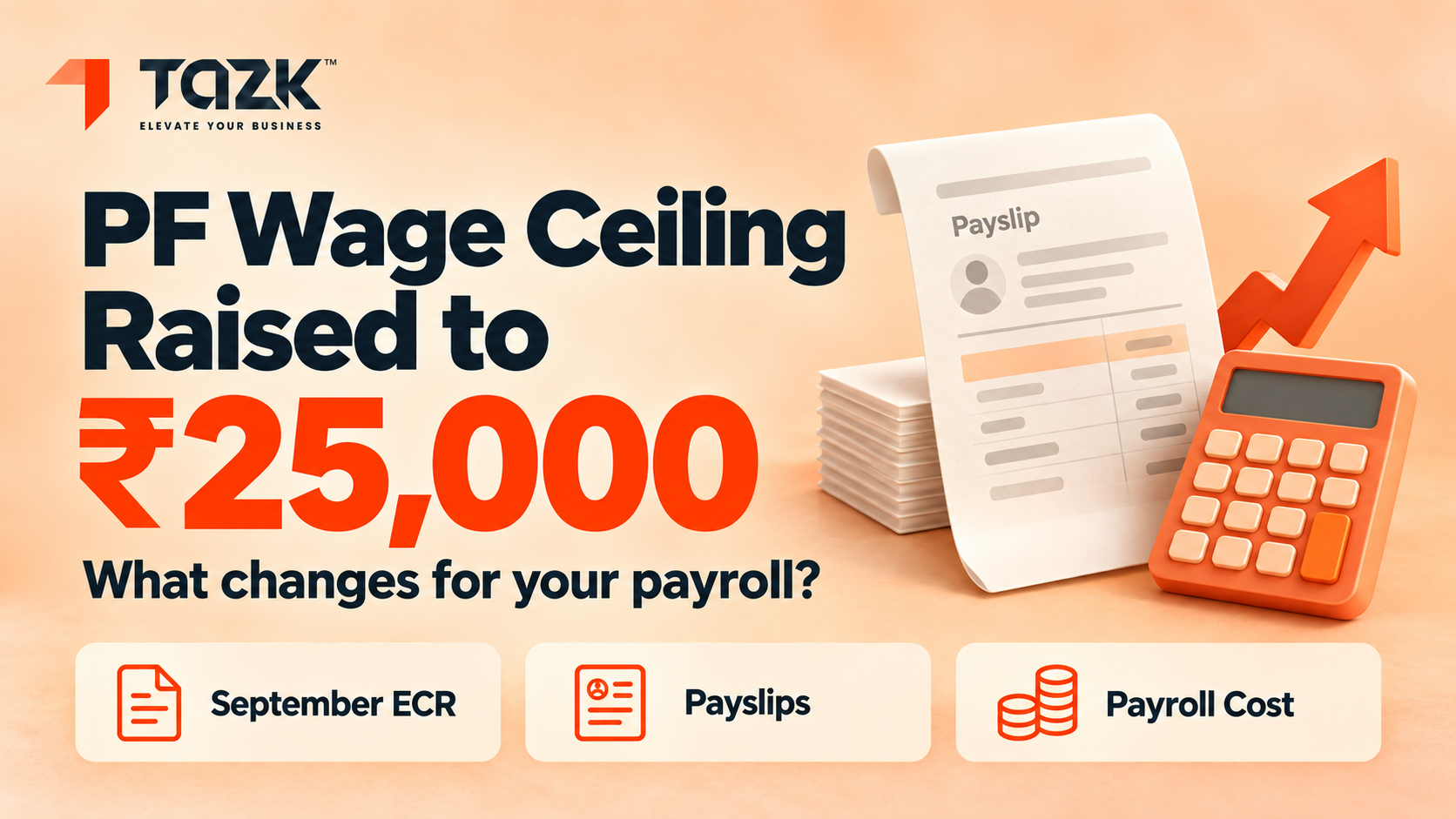
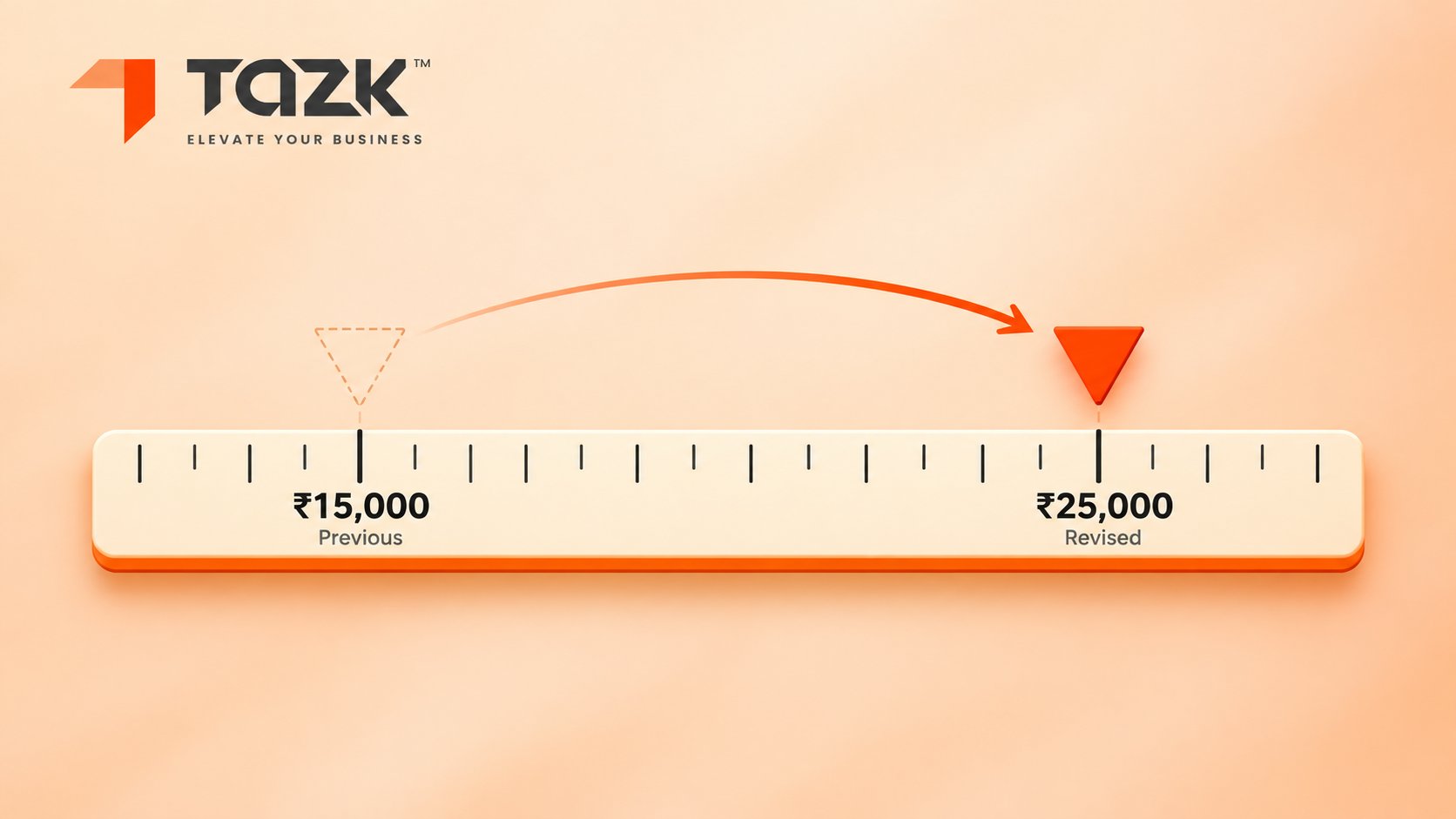
Here is the simple story. Two rules changed in the same year. First, the PF wage ceiling moved from ₹15,000 to ₹25,000 on 17 September 2026. The ceiling is the highest wage on which PF is counted, so a higher ceiling can mean a bigger PF deduction for people whose employers cap PF at the old limit. Second, under the Code on Wages, in force since 21 November 2025, “wages” such as basic pay must be at least half of total pay, or the shortfall is added back to wages for PF.
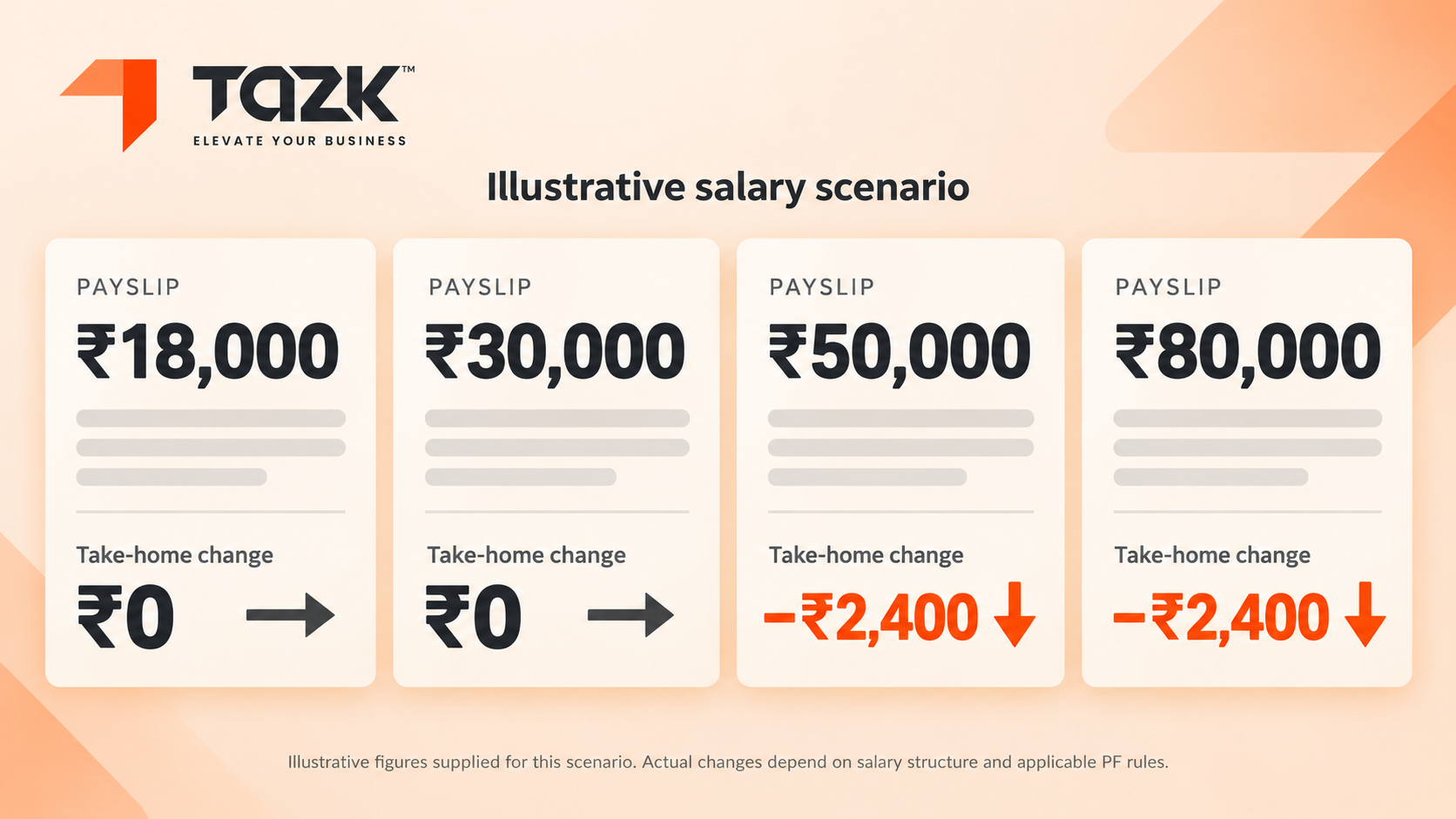
Not everyone is affected. In our worked examples below, someone on ₹18,000 or ₹30,000 CTC sees no change, while someone on ₹50,000 or ₹80,000 can lose ₹1,200 to ₹2,400 a month, depending on what the employer does.
The short answer
- Employee PF is 12% of PF wages (basic + DA + retaining allowance), counted up to the ceiling. The most you pay is now ₹3,000 a month, up from ₹1,800.
- Take-home falls only if your PF was capped at ₹15,000 and your basic is above that, or if your basic is below half of your pay.
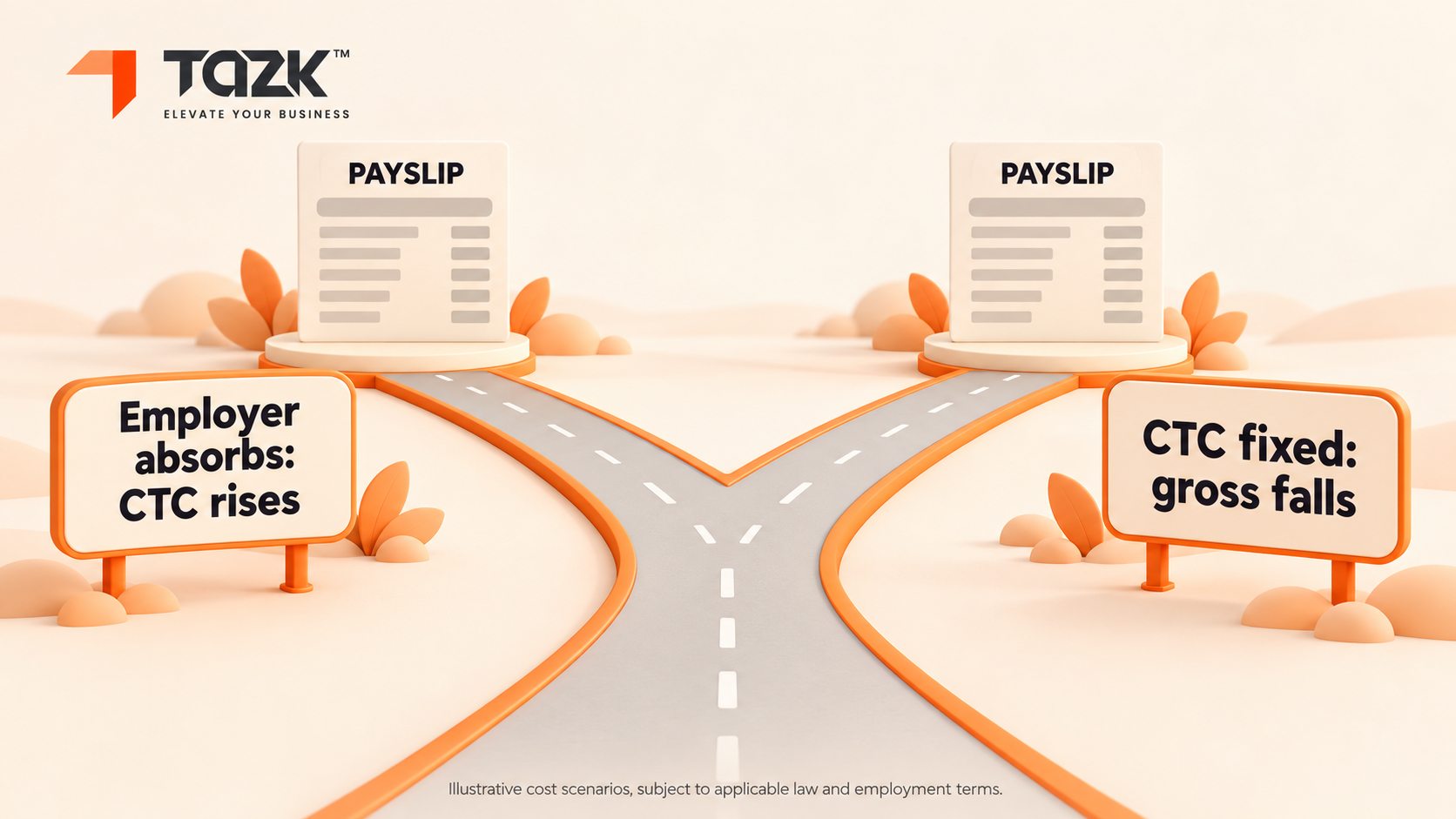
- If CTC stays fixed, the employer's extra PF comes out of your gross pay, so take-home can fall by twice the PF rise. If the employer absorbs the cost, it falls by the PF rise only.
- The deduction is mandatory if your PF wages are ₹25,000 or less.
- Employers can absorb the cost, rebalance pay, or phase the change in.
Under each heading you will find In simple words. Read only those lines and you will still understand the story.
Why did my PF deduction increase this month?
There are four common reasons: the ceiling rose, you are newly covered, the 50% rule lifted your PF wages, or September was a split month. The first is the most common. If your employer counts PF only up to the ceiling, your maximum employee PF jumped from ₹1,800 (12% of ₹15,000) to ₹3,000 (12% of ₹25,000) once the new ceiling applied from 17 September 2026.
In simple words: PF is a slice of your basic pay, and the slice used to stop growing at ₹15,000. Now it stops at ₹25,000.
| PF wages (basic + DA) | Employee PF before | Employee PF now |
|---|---|---|
| ₹10,000 | ₹1,200 | ₹1,200 |
| ₹15,000 | ₹1,800 | ₹1,800 |
| ₹20,000 | ₹1,800 if capped, ₹2,400 if on actual wages | ₹2,400 |
| ₹25,000 | ₹1,800 if capped | ₹3,000 |
| ₹35,000 | ₹1,800 if capped | ₹3,000 |
- The ceiling rose. This is the main reason for people whose PF was capped.
- You are newly covered. If your PF wages are between ₹15,001 and ₹25,000 and you were not a member, EPFO's FAQ says PF is now mandatory.
- The 50% rule. If your basic is below half of your pay, more of your pay counts as wages. The next sections explain it.
- A split month. September used the old ceiling for 1 to 16 September and the new one from 17 September, so the September payslip can show a mixed figure. October is the first full month at ₹25,000. Our guide to the PF wage ceiling change explains the split.
How much will take-home change at ₹18,000, ₹30,000, ₹50,000 and ₹80,000 CTC?
It depends on your basic pay and on what your employer does with the extra cost. In our examples, take-home does not change at ₹18,000 or ₹30,000. At ₹50,000 and ₹80,000 it falls by ₹2,400 a month if CTC stays fixed, or by ₹1,200 if the employer absorbs the cost.
In simple words: The PF slice got bigger only for people whose basic pay is above ₹15,000. Everyone else keeps the same slice.
Our assumptions. All figures are monthly rupees. CTC includes the employer's PF. Basic is 50% of CTC, HRA is 40% of basic, and special allowance fills the rest. PF is 12% of basic, counted up to the ceiling (₹15,000 before, ₹25,000 now). ESI (0.75% from the employee, 3.25% from the employer) applies when gross pay is ₹21,000 or less. Take-home is shown before professional tax and income tax, which vary by state and person. “CTC fixed” means the employer keeps CTC he same, so its higher PF reduces your gross. “Employer absorbs” means gross stays the same and CTC rises.
CTC ₹18,000 (ESI applies). No change in either case.
| Line | Before | After |
|---|---|---|
| Basic | 9,000 | 9,000 |
| HRA | 3,600 | 3,600 |
| Special allowance | 3,787 | 3,787 |
| Gross | 16,387 | 16,387 |
| Employee PF | 1,080 | 1,080 |
| Employee ESI | 123 | 123 |
| Take-home | 15,184 | 15,184 |
CTC ₹30,000. No change in either case.
| Line | Before | After |
|---|---|---|
| Basic | 15,000 | 15,000 |
| HRA | 6,000 | 6,000 |
| Special allowance | 7,200 | 7,200 |
| Gross | 28,200 | 28,200 |
| Employee PF | 1,800 | 1,800 |
| 26,400 | 26,400 |
CTC ₹50,000.
| Line | Before | After, CTC fixed | After, employer absorbs |
|---|---|---|---|
| Basic | 40,000 | 40,000 | 40,000 |
| HRA | 16,000 | 16,000 | 16,000 |
| Special allowance | 22,200 | 21,000 | 22,200 |
| Gross | 78,200 | 77,000 | 78,200 |
| Employee PF | 1,800 | 3,000 | 3,000 |
| Take-home | 76,400 | 74,000 | 75,200 |
| Change in take-home | none | −2,400 | −1,200 |
| Employer's CTC | 80,000 | 80,000 | 81,200 |
A middle case shows who is hit hardest in percentage terms: at ₹40,000 CTC (basic ₹20,000), take-home goes from ₹36,400 to ₹35,200 if CTC stays fixed, or to ₹35,800 if the employer absorbs the cost. If your employer already deducts PF on your actual basic, nothing changes. At ₹80,000 that would be ₹4,800 before and after. These are illustrations under the stated assumptions, so ask your CA or payroll team to check them against your own structure. Professional tax depends on your state; see professional tax in the salary structure.
What is the 50% wage rule and does it change my basic salary?
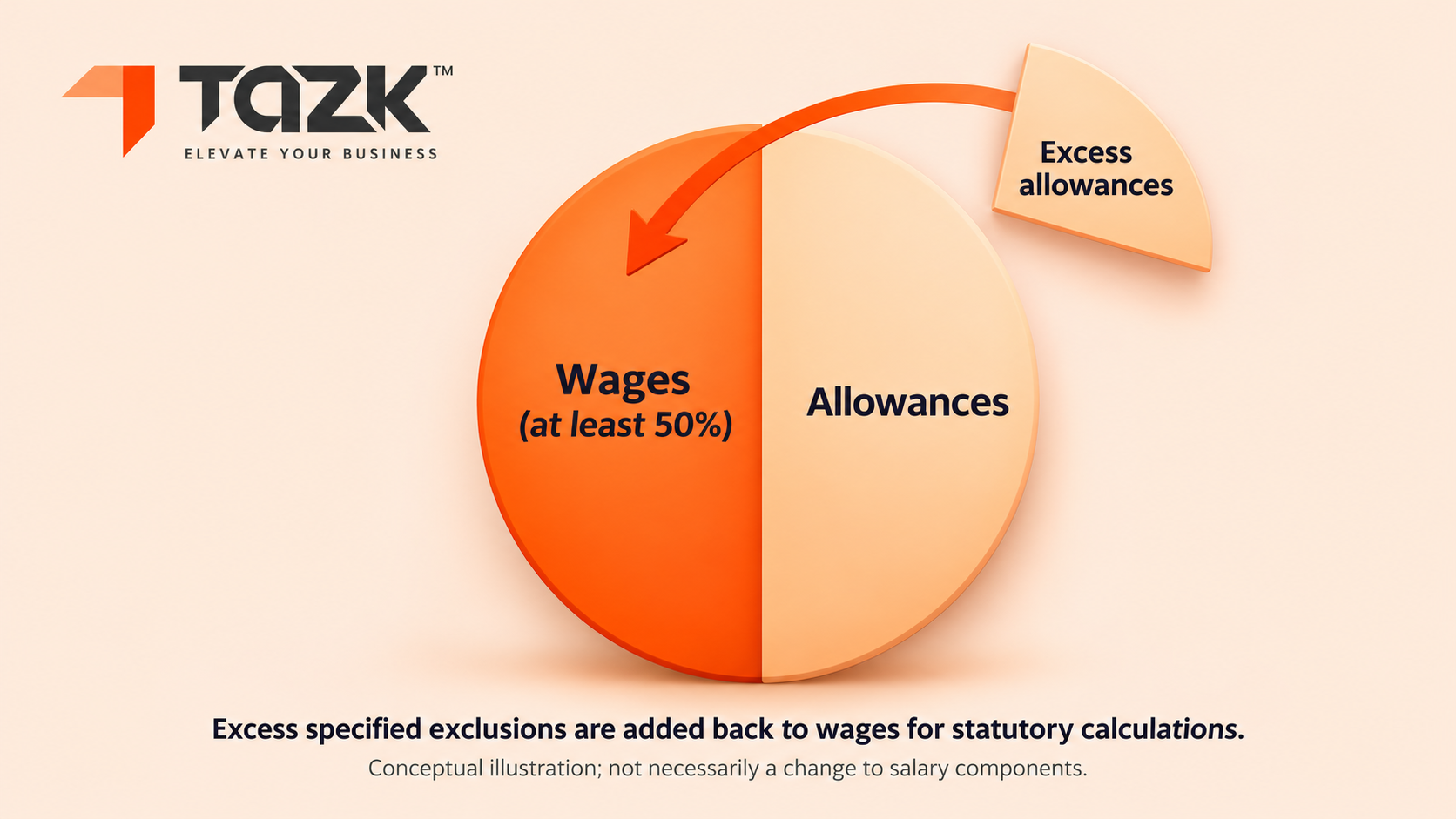
The rule says that “wages” (basic pay, dearness allowance and retaining allowance) must be at least 50% of your total remuneration. If allowances such as HRA, conveyance, bonus, overtime and commission add up to more than half, the extra is added back to wages when PF, gratuity and similar benefits are worked out. It does not rewrite your payslip, but if your basic is below half, PF is worked out as if it were half. The rule sits in Section 2(y) of the Code on Wages, in force since 21 November 2025.
In simple words: Think of a pizza. At least half must be the base. If the toppings take more than half, the extra counts as base.
Here is the effect in rupees. Take ₹50,000 CTC with a basic of only ₹15,000 (30%). Before, PF was worked out on ₹15,000, which is ₹1,800 for you. With the 50% floor, your PF wages are at least ₹25,000, which is ₹3,000. Both changes matter together: the add-back lifts the base to ₹25,000, and the new ceiling lets all of it count. Under the old ceiling, PF would have stopped at ₹15,000 even after the add-back. At ₹30,000 CTC with a 30% basic (₹9,000), the floor lifts PF wages to ₹15,000, so employee PF goes from ₹1,080 to ₹1,800.
What counts as “total remuneration”? The Ministry of Labour's FAQs of December 2025 and March 2026 say employer PF and pension contributions and statutory bonus count in, while gratuity and ESI do not, and overtime counts in, as SCC Online reports. Corporate Professionals calls the definition a grey area, and CalcGuru shows how take-home can fall when basic is low. State rules are still being notified, so ask your adviser how your employer applies it. Our PF, ESI, PT and TDS compliance guide covers the wider picture.
Is the higher PF deduction mandatory for me?
For most people, yes. If your PF wages are ₹25,000 or less, PF is mandatory and your employer enrols you. If you were already a member with PF capped at ₹15,000, the cap is now ₹25,000, so the higher deduction applies. If your PF wages are above ₹25,000 and you were never a member, you are not forced to join. A higher base than ₹25,000 needs agreement between you and your employer. Ask HR in writing which case applies to you.
In simple words: If your PF wages fit under the new line, you are in. If you are over it, ask first.
| Your situation | What it means now |
|---|---|
| PF wages of ₹25,000 or less, not yet a member | PF is mandatory, and your employer enrols you |
| A member, capped at ₹15,000, with higher PF wages | PF now counts wages up to ₹25,000 |
| A member already contributing on wages above ₹25,000 | Your arrangement continues |
| PF wages above ₹25,000, never a member | Not compulsory. You may join if your employer agrees |
These cases come from EPFO's Not compulsory. You may join if your employer agrees FAQ on the revised ceiling. Note that PF wages mean basic + DA + retaining allowance, not your gross pay. If a deduction looks wrong, ask HR or the PF wage figure and the month-by-month calculation, and check it against your UAN passbook.
How can employers restructure CTC without cutting take-home?
Decide who bears the extra cost, then choose how to show it. For someone whose PF was capped at ₹15,000, the extra employer PF is up to ₹1,200 a month (12% of the extra ₹10,000). Employers have four sensible routes: absorb the cost, rebalance pay within a fixed CTC, phase the change in, or fix structures that sit below the 50% floor. Whatever you choose, run the numbers for each employee first, tell people before payday, and take advice before cutting any pay component to fund the employer's share.
In simple words: Someone has to pay the bigger slice. Decide who, say it out loud, and do the sums before payday.
| Option | Employee take-home | Employer cost | Watch out for |
|---|---|---|---|
| Absorb the extra cost | Falls only by the employee's own PF rise, up to ₹1,200 | Rises by up to ₹1,200 per capped employee a month | Budget it: for 10 capped staff, that is ₹12,000 a month, or ₹1.44 lakh a year |
| Rebalance within a fixed CTC | Falls by up to ₹2,400 | No change | Morale, and advice first: EPFO's FAQ says the employer's share is the employer's cost |
| Phase it in | Protects current staff | Rises gradually | Two structures in one team |
| Fix the structure | Avoids surprises later | Depends on the gap | A basic below 50% triggers the add-back |
| Use hiring incentives | No effect on current staff | Offsets only new hires | The PMVBRY scheme covers additional hires only, with conditions, as SGCMS explains |
Payroll software with salary templates lets you test each structure for each person before you commit. See Tazk payroll software, and read our salary calculation guide for how the pieces of a salary fit together.
How is CTC recovery shown on a payslip?
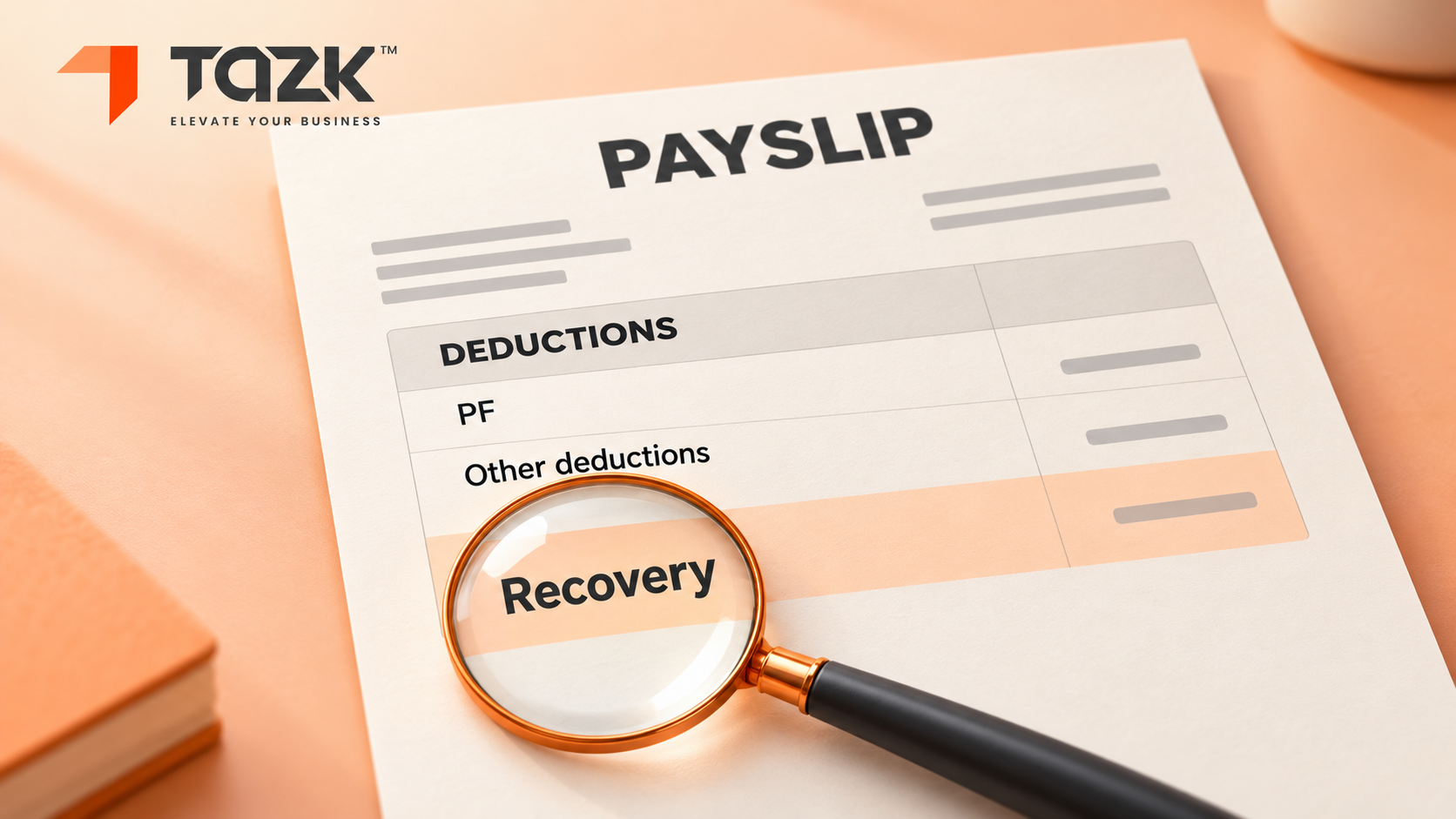
There is no standard, legal line called “CTC recovery”. When you see it, it is your employer's label for money taken back from your pay. The usual causes are a notice period shortfall, an advance, a joining bonus or a payment made by mistake. It normally sits under deductions, often in the final settlement. The base used (CTC, gross or basic) comes from your offer letter or policy. Ask HR for four things: the reason, the days or amount, the base, and the clause that allows it.
In simple words: It is like a shop asking for money back. It must tell you what for, why and how much.
The base changes the amount a lot. Suppose someone on ₹30,000 CTC (basic ₹15,000) leaves 10 days short of the notice period. At CTC ÷ 30 × 10, the recovery is ₹10,000. At basic ÷ 30 × 10, it is ₹5,000. Practice varies: a greytHR community thread notes that no labour act defines notice pay, and HROne says recovery is often based on basic or basic plus some allowances rather than full CTC, following the written contract.
The law adds guardrails. Section 18 of the Code on Wages allows only authorised deductions, including recovery of advances and adjustment of overpaid wages, and caps all deductions in a wage period at 50% of wages, as the bare text and Nyaaya's explainer show. So check that PF, tax and the recovery together stay under that cap. If a recovery looks wrong, ask in writing first, then take advice.
Checklists for employees and employers, and 6 mistakes to avoid
For employees: do these six things
- Find your PF wages (basic + DA + retaining allowance) on your payslip.
- Put your September and October payslips side by side, and note PF, gross and take home.
- Ask HR whether PF is worked out on the ceiling or on your actual basic.
- Ask whether your basic is at least 50% of your total pay.
- Ask whether your CTC changed, or only the split inside it.
- Check your UAN passbook for the employee and employer shares
For employers: do these six things
- List everyone with PF wages above ₹15,000, and note who is capped and who is on actual wages.
- Work out the cost: capped staff × up to ₹1,200 × 12 months.
- Find structures where basic is below 50% of total pay, and work out the add-back.
- Decide whether to absorb, rebalance or phase in.
- Tell staff in writing, with a sample payslip, before payday.
- Update your salary templates with the new ceiling and its start date, 17 September 2026.
Six mistakes to avoid
- Using gross pay instead of PF wages.
- Assuming every employee's take-home falls. Many people see no change.
- Forgetting that September was a split month.
- Counting only the employee's rise and forgetting the employer's share.
- Cutting basic pay to dodge PF. The 50% rule adds it back.
- Trusting a calculator that still shows the old ₹15,000 ceiling. Check the date on it.
What happens next: your take-home and payroll outlook, 2026 to 2027
The next few months will show the full effect of the change on payslips. Here are the dates we know, then expectations that we label as expectations.
| When | What | What to do |
|---|---|---|
| Thu 15 Oct 2026 | The September PF return, a split month, is ordinarily due | Employers check that mixed-rate payslips match the return |
| Sun 15 Nov 2026 | The October return, the first full month at ₹25,000 | Staff see the full change on the October payslip |
| Dec 2026 to Mar 2027 | Appraisal season | A raise in basic adds PF only until PF wages reach ₹25,000, so run what-if sums first |
| 2027 | State rules for the labour codes keep arriving | Re-check how your state treats the 50% rule |
What may come next (expectations, not promises):
- More clarifications. The Ministry has already issued several rounds of FAQs on what counts as total remuneration. Expect more, and check them when you set structures.
- More structures built at 50% basic. As employers redesign pay, HRA and special allowance may shrink in the split while PF and gratuity grow.
- Fresher calculators. Many online tools still show the old ceiling. Prefer one that states its ceiling date and its assumptions.
- A steady ceiling. The ceiling had not moved since 2014 before this change, so plan around ₹25,000 for now.
Want to see your own numbers? Bring your salary structure to a 20-minute Tazk Payroll demo and see your take-home with the ₹25,000 ceiling on sample data. Explore Tazk payroll software, or visit the Tazk home page to see every module.