Is Diwali Bonus Compulsory? Who Gets It, How Much, and the 30 November Deadline Many Owners Miss
6 min read | By Lokesh A
Table Of Contents
Social Media


Every October, two questions fly around shops, factories and offices. Owners ask, “Do I have to pay Diwali bonus?” Employees ask, “Will I get one?”
Here is the surprise. For many workers, the answer does not depend on Diwali or on the owner's mood. It depends on the law. Since 21 November 2025, the Code on Wages, 2019 has replaced the old Payment of Bonus Act, 1965. The new law keeps a yearly bonus for eligible employees, with a minimum of 8.33% and a deadline of 30 November 2026 for the year that ended on 31 March.
Think of it like a school prize-giving. Everyone who qualifies gets a small prize (the minimum). If the whole class did very well, the prize can be bigger (up to the maximum). A box of sweets on festival day is a lovely extra, but it is not the prize
This guide separates the law from the gift, shows the sums with simple examples, and ends with a checklist for owners and a list of rights for employees.
The short version
- Statutory bonus is a legal right for eligible employees. It is not a favour, and it is not tied to Diwali.
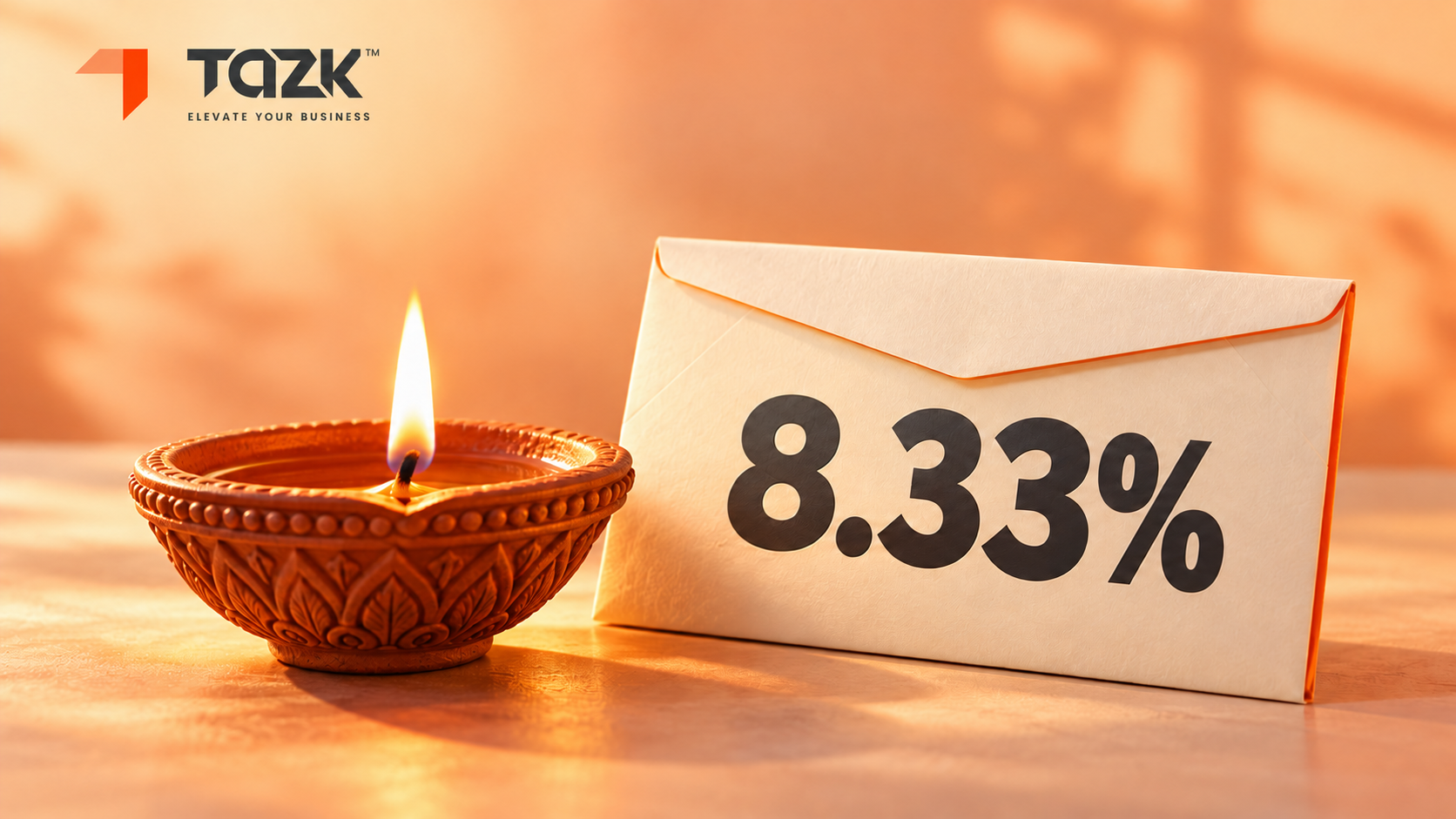
- The minimum is 8.33% of the wages earned in the accounting year (or ₹100, if that is higher). The maximum is 20%.
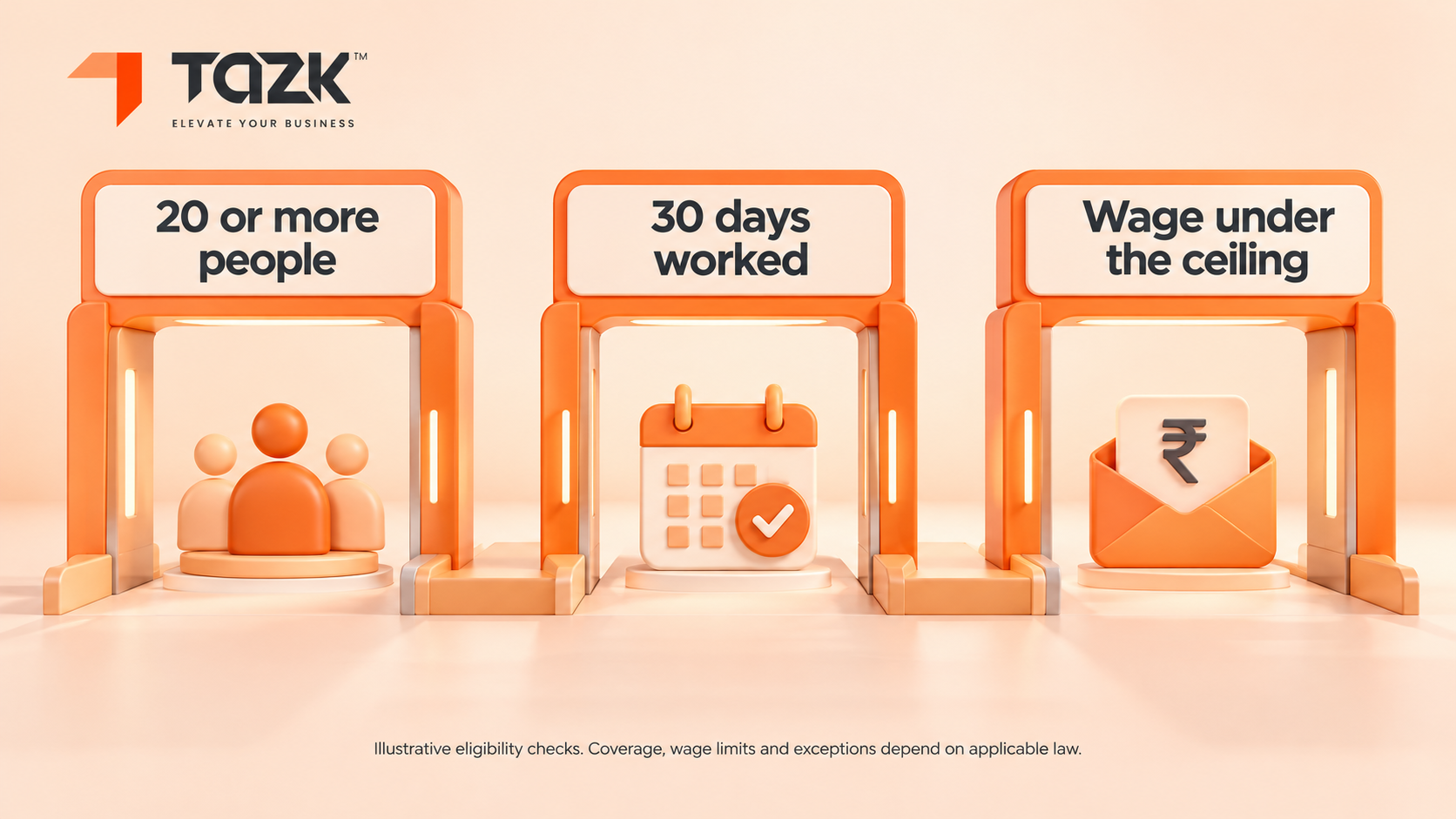
- Three tests decide who is covered: the establishment has 20 or more people, the employee worked at least 30 days in the year, and the wage is within the ceiling the government notifies.
- For 2025-26, the deadline is 30 November 2026, and the bonus should reach the employee's bank account.
- A Diwali gift or ex-gratia payment is different. A cash bonus is taxed as salary. From 1 April 2026, gifts and vouchers up to ₹15,000 a year are tax-free.
Is Diwali bonus mandatory in India?
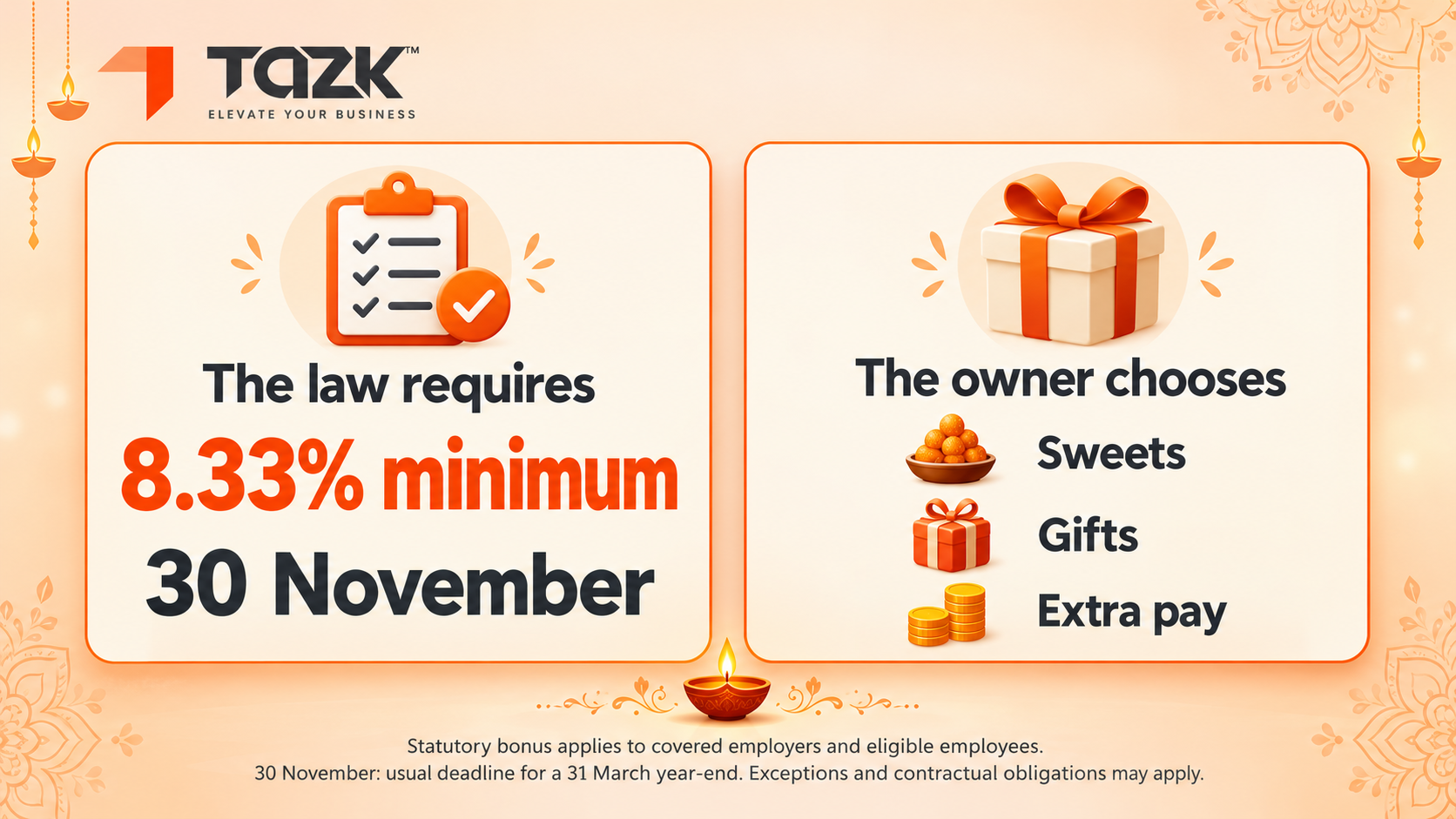
Often yes, but not because of Diwali. Eligible employees have a legal right to a yearly statutory bonus under the Code on Wages, 2019. A festival gift on top of that is the owner's choice. The legal bonus has a floor of 8.33%, a loss-making year does not remove it, and it has a deadline
In simple words: The law gives a yearly prize to staff who qualify. The sweets box on Diwali is an extra, not the prize.
Section 26 of the Code sets the rule (bare text of Section 26). An eligible employee who has worked at least 30 days in the accounting year gets an annual minimum bonus of 8.33% of the wages earned, or ₹100 if that is higher. The employer owes this whether or not it has any allocable surplus, which is the profit pool the law lets you share.
Two things surprise people. First, many online guides still describe the repealed Payment of Bonus Act. The 8.33% floor and the 20% ceiling carried over, but section numbers and some details changed. Second, the Code asks for the bonus to be credited to the employee's bank account, not paid in cash, as the Indian Pay Calculator explainer points out.
Who is eligible for statutory bonus under the Code onWages?
Three tests decide it. The establishment must employ 20 or more people, the employee must have worked at least 30 days in the accounting year, and the employee's wage must be within the ceiling the government notifies. A few serious wrongs, such as fraud or violence, can disqualify a person.
In simple words: Three gates. The firm must be big enough, you must have worked a month, and your pay must be under the line
| Test | What the Code says | In practice |
|---|---|---|
| 1. The establishment | Covers places where 20 or more people work, or worked on any day in the year. Government establishments are out unless notified. | Shops, factories, warehouses, hotels and offices all count |
| 2. The employee's service | At least 30 days of work in the accounting year | A joiner from November can qualify |
| 3. The employee's wage | Wages not above an amount the appropriate Government notifies | Many employers still use ₹21,000 a month (basic + DA) |
A caution on the third test. The Code does not print a rupee figure. It leaves the number to the central or state government. As of 6 October 2026 we could not find a new notification, and TaxGuru's summary of the labour codes says the threshold was still awaited. So many employers carry on with the old ₹21,000 for eligibility and the old ₹7,000 for the calculation base. That is a habit, not a rule. Ask your adviser which notification applies in your state
The disqualifications are narrow. Dismissal for fraud, violence on the premises, theft or damage to the employer's property, or a conviction for sexual harassment can end the claim. Someone earning ₹30,000 a month sits above the old ₹21,000 line, so any bonus for them is company policy, not statutory
Whatis the minimum bonus and how is it calculated?
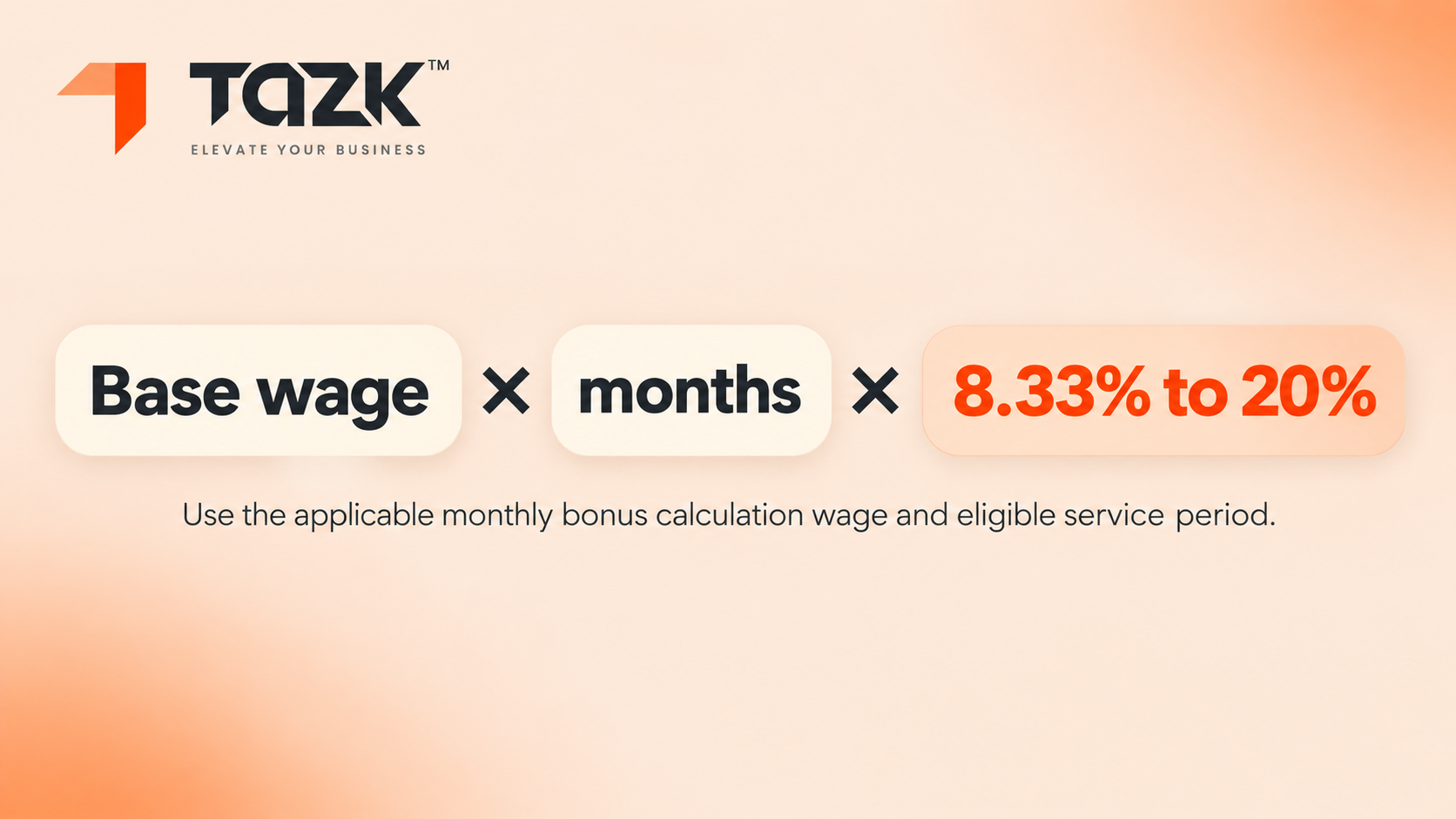
The minimum bonus is 8.33% of the wages an employee earned in the accounting year, or ₹100 if that is higher. The maximum is 20%, payable when the employer has enough allocable surplus. If the wage is above the government's calculation amount, the bonus is worked out as if the wage were that amount or the minimum wage, whichever is higher
In simple words: Take a year's wages. 8.33% of it is the minimum prize. In a very good year the prize can grow to 20%. Pay above the cap is treated as the cap.
Allocable surplus is the profit pool for bonus. If it is bigger than the minimum bonus needs, the bonus can rise above 8.33%, up to 20%.
Four steps:
- Find the monthly base. If the wage is within the notified calculation amount, use the actual wage. If it is above, use that amount or the state minimum wage, whichever is higher.
- Count the months worked. A part-year worker gets a proportionate bonus.
- Work out the minimum: base × months × 8.33%.
- Work out the maximum: base × months × 20%. The rate you pay sits between the two.
These examples assume the old ₹7,000 calculation amount still applies, and they state each state minimum wage as an assumption. Your own numbers depend on your state's notified figures.
| Employee | Monthly wage | Monthly wage | Months | Minimum (8.33%) | Maximum (20%) |
|---|---|---|---|---|---|
| Meena | ₹12,000 | ₹12,000 (assume this is her job's minimum wage) | 12 | ₹11,995 | ₹28,800 |
| Karthik | ₹18,000 | ₹10,000 (assume this is his job's minimum wage, above ₹7,000) | 12 | ₹9,996 | ₹24,000 |
| Priya, joined 1 Nov | ₹12,000 | ₹12,000 | 5 | ₹4,998 | ₹12,000 |
| Ravi | ₹30,000 | Above the old ₹21,000 line, so not covered by statutory bonus | N/A | N/A | N/A |
The Code's rules on the calculation base are in Section 26.
By when must the bonus for FY 2025-26 be paid?
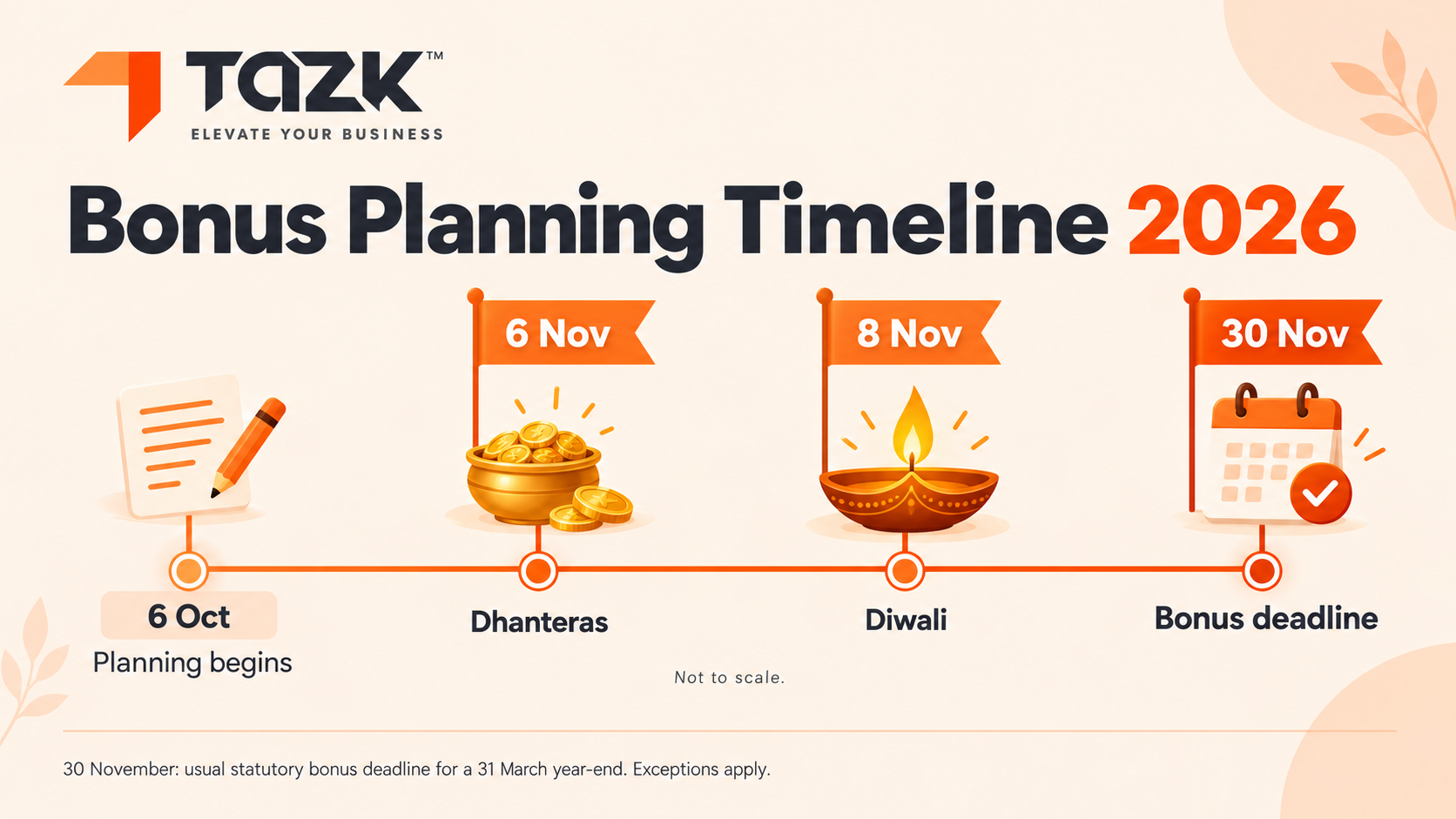
Within eight months after the accounting year ends. For the year that ended on 31 March 2026, that date is 30 November 2026. The Code asks for the bonus to be credited to the employee's bank account. Diwali falls on 8 November, so the festival is a custom, and 30 November is the legal date.
In simple words: The bonus bell rings on 30 November. Diwali comes first, but the law does not make it the deadline.
| Date | What happens | What to do |
|---|---|---|
| Tue 6 Oct | Today | Check the three tests and list who qualifies |
| Tue 20 Oct | Dussehra | Fix the base wage and the rate |
| Fri 6 Nov | Dhanteras | Pay early if cash flow allows, by bank transfer |
| Sun 8 Nov | Diwali | Gifts and festival extras; a cash bonus is taxed |
| Sun 15 Nov | PF and ESI deposits for October due | Keep bonus separate from PF wages |
| Mon 30 Nov | Statutory bonus deadline for 2025-26 | Every eligible employee paid |
An employer can ask the appropriate Government for more time, with sufficient reasons, and the total extension cannot go beyond two years. Do not plan on it. Three practical points follow. “We will adjust it next year” is not allowed. Bank credit leaves a record. And keep payslips and bank statements, because a claim rests on the wages earned and what reached the account.
Employees who have not been paid should first write to the employer and keep a copy. If that fails, the complaint goes to the labour authority for the establishment. Claims have time limits, so do not let it drift (Indian Pay Calculator).
Is a Diwali gift or ex-gratia paymentthe same as statutory bonus?
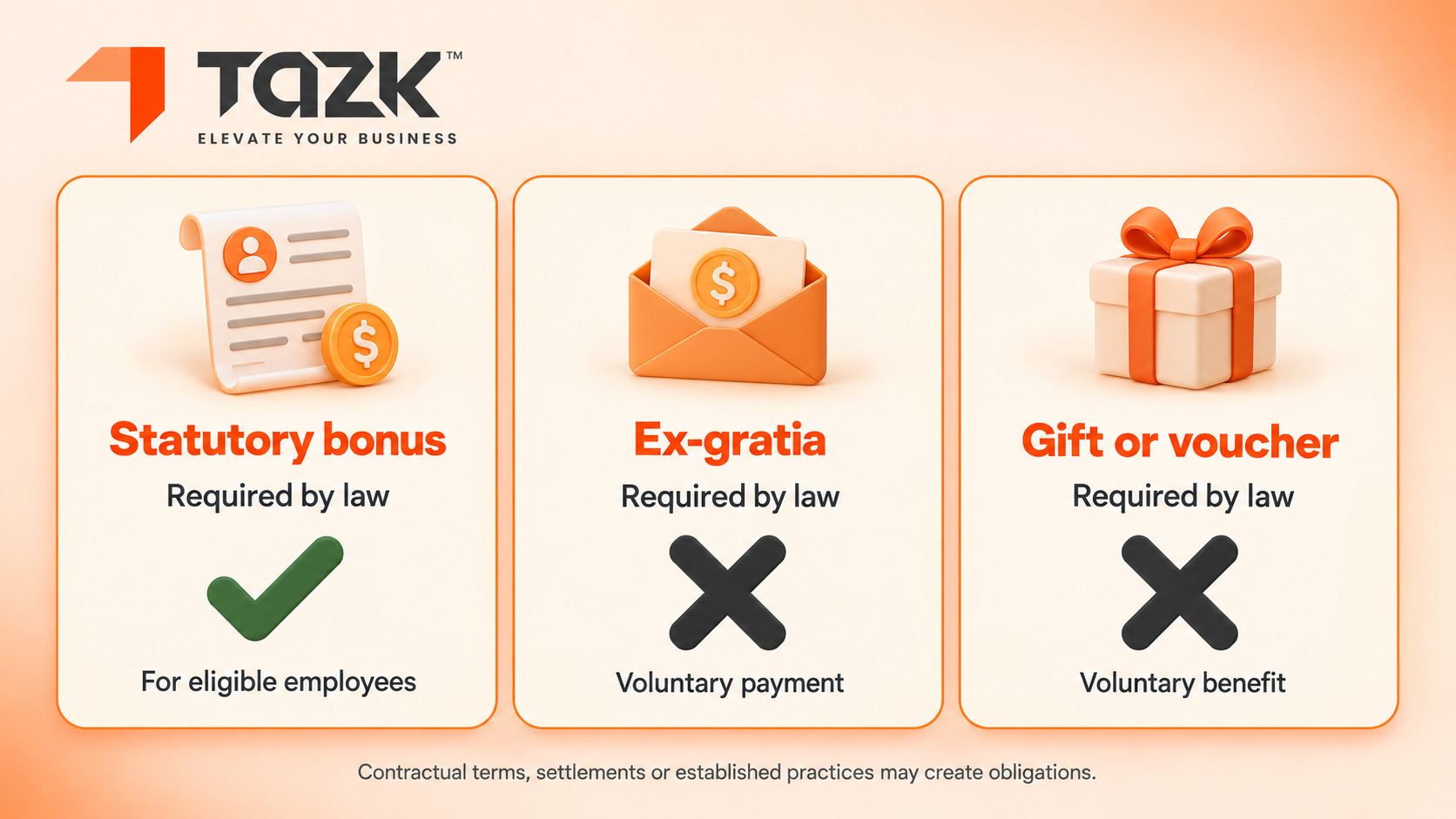
No. Statutory bonus is a legal right with a floor, a ceiling and a deadline. An ex-gratia payment or a festival gift is voluntary, so the owner decides who gets it and how much. The risk is mixing them up: calling a smaller payment “ex-gratia” may not settle what an eligible employee is owed.
In simple words: Statutory bonus is the homework the law marks. A gift hamper is extra credit.
| Statutory bonus | Ex-gratia or festival bonus | Gift, voucher or token | |
|---|---|---|---|
| Required by law? | Yes, for eligible staff | No | No |
| Amount | 8.33% to 20% of the base wage | The owner decides | The owner decides |
| When | By 30 Nov 2026 for 2025-26 | The owner decides, often before Diwali | The owner decides |
| Tax for the employee | Taxed as salary | Taxed as salary | Nil up to ₹15,000 a year in total; taxable above it |
The safe habit is simple. Label every payment clearly, keep the statutory amount separate from any extra, and ask your adviser before you replace a statutory payment with a gift. Our PF, ESI, PT and TDS compliance guide explains how each payroll item is treated.
Is bonus taxable, and how isTDS applied?
Yes. A cash bonus is part of salary and is taxed at the employee's normal slab rates. The employer deducts TDS on salary, which has been section 392 of the Income-tax Act, 2025 since 1 April 2026. Gifts and vouchers are treated differently: from the 2026-27 tax year they count as nil up to ₹15,000 in total, but cash never does.
In simple words: A cash bonus is part of your pay, so it is taxed. A gift hamper up to ₹15,000 a year is not.
How TDS works. The employer estimates the employee's salary for the whole year, including the bonus, and deducts tax at the average rate on that estimate, as this guide to the 2026 TDS sections explains. So deductions can rise in and after the bonus month. Run a projection before payday so nobody is surprised.
The gift limit changed. Under the old rules, employer gifts, vouchers and tokens were taxfree up to ₹5,000 a year. The Income-tax Rules, 2026, notified on 20 March 2026, raised that to ₹15,000 for the tax year, as KPMG's alert reports. Many older articles still say ₹5,000. Go over the limit and the gift becomes a taxable perquisite, so keep a running total for each employee.
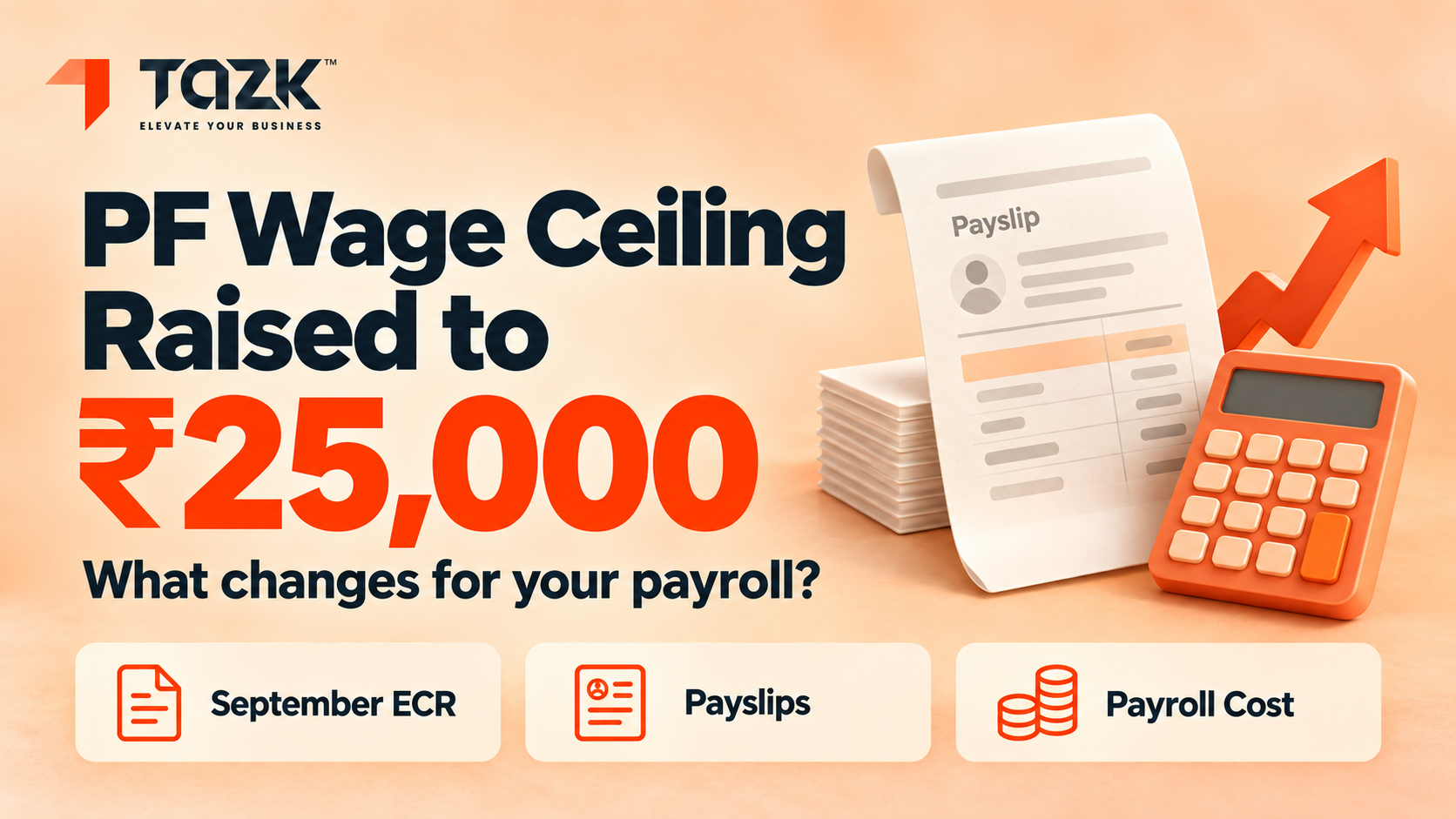
PF. PF is worked out on PF wages (basic pay + DA + retaining allowance). A separate bonus normally sits outside it. We cover the new ₹25,000 PF ceiling in a separate guide.
The bonus and any taxable gift value then appear in the salary TDS certificate, Form 130, under the 2026 rules.
The owner's checklist,the employee's rights and 5 mistakes to avoid
Owner's checklist: do these eight things this month
- Count your people. Did 20 or more work for you on any day of the year?
- List everyone who worked at least 30 days in 2025-26
- Ask your adviser which wage ceilings apply in your state.
- Find each person's base wage, and check it against the minimum wage for the job.
- Work out the minimum (8.33%), then decide the rate up to 20% based on your surplus.
- Run a TDS projection, and keep a running total of gifts per employee against ₹15,000.
- Pay by bank transfer, ideally by Dhanteras on 6 November, and never later than 30 November.
- Save the workings, payslips and bank proof. Still on spreadsheets? See the manual payroll errors that creep into bonus sums.
Employee's rights: what to know
- You may be covered if your firm has 20 or more people, you worked at least 30 days, and your wage is within the notified ceiling.
- Ask HR three questions: which ceiling, which base wage, and which rate.
- For 2025-26 the bonus should reach your bank account by 30 November 2026.
- A part-year worker gets a proportionate amount.
- If you are not paid, write to your employer first, then approach the labour authority.
- Following guides that still describe the repealed Payment of Bonus Act, including its cash-payment rule.
- Using the full salary when the wage is above the calculation cap.
- Treating Diwali week as the deadline.
- Calling the statutory bonus “ex-gratia” to avoid the obligation.
- Using the old ₹5,000 gift limit, or forgetting that a cash bonus raises TDS.
What happens next: your bonus outlook for 2026 to 2027
The bonus rules will keep moving as the labour codes settle in. Here are the dates we know, then expectations that we label as expectations.
| When | What | What to do |
|---|---|---|
| Mon 30 Nov 2026 | Bonus deadline for 2025-26 | Pay and file your records |
| Dec 2026 to Mar 2027 | Planning window | Set aside bonus money each month for next year |
| 1 Apr 2027 | Financial year 2026-27 starts | Reset your accrual, recheck the ceilings |
| June 2027 | First Form 130 salary certificates | Check that bonus and gift values show correctly |
| 30 Nov 2027 | Bonus deadline for 2026-27 | Same eight-month rule |
What may come next (expectations, not promises):
- A notified wage ceiling. The Code leaves the eligibility figure to the government, and TaxGuru's summary says it was still awaited. If it rises above ₹21,000, more employees will become eligible. Check your payroll against a higher line now.
- A bonus base that follows minimum wages. Because the base can be the minimum wage, a rise in minimum wages can lift your bonus bill. SGCMS tracks minimum wage and labour-code notices, including a central-sphere revision from 1 October 2026.
- More state and territory rules. SGCMS posted final labour code rules for Ladakh and Lakshadweep on 5 October 2026, so the picture is still filling in.
- More digital records. Bank-credited bonus, Form 130 and ECR filings all leave a trail. Expect inspectors to ask for it
The safest plan is plain: write down which ceiling and base you used, pay by bank, and keep proof.