Payroll & HR Compliance Software for Businesses in Pune: What Changed in 2026
13 min read | By Lokesh A

Table Of Contents
Social Media




A city that runs on two very different clocks
Pune is an unusual city to run payroll for, and most generic advice doesn't account for why.
On one side, you have IT parks in Hinjawadi and Kharadi, full of software companies and global capability centres, with salary structures built around high CTC packages, multiple allowances, and flexible benefits. On the other, you have decades-old manufacturing and auto-ancillary units along the Pune-Aurangabad-Nashik industrial belt, running shift based, wage-driven payroll with a completely different rhythm.
Both types of business sit in the same state, under the same Maharashtra rules — but those rules hit each one differently. This article walks through exactly what changed for Pune employers in 2026, and what a payroll system actually needs to handle correctly.
The Change Almost Nobody Has Fully Updated For
Here's the single biggest shift, and it affects every Pune employer, regardless of industry.
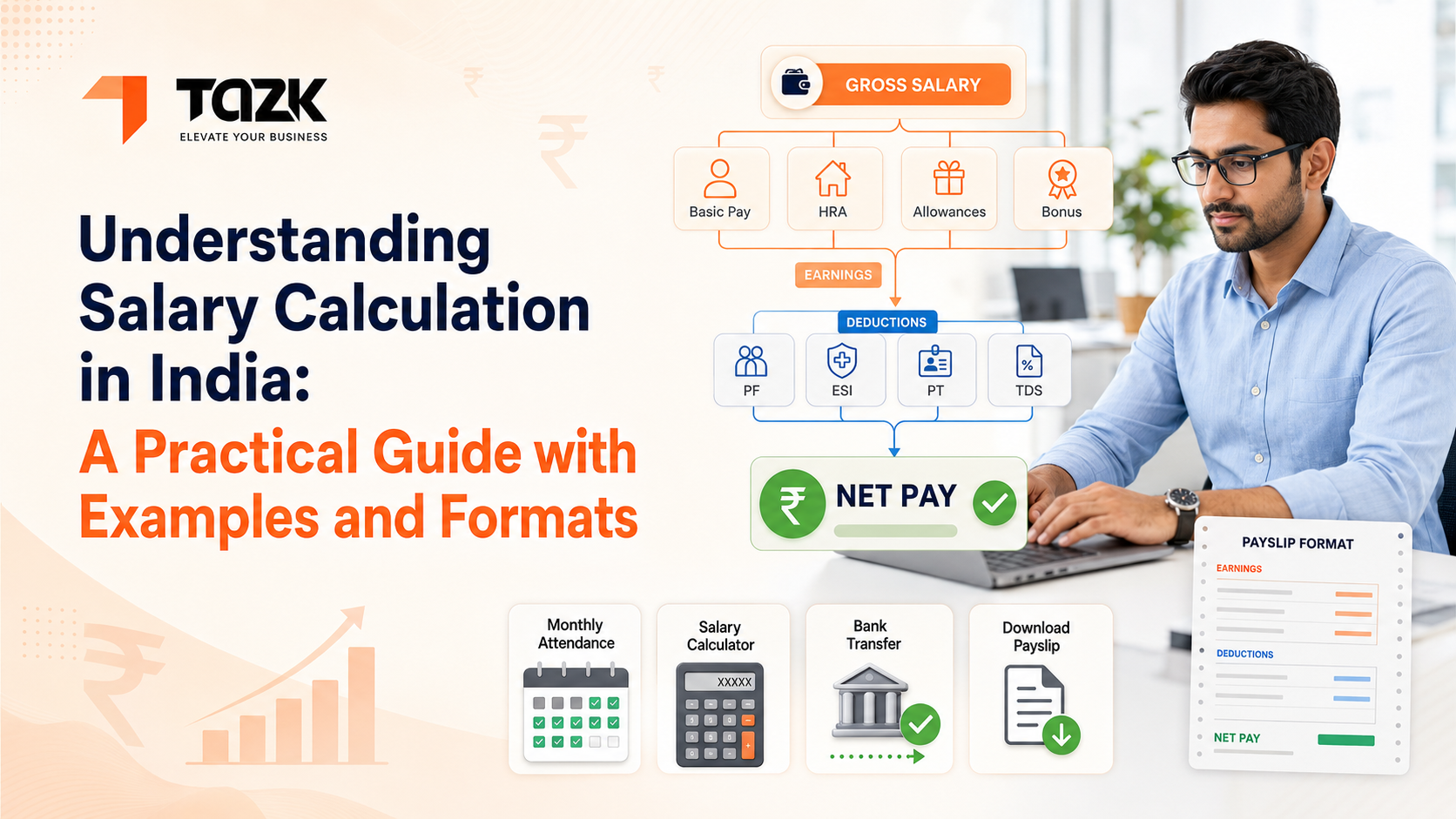
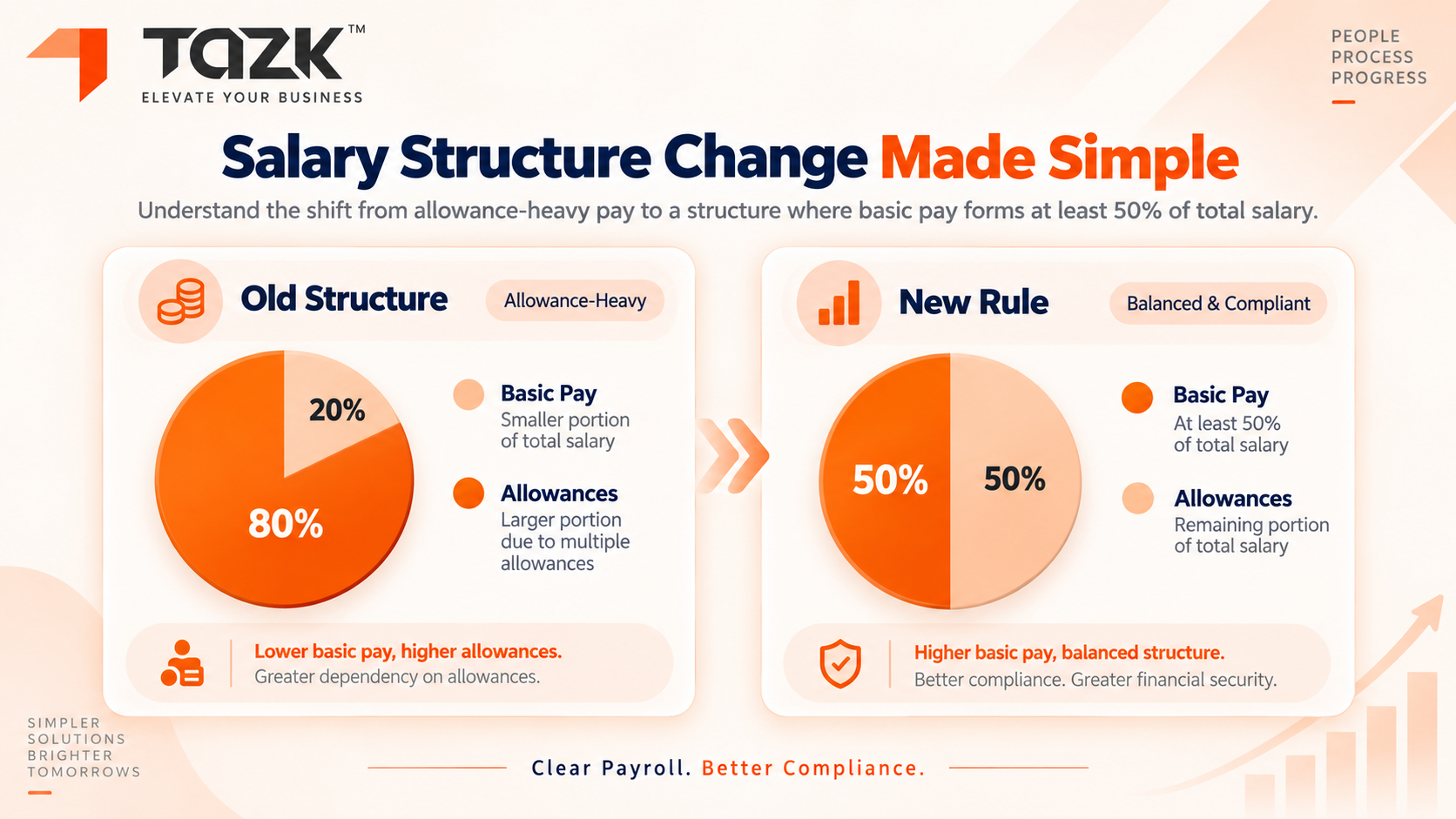
Under India's new Labour Codes, "wages" now has one uniform legal definition. It requires that basic pay must be at least 50% of an employee's total CTC (source: HR Tailor, Maharashtra Labour Law Compliance Guide 2026). This sounds technical, but it has a very real effect. Many companies, especially in IT, have historically structured salaries with a small basic pay and a large share of allowances. Part of the reason was that it reduced PF and gratuity contributions. That structure no longer works the same way.
In plain terms: if your current salary structures were built years ago, before this rule, pay attention. A meaningful share of them may now be technically non-compliant. Not because anyone did anything wrong — the definition of "wages" underneath them just changed. This affects PF contributions, gratuity calculations, and bonus calculations all at once, since all three are calculated from this same wage definition.
Maharashtra's Specific Compliance Calendar
Beyond the wage definition change, Maharashtra layers several state-specific obligations on top of central rules. Here's what actually applies.
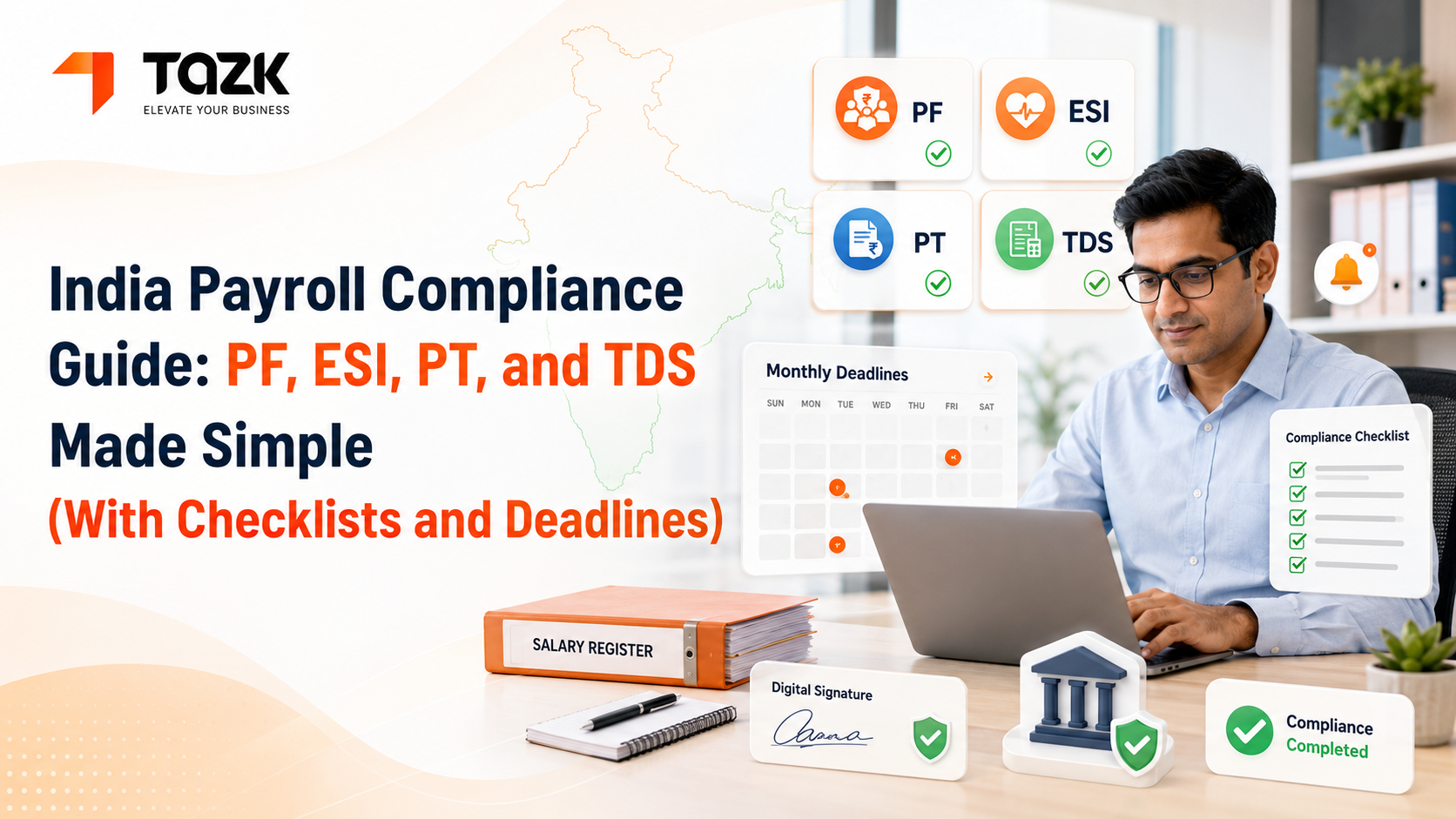
Professional Tax. Men are taxed starting from ₹7,500 a month. Women are exempt until ₹25,000 a month. It's collected monthly, at ₹200, with a slightly higher amount of ₹300 in February to round out the annual total (source: eZHRM, Professional Tax India 2026).
Maharashtra Labour Welfare Fund (LWF). This is a separate, easy-to-miss obligation. Any establishment with 5 or more employees must contribute — employees pay ₹25 per half year, employers pay ₹75 per half-year, for a combined ₹100 every six months per employee. Contributions are due twice a year: 15 July (for the January–June period) and 15 January (for the July–December period) (source: FactoHR, Maharashtra Labour Welfare Fund). These rates were actually revised upward from ₹12/₹36 by the Maharashtra LWF Amendment Act, 2024, so if your payroll system still references the old numbers, it's out of date.
Shops and Establishments registration. Under the newer Maharashtra Shops and Establishments Act, 2017, registration must happen online within 60 days of starting operations, through the state's portal. Unlike the old rules, this registration is valid for the establishment's lifetime — no annual renewal needed (source: HRTailor).
The practical trap here is simple: December 31 is the single most commonly missed LWF deadline nationally, because year-end payroll is already closed and the holiday season swallows the reminder. Setting an internal reminder for mid-December, well before the 15 January due date, avoids this entirely.
What's Still in Motion (And Why That Matters for Pune)
Maharashtra isn't finished updating its rules — and Pune employers should know exactly what's settled versus what's still changing.
The Maharashtra Industrial Relations Rules, 2026 are the state's operating rulebook under the central Industrial Relations Code. They were published in draft form on 28 April 2026. As of recent tracking, they remained under public consultation rather than finally notified (source: Praans Consultech, Maharashtra Industrial Relations Rules 2026). These rules matter a great deal for Pune's manufacturing base specifically, since they set thresholds like:
- 300 or more workers — mandatory Standing Orders and prior permission requirements for layoffs.
- 100 or more workers — a mandatory Works Committee.
- 20 or more workers — a mandatory Grievance Redressal Committee.
- 7 or more workers — eligible to register as a Trade Union.
For Pune's larger auto-ancillary factories, several of these thresholds are directly relevant right now. Since the rules are still in draft, staying updated as they finalise matters more than treating today's draft as permanent.
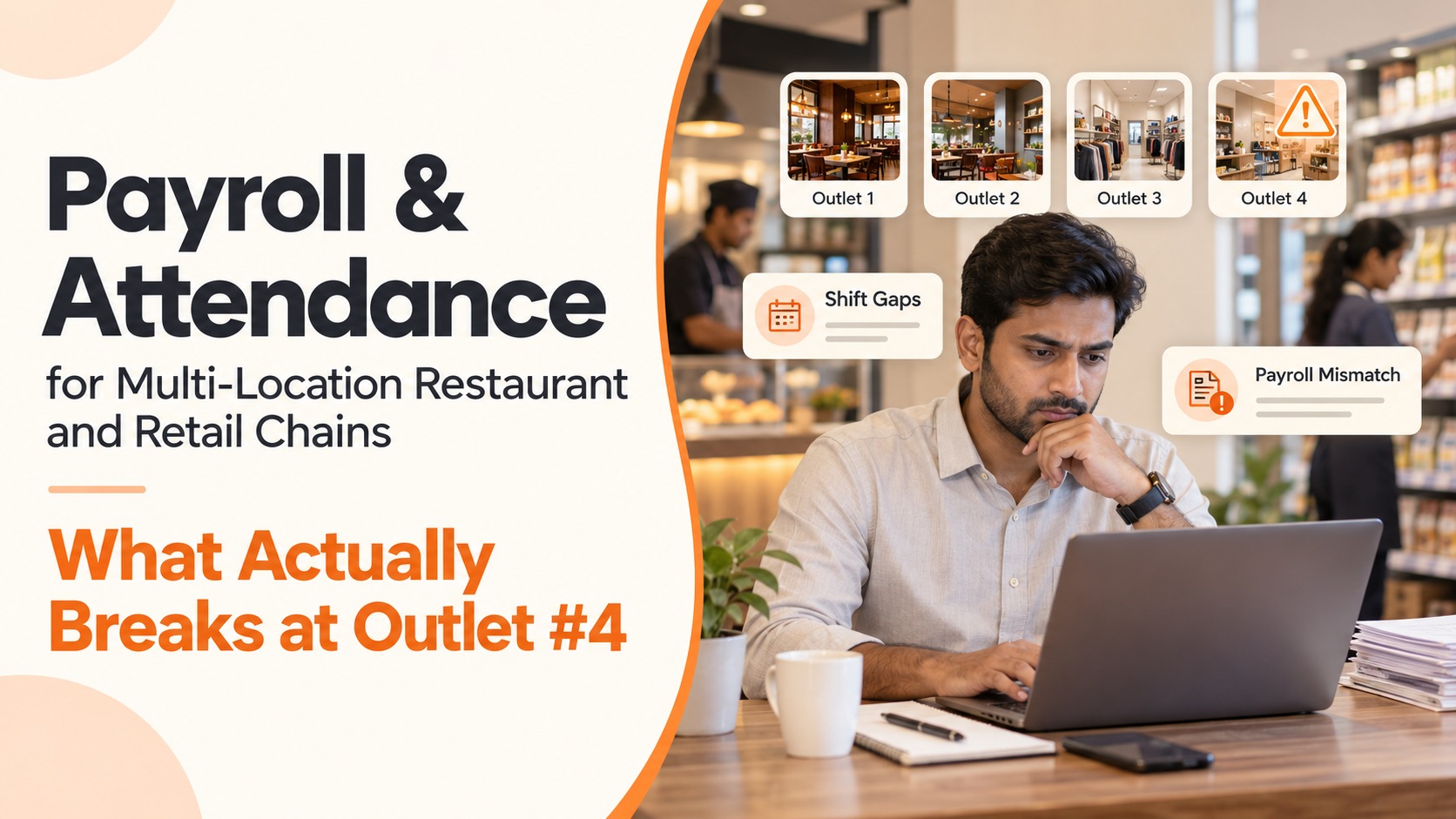
Why Pune's Two Industries Need Genuinely Different Attendance Handling
It's worth spelling out exactly why treating IT and manufacturing payroll the same way causes problems, since this is where many Pune businesses first notice their system isn't working well.
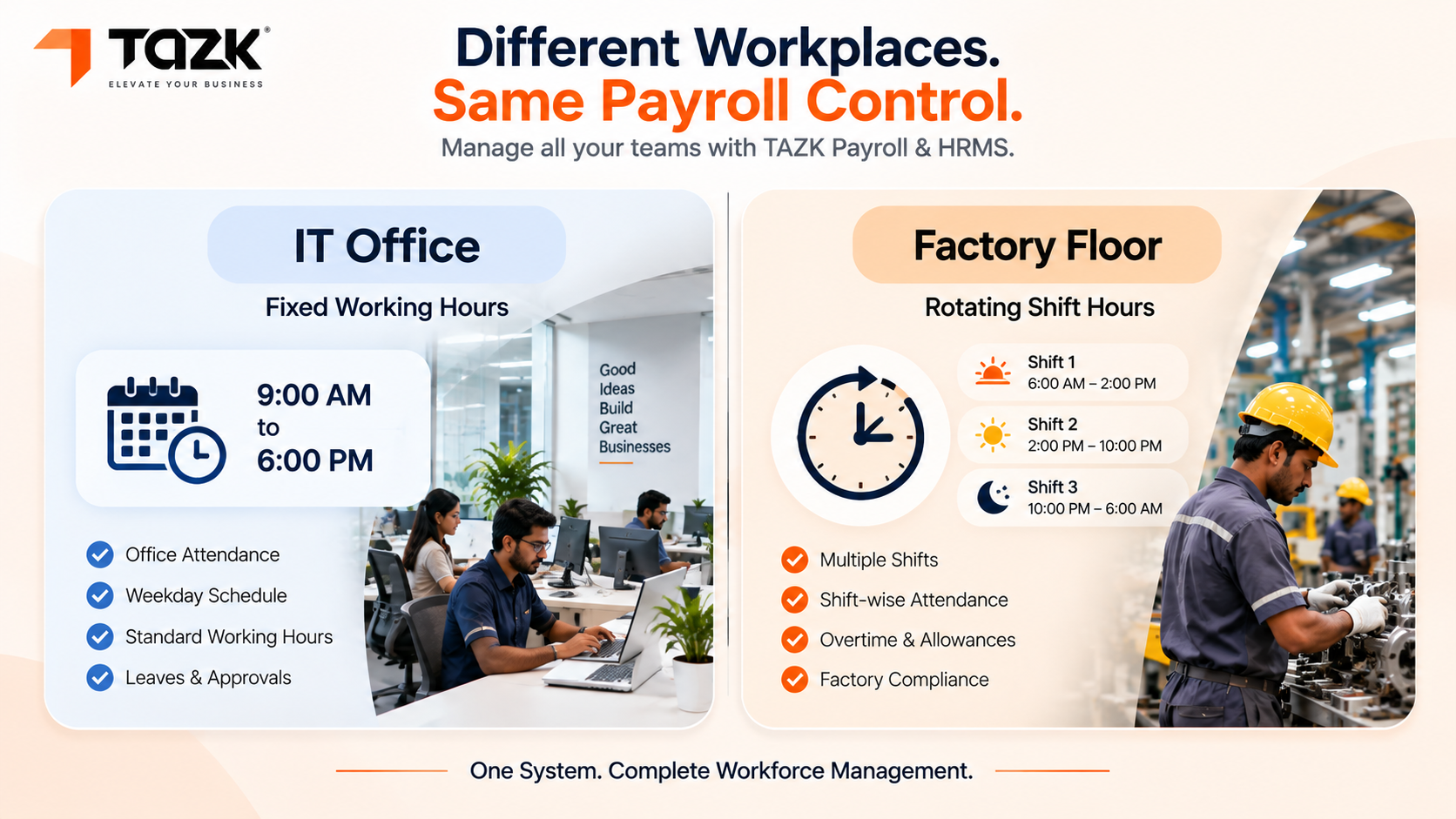
A software engineer in a Kharadi office typically works a fixed schedule, takes planned leave, and rarely deals with overtime in the traditional sense. Attendance is mostly about confirming presence and tracking leave balances correctly.
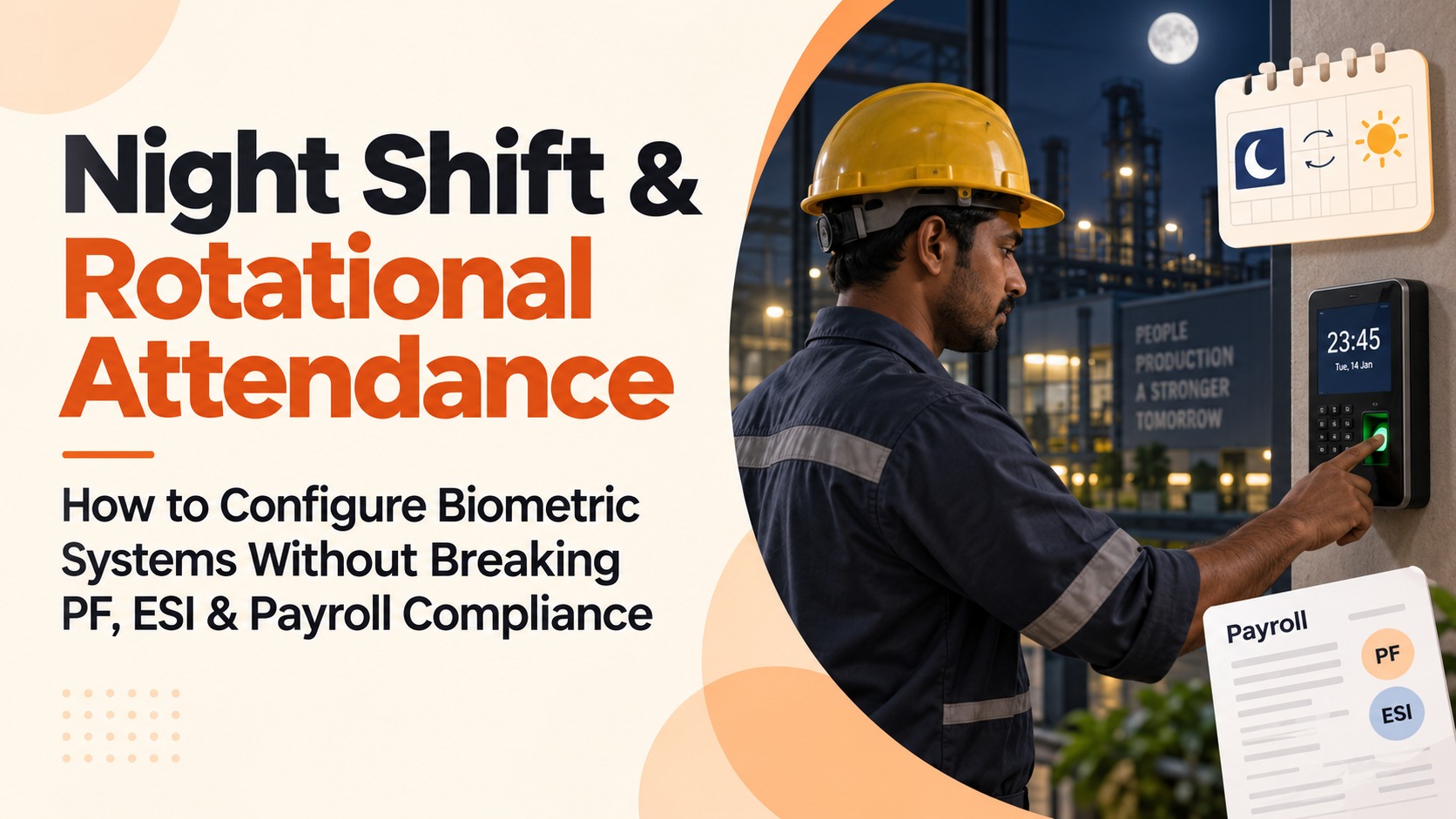
A factory worker in a Chakan auto-ancillary unit often works rotating shifts, earns overtime pay calculated by the hour, and may be entitled to a night shift allowance that changes the wage calculation entirely. Getting this wrong doesn't just create an annoyed employee — it creates a wage calculation that may not match what labour law actually requires for that shift pattern.
A business running both types of operations under one roof, or across nearby locations, needs a system that can apply the right logic to each group automatically — rather than forcing one team to use workarounds designed for the other's schedule.
Five Things That Trip Up Pune Employers Specifically
1. Assuming IT-sector salary structures are automatically compliant. The new 50% basic-pay rule affects high-CTC, allowance-heavy structures more than simpler ones — exactly the structures common across Pune's IT parks.
2. Forgetting LWF because it's small and infrequent. ₹100 per employee every six months feels too small to matter, which is exactly why it's commonly missed — the amount is trivial, but the penalty for missing it isn't.
3. Treating manufacturing and IT payroll the same way. Shift-based factory payroll, with overtime and multiple shift allowances, needs different attendance handling than salaried IT staff — a system that only handles one well will struggle with the other.
4. Not tracking draft rules as they finalise. Industrial Relations Rules specifically are still in motion. A payroll or compliance process built assuming today's draft is final risks falling behind the moment it's officially notified.
5. Registering once and forgetting registration exists. Because Shops and Establishments registration no longer needs annual renewal, some businesses forget it needs updating when key details — like registered address or employee count — genuinely change.
How Tazk Handles This
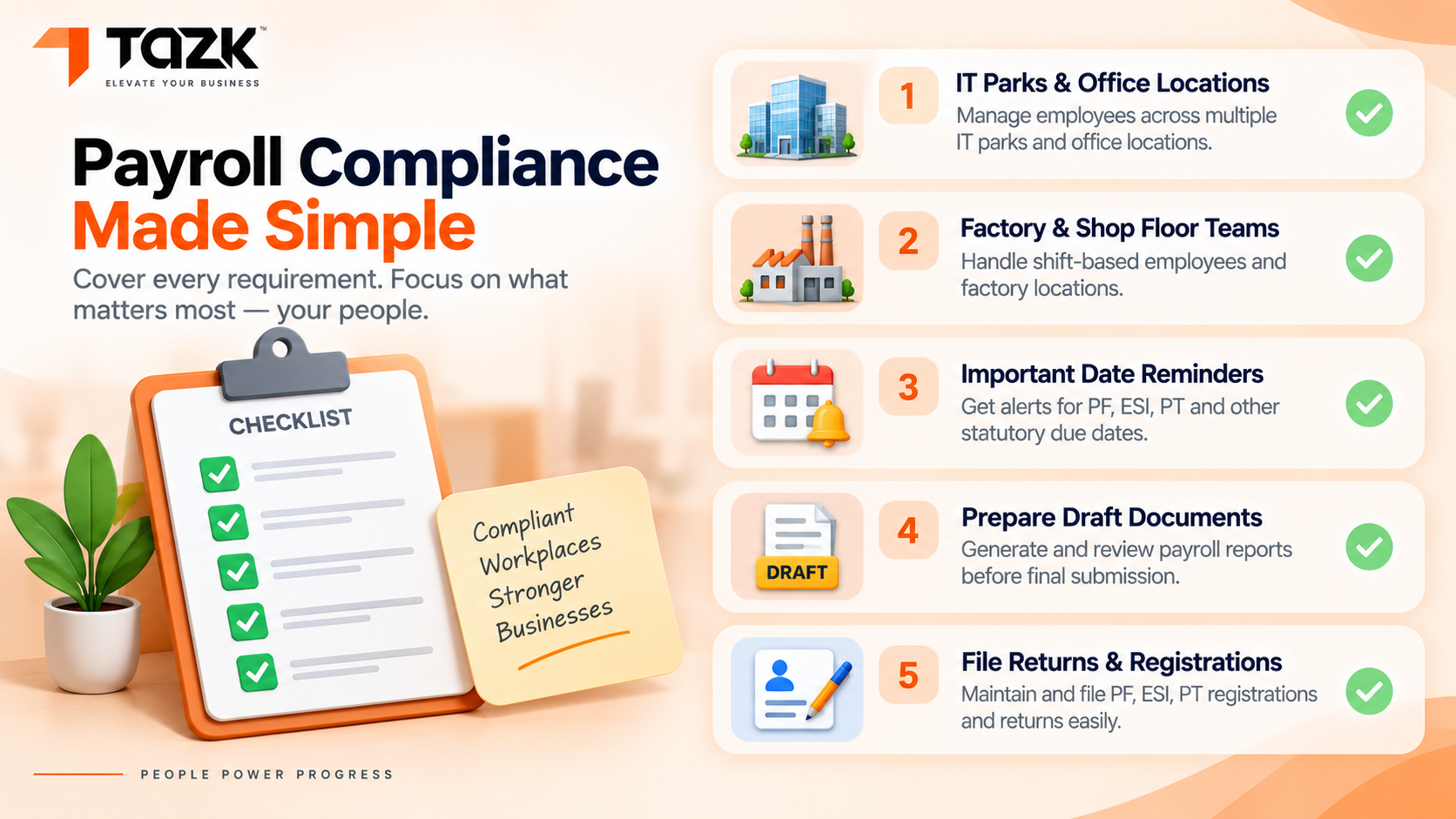
Tazk's Payroll & HRMS module is built to handle exactly this kind of mixed compliance environment:
- Automatic wage-definition compliance checks, flagging salary structures where basic pay falls below the required share of CTC.
- Maharashtra-specific PT and LWF rules built in, including the correct half-yearly LWF amounts and due dates, so nothing depends on someone remembering a small, easy-to-forget obligation.
- Separate, appropriate handling for shift-based and salaried staff, so a manufacturing floor and an IT office can run on the same platform without forcing one to work like the other.
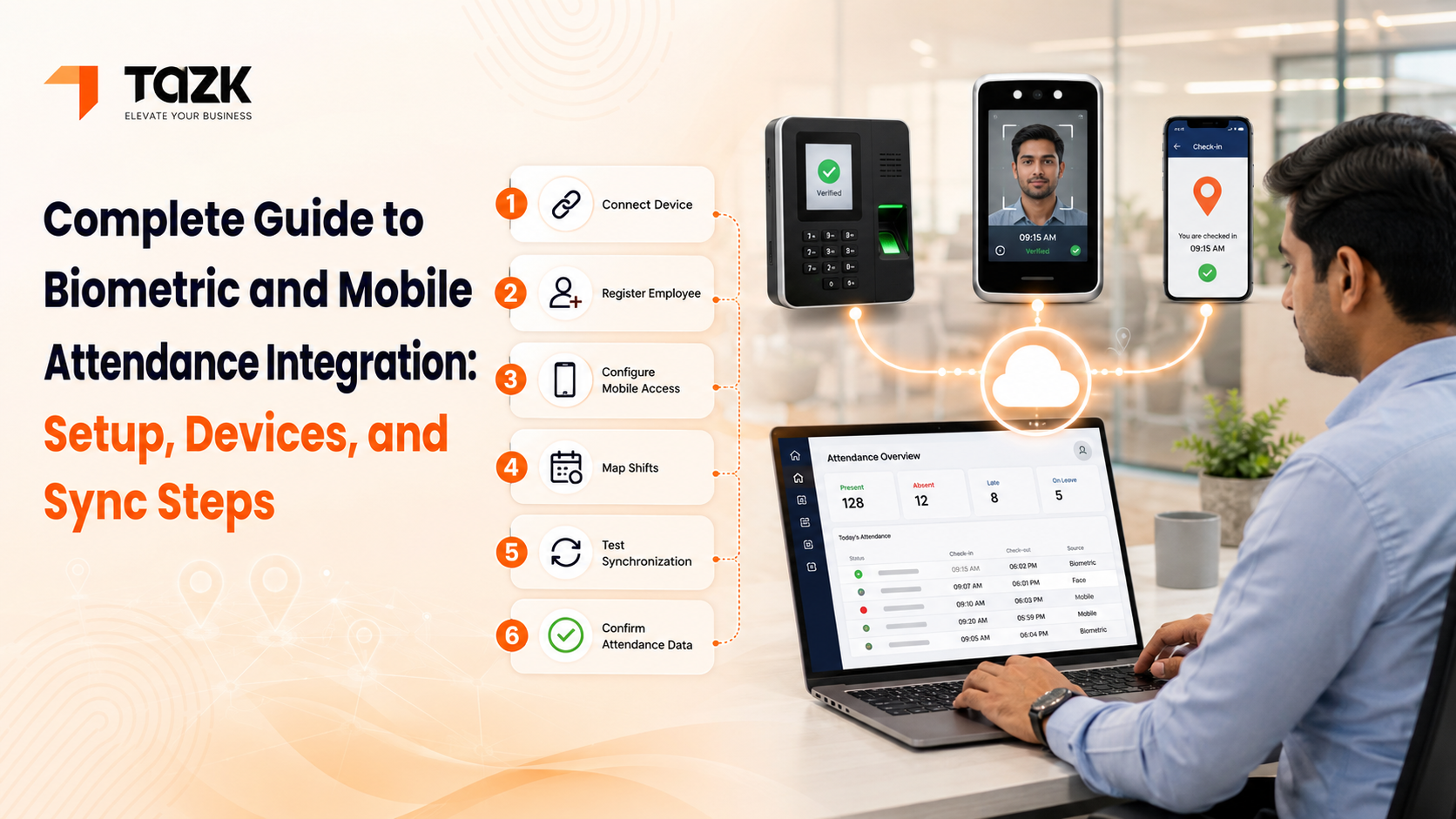
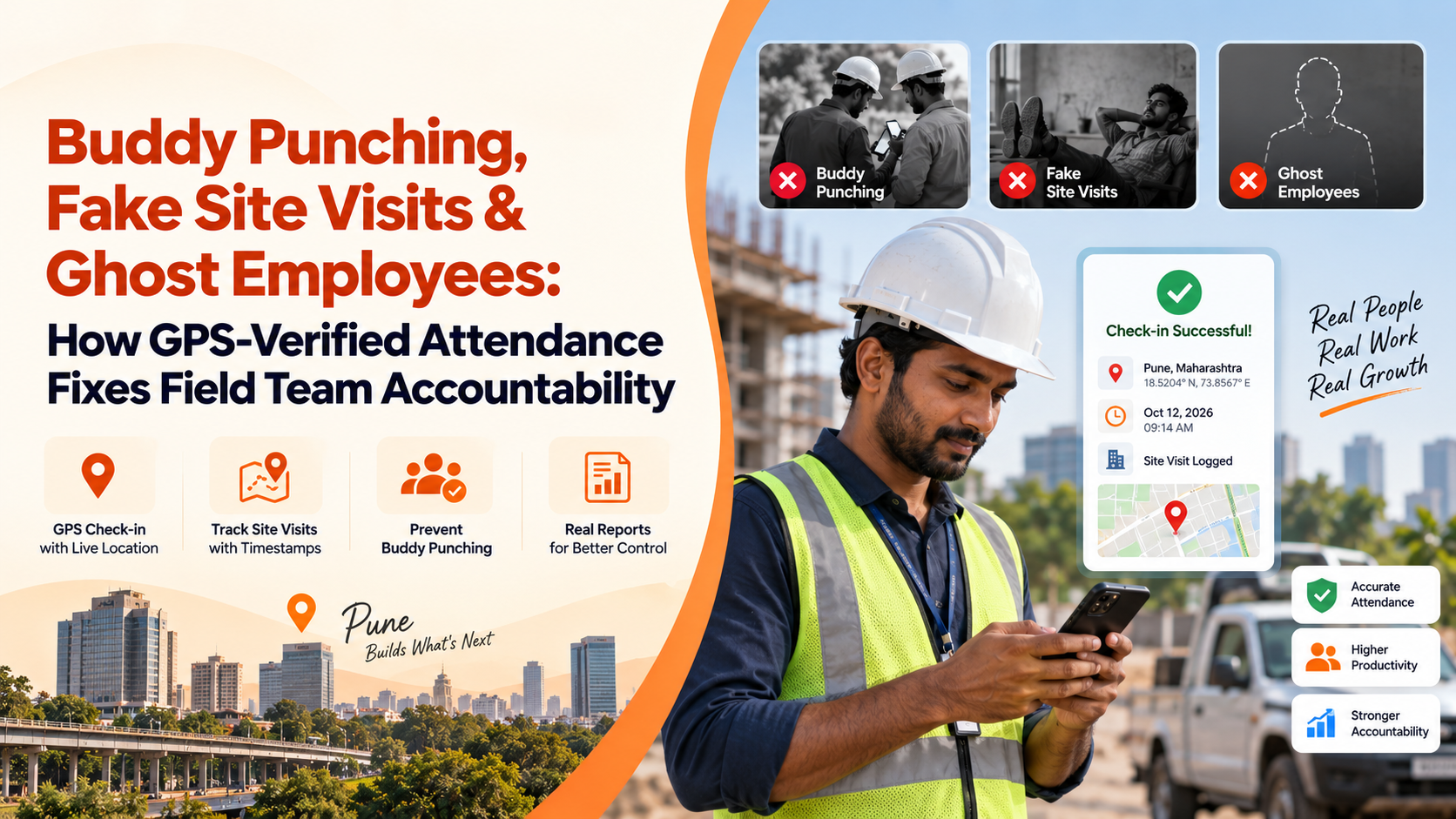
- GPS and face-recognition attendance for factory floors and field staff, integrated directly with payroll calculation.
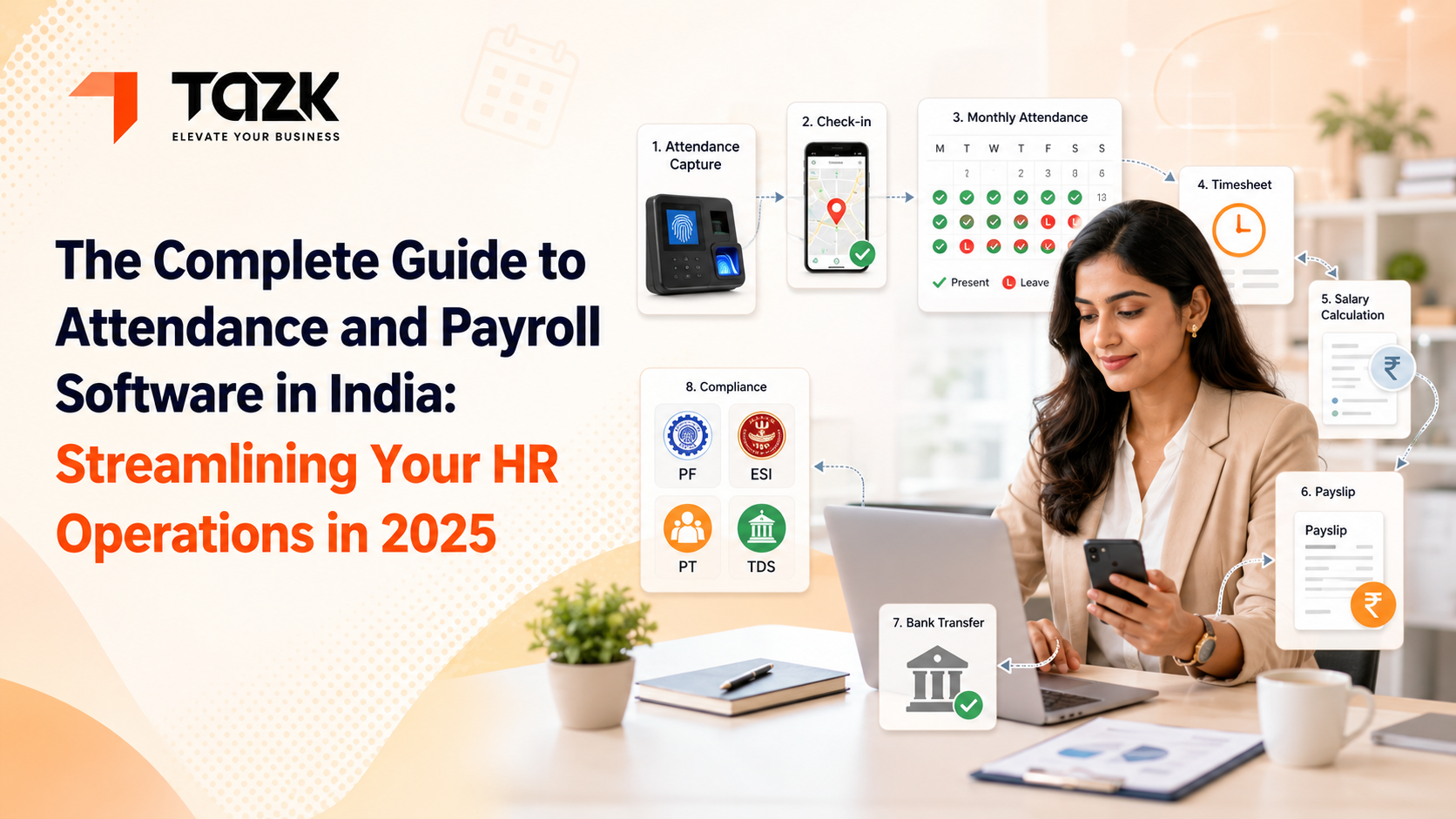
If you're running payroll across more than just Pune, our guide on attendance and payroll software in India covers the broader foundations of managing this consistently as you grow.
A Realistic Example
Picture a mid-sized auto-component manufacturer near Chakan, on Pune's industrial outskirts, with around 180 factory floor employees and a smaller office staff of 25.
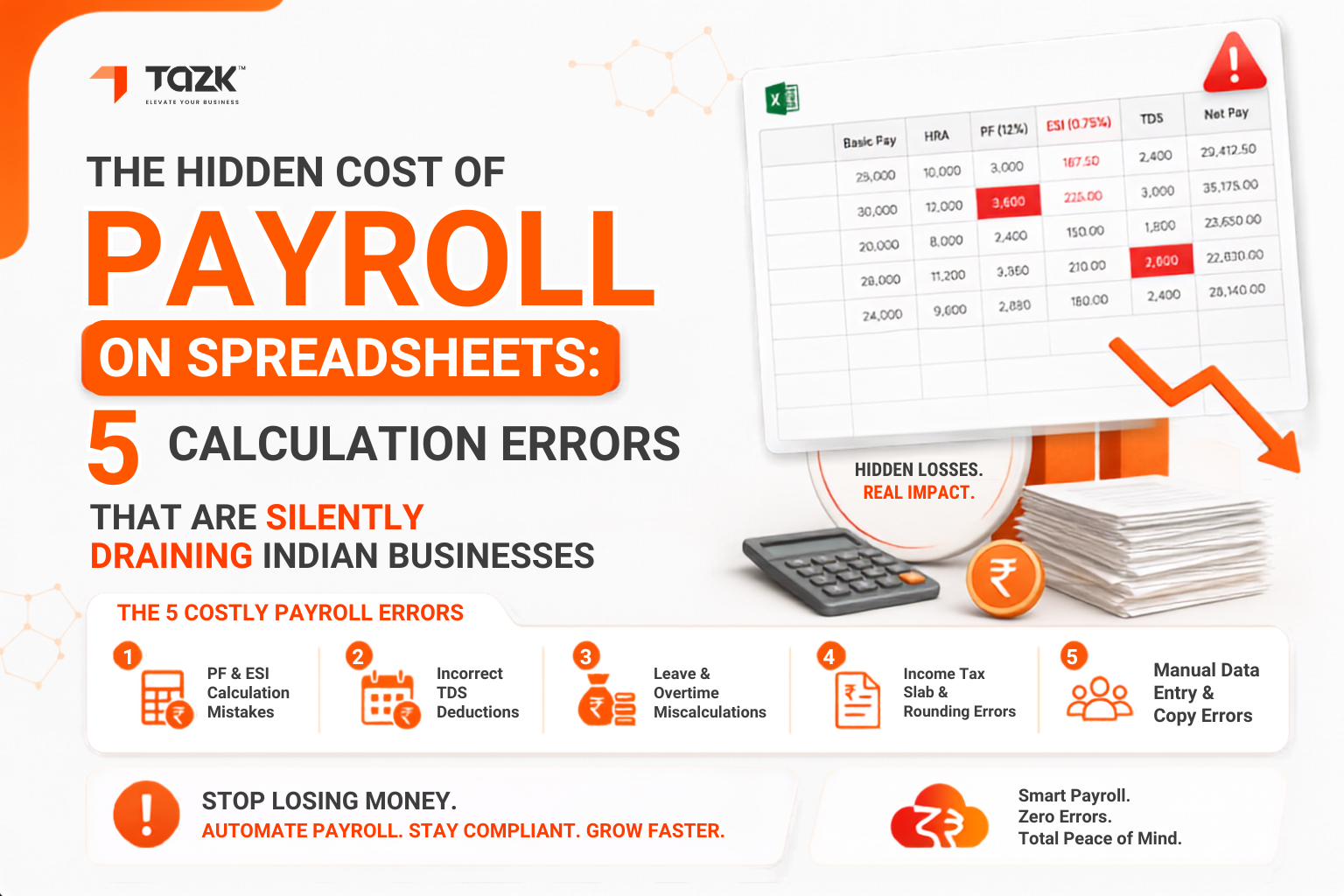
For years, LWF contributions were handled manually by a single HR executive, tracked in a spreadsheet alongside a dozen other compliance dates. One December, the holiday rush meant the July–December LWF cycle was deposited three weeks late — triggering a notice from the Labour Welfare Board and an unplanned scramble to explain the delay.
After moving compliance dates into a system that tracks Maharashtra's specific due dates automatically, the fix wasn't about hiring more HR staff. It was about removing the dependency on one person remembering a small, infrequent, easy-to-forget deadline in the middle of a busy season — the system now flags it weeks in advance, every cycle, without exception.
What's Changing Next
The Maharashtra Industrial Relations Rules will finalise eventually, and thresholds may shift when they do. Pune manufacturers with workforce counts near the 20, 100, or 300 worker thresholds should watch this closely, since crossing one triggers new obligations immediately.
The 50%-basic-pay wage definition will keep reshaping salary structuring conversations. As more companies review and adjust existing structures to comply, expect this to become a standard part of any new hire's offer letter discussion, not just a backend payroll calculation.
LWF rates and thresholds continue to be revised across states. Maharashtra's own 2024 increase is a good example. Even small, seemingly stable compliance items can change with little warning. They're worth reviewing periodically rather than assuming they're fixed forever.
Pune's dual identity — IT hub and manufacturing base — means payroll compliance isn't one-size-fits-all, even within a single state. Get the wage definition right. Don't lose track of small but real obligations like LWF. Build a system flexible enough to handle both a shift worker and a software engineer correctly. Do this, and Maharashtra's rules stop being a quiet risk and become routine.
See how Tazk automates PF, PT and ESI for Maharashtra businesses — book a free review. Book a demo or start a free trial today. Visit tazk.in to explore all connected modules.