Top 10 POS Software in India (2026): Comparison Checklist
15 min | By Lokesh A
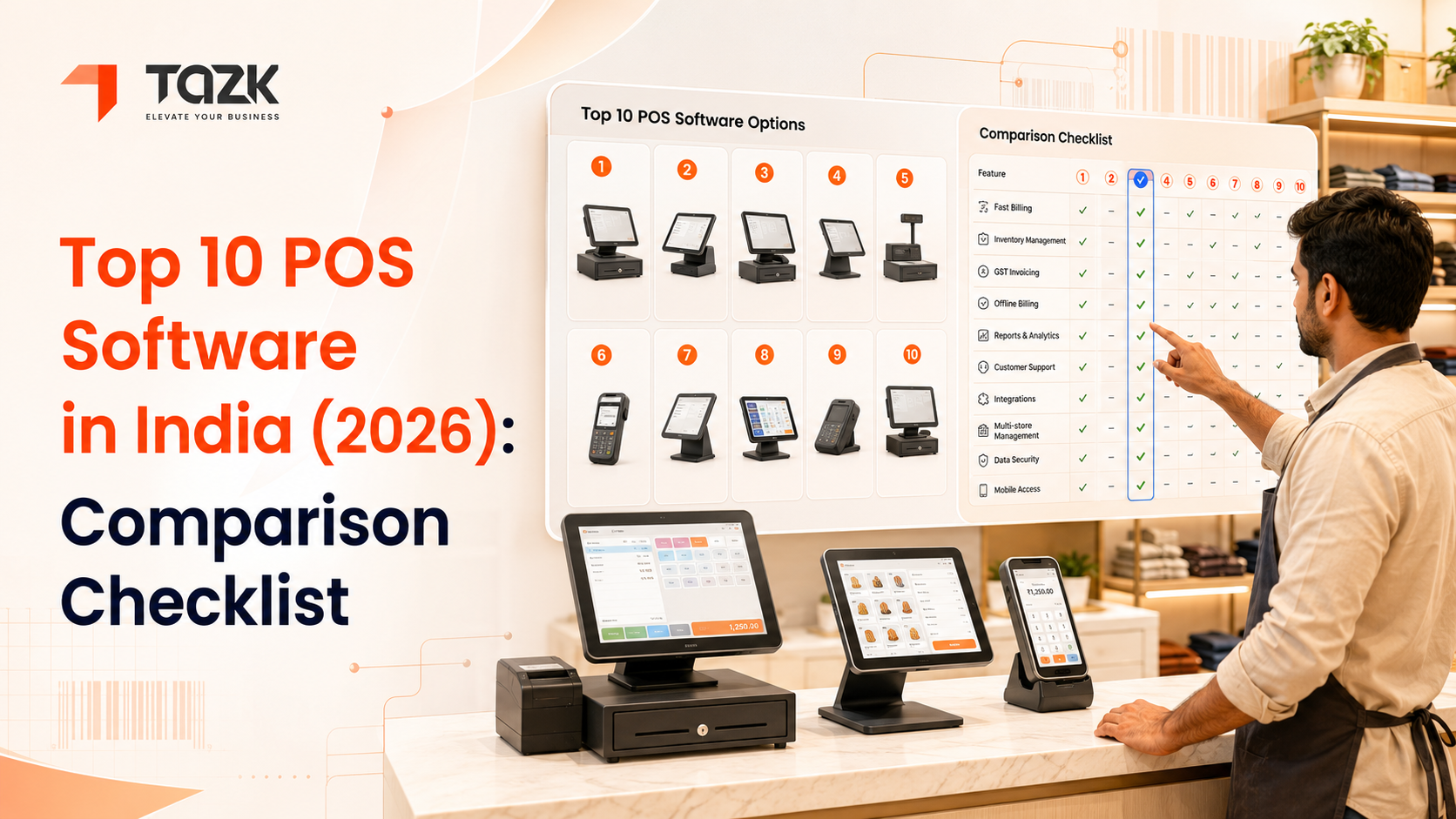
Table Of Contents
Social Media




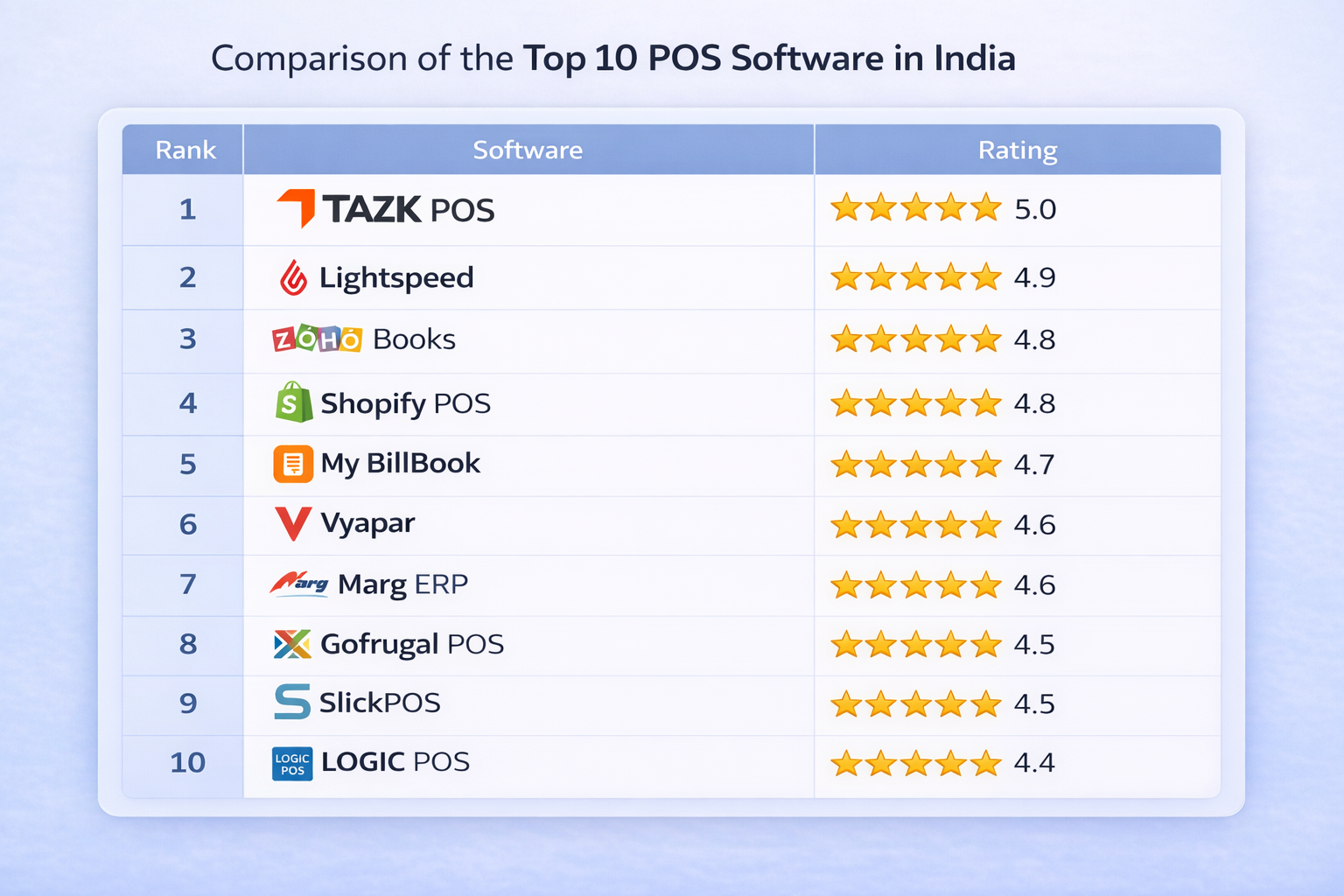
Choosing the right point of sale system can transform how your business operates, but with hundreds of options flooding the Indian market, making the right choice feels overwhelming. You need software that handles your specific business type, fits your budget, works reliably with India's internet infrastructure, and actually makes your daily operations easier rather than more complicated. This comprehensive comparison of the top 10 POS software in India breaks down exactly what each solution offers, who it's best suited for, and how they stack up against each other.
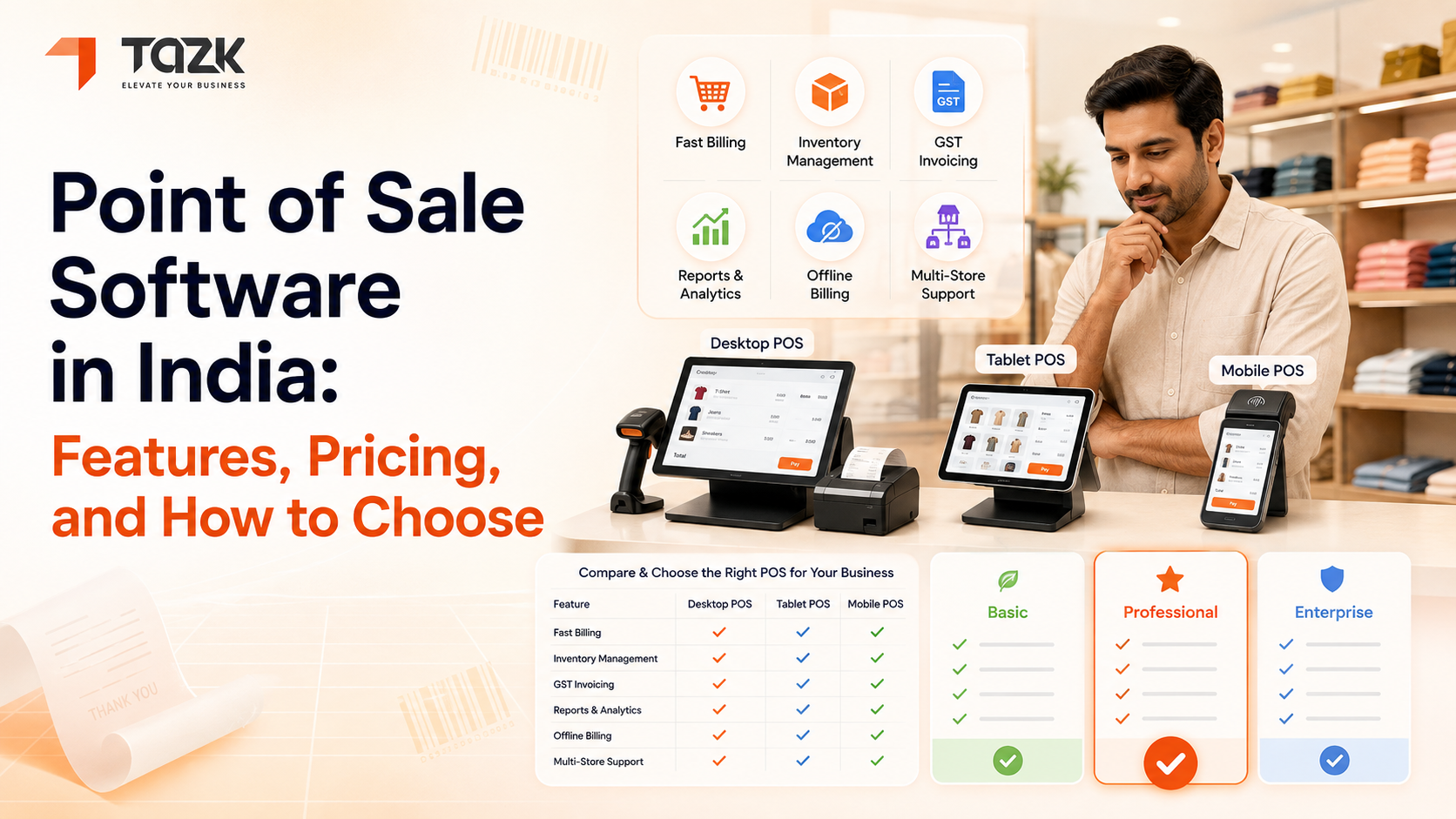
Whether you're opening your first retail store, upgrading from an outdated system, or expanding to multiple locations, understanding the strengths and weaknesses of leading POS platforms helps you make an informed decision. We've evaluated these solutions based on features, pricing, ease of use, customer support, and real-world performance in Indian business environments. If you're just getting started with understanding POS systems, check out our comprehensive guide to point of sale software in India for foundational knowledge before diving into specific vendor comparisons.
1. Tazk POS
TAZK POS is built for Indian businesses that want faster billing, better inventory control, and cleaner reporting without complicated setup. It suits retail stores, small chains, service counters, and businesses that need GST-ready billing with day-to-day simplicity.
Key Features: TAZK POS supports barcode billing, inventory tracking with low-stock alerts, GST invoice formats, customer and supplier management, and role-based access for staff. It helps you manage products with variants like size and color, track purchases and sales in one place, and view daily, weekly, and monthly reports to monitor revenue, top-selling items, and margins. It can also support multi-branch operations so you can monitor sales and stock across locations from one dashboard, depending on your plan and setup.
Pricing: TAZK POS typically follows a subscription model with monthly or annual plans based on your business size, number of users, and modules you enable. Keep your pricing section clear with 2 to 3 tiers, for example single outlet, growing business, multi-location, and mention what each tier includes such as users, branches, and support. If you offer a setup fee or add-ons like extra branches, include those as separate line items.
Best For: Retailers who want barcode billing and inventory in one system, businesses that need GST-compliant invoices, owners who want simple staff controls, and shops planning to expand to 2 to 10 locations and want one place to track sales and stock.
Limitations: Your readers should know the trade-offs up front. For example, businesses with very complex enterprise workflows may need deeper customization, and teams migrating from older systems may need data cleanup and structured onboarding for smooth adoption. If you rely on the internet for certain features like cloud sync, explain what still works during low connectivity and what syncs later.
2. Vyapar
Vyapar has rapidly gained popularity among small and medium Indian businesses due to its simplicity, affordability, and mobile-first approach. It's essentially a comprehensive business management app that puts powerful POS capabilities in your smartphone.
Key Features: Vyapar excels at ease of use—you can start billing within minutes of download. It generates professional GST invoices automatically, tracks inventory with low-stock alerts, manages expenses and purchases alongside sales, creates professional quotations and delivery challans, and provides basic analytics on sales trends and party-wise reports. The offline mode works flawlessly, crucial for Indian businesses facing connectivity issues. Data syncs across multiple devices automatically when online
Pricing: Vyapar offers a freemium model with basic features free forever for businesses processing limited transactions. Premium plans start at ₹4,999 annually (approximately ₹415 monthly), which is extremely affordable compared to competitors. They occasionally offer lifetime plans during promotional periods.
Best For: Small businesses and startups with limited budgets, mobile-first businesses that prefer managing everything from smartphones, service businesses that need invoicing more than complex inventory management, and solopreneurs managing their own finances without dedicated accounting staff.
Limitations: Advanced inventory features are limited compared to enterprise solutions. Multi-location management capabilities are basic. Restaurant-specific features like table management are absent. The system is primarily designed for Indian businesses, so international expansion isn't its strength.
3. Ginesys
Ginesys positions itself as an enterprise retail management platform rather than just POS software. It's widely used by organized retail chains, fashion brands, and multi-location businesses across India.
Key Features: Ginesys offers true omnichannel capabilities that unify online and offline sales, sophisticated inventory management handling variants, sizes, and colors effortlessly, centralized management for multiple stores with role-based access control, customer relationship management with loyalty programs and targeted marketing, comprehensive analytics and business intelligence dashboards, and integration with major e-commerce platforms. Their fashion retail module handles complex scenarios like buy-one-get-one offers and matrix-based inventory.
Pricing: Ginesys pricing is customized based on business size and requirements, typically starting around ₹2,500-₹5,000 per month per location for subscription plans. Enterprise implementations can cost significantly more depending on modules selected and customization needs.
Best For: Retail chains with multiple locations, fashion and apparel businesses managing extensive size-color-style combinations, organized retail seeking enterprise-grade solutions with strong analytics, and businesses selling across online and offline channels simultaneously.
Limitations: Higher price point makes it less suitable for very small businesses. Implementation complexity requires dedicated training time. Overkill features for single-location small retailers who don't need enterprise capabilities.
4. GOFRUGAL
GOFRUGAL has established itself as a versatile POS solution serving retail, restaurants, and distribution businesses across India. Their industry-specific modules provide tailored functionality rather than one-size-fits-all approaches.
Key Features: GOFRUGAL offers separate industry-specific versions for retail, restaurants, and distribution, each optimized for that sector. Restaurant features include table management, kitchen order tickets, recipe management, and delivery integration with Swiggy and Zomato. Retail features emphasize variant management, promotion engines, and customer loyalty. The cloud-based architecture enables access from anywhere, while offline mode ensures continuity during network issues. Comprehensive reporting includes sales analysis, inventory valuation, and employee performance tracking.
Pricing: Subscription pricing starts around ₹1,499 per month for basic retail plans, with restaurant modules priced slightly higher at ₹1,999-₹2,999 monthly depending on features. Annual subscriptions offer approximately 20% discount. On-premise licenses are also available starting around ₹25,000.
Best For: Restaurants and QSRs needing table management and kitchen integration, multi-format retailers operating different store types, distribution businesses with field sales teams, and growing businesses planning to scale from single to multiple locations.
Limitations: Some users report occasional sync delays in cloud versions. Customer support response times vary by region. Advanced customization requires technical assistance from the GOFRUGAL team.
5. Lightspeed Retail
Lightspeed is a global POS platform with strong presence in India, particularly popular among lifestyle, fashion, and specialty retail businesses. It's cloud-native with modern design and robust e-commerce integration.
Key Features: Lightspeed excels at omnichannel retail with seamless Shopify and WooCommerce integration, sophisticated inventory management that tracks products across warehouses and stores in real-time, advanced analytics and reporting with customizable dashboards, customer management with detailed purchase history and automated marketing, and employee management with shift tracking and performance metrics. The iPad-based POS provides a modern, intuitive interface that staff learn quickly.
Pricing: Lightspeed follows a tiered subscription model starting around $69 (approximately ₹5,800) monthly for basic plans, going up to $199+ (approximately ₹16,500) for advanced features. Pricing is in USD which creates currency fluctuation considerations for Indian businesses.
Best For: Fashion and lifestyle retailers selling online and offline, specialty stores with curated product selections, businesses prioritizing modern design and user experience, and retailers planning international expansion who need global platform capabilities.
Limitations: Higher pricing compared to India-specific competitors. USD-based pricing subject to exchange rate fluctuations. Some features are designed for Western markets and may not perfectly align with Indian business practices. Customer support primarily operates during international hours
6. Pine Labs Plural
Pine Labs, already dominant in the payment terminal market in India, offers Plural as their comprehensive POS and business management platform. The tight integration between payment processing and POS software is a unique advantage
Key Features: Plural provides seamless payment integration since Pine Labs controls the entire stack from software to payment terminals, comprehensive retail management including inventory, billing, and customer engagement, EMI and cardless EMI options integrated directly in POS, loyalty program management with Pine Labs' extensive network, and analytics covering both sales and payment trends. The platform handles retail, restaurants, and service businesses with industry-specific modules.
Pricing: Pricing is typically bundled with Pine Labs payment terminals and varies based on transaction volume and features required. Monthly subscriptions generally range from ₹1,500-₹4,000, often combined with payment terminal rental or purchase.
Best For: Businesses already using or planning to use Pine Labs payment terminals, retailers offering EMI and cardless EMI facilities frequently, multi-location chains seeking integrated payment and POS management, and businesses prioritizing payment processing reliability and integration.
Limitations: Full benefits require using Pine Labs payment ecosystem. Less flexible if you prefer using different payment processors. Customization options are more limited than some competitors.
7. Shopify POS
Shopify POS extends the popular e-commerce platform into physical retail, creating truly unified commerce where online and offline sales are managed identically. It's ideal for businesses that started online and are now opening physical locations, or existing retailers expanding to e-commerce.
Key Features: Shopify POS offers perfect synchronization between online and offline inventory—sell the same product across all channels with automatic stock updates, unified customer profiles showing all purchases regardless of channel, centralized product management where you add products once and they appear everywhere, powerful analytics combining online and offline sales data, and extensive app ecosystem with thousands of integrations. The iPad-based POS is extremely user-friendly with minimal training required.
Pricing: Shopify POS pricing starts at $89/month (approximately ₹7,400) for the basic plan, which includes both the online store and POS system. Advanced features like unlimited staff accounts and advanced reporting require higher-tier plans at $299/month (approximately ₹25,000).
Best For: E-commerce businesses opening physical stores, retailers wanting to sell online and offline seamlessly, businesses in fashion, beauty, or lifestyle sectors with strong online presence, and stores prioritizing modern, Apple-ecosystem-based operations.
Limitations: Requires Shopify online store subscription even if you only need POS. Pricing is USD-based with currency conversion considerations. Some features are designed for Western markets. Offline mode is functional but more limited than India-specific competitors built for unreliable connectivity.
8. Petpooja
Petpooja has carved a strong niche in the restaurant and hospitality sector across India. It's specifically designed for the complexities of food service businesses rather than being a retail-focused system adapted for restaurants.
Key Features: Petpooja provides comprehensive table management with visual floor plans and table status tracking, Kitchen Order Ticket (KOT) system that sends orders directly to kitchen displays or printers organized by cooking stations, recipe and menu management including ingredient-level inventory tracking, integration with food delivery platforms like Swiggy, Zomato, and Dunzo with automatic menu sync, customer feedback and review management, and detailed restaurant analytics covering dish-wise sales, waste management, and peak hours. The captain app allows waiters to take orders tableside on smartphones.
Pricing: Petpooja offers subscription plans starting around ₹999 per month for small cafés, going up to ₹3,999+ monthly for multi-location restaurant chains. They also offer one-time purchase options starting around ₹29,999. Hardware bundles including KOT printers and tablets are available.
Best For: Restaurants, cafés, and quick-service restaurants, cloud kitchens operating delivery-only models, multi-cuisine restaurants with complex kitchen organization, and hospitality businesses integrating with food delivery platforms.
Limitations: Restaurant-specific focus means it's not suitable for retail or other business types. Some users report occasional sync issues with delivery platforms during high-volume periods. Customer support quality varies by location.
9. RetailGraph
RetailGraph focuses specifically on grocery, supermarket, and FMCG retail, providing features tailored to the unique challenges of these high-volume, low-margin businesses. It handles the complexity of weighted items, perishables, and rapid checkout that grocery stores require.
Key Features: RetailGraph excels at handling weighted items and barcode generation for loose products sold by weight, expiry date tracking and FEFO (First Expiry First Out) inventory management crucial for perishables, extremely fast billing capable of processing hundreds of transactions hourly during peak periods, scheme and offer management for complex promotions common in grocery retail, vendor management and purchase order automation, and integration with wholesale pricing and B2B sales. The system handles both retail and wholesale operations from the same platform.
Pricing: Subscription pricing starts around ₹1,999 per month for single-location grocery stores, with enterprise plans for supermarket chains priced based on store count and transaction volume. On-premise licenses are available starting around ₹35,000.
Best For: Grocery stores and supermarkets, FMCG retail and wholesale distributors, businesses selling both retail and wholesale from the same location, and kirana stores modernizing from traditional methods.
Limitations: Highly specialized for grocery/FMCG means it's not ideal for fashion, electronics, or other retail segments. User interface is functional but less modern than some cloud-native competitors.
8. Petpooja
Petpooja has carved a strong niche in the restaurant and hospitality sector across India. It's specifically designed for the complexities of food service businesses rather than being a retail-focused system adapted for restaurants.
Key Features: Petpooja provides comprehensive table management with visual floor plans and table status tracking, Kitchen Order Ticket (KOT) system that sends orders directly to kitchen displays or printers organized by cooking stations, recipe and menu management including ingredient-level inventory tracking, integration with food delivery platforms like Swiggy, Zomato, and Dunzo with automatic menu sync, customer feedback and review management, and detailed restaurant analytics covering dish-wise sales, waste management, and peak hours. The captain app allows waiters to take orders tableside on smartphones.
Pricing: Petpooja offers subscription plans starting around ₹999 per month for small cafés, going up to ₹3,999+ monthly for multi-location restaurant chains. They also offer one-time purchase options starting around ₹29,999. Hardware bundles including KOT printers and tablets are available.
Best For: Restaurants, cafés, and quick-service restaurants, cloud kitchens operating delivery-only models, multi-cuisine restaurants with complex kitchen organization, and hospitality businesses integrating with food delivery platforms.
Limitations: Restaurant-specific focus means it's not suitable for retail or other business types. Some users report occasional sync issues with delivery platforms during high-volume periods. Customer support quality varies by location.
10. Posist
Posist is another restaurant-focused POS platform with strong presence across India, Southeast Asia, and the Middle East. It emphasizes multi-location restaurant management and franchise operations.
Key Features: Posist offers centralized multi-location management with real-time visibility across all restaurants, comprehensive table and reservation management with customer waitlisting, integrated online ordering and delivery with own-branded apps plus aggregator integration, detailed recipe management with ingredient-level costing and waste tracking, employee shift management and performance analytics, customer relationship management with loyalty programs, and franchise management features for businesses operating licensed locations. The cloud-based system updates all locations simultaneously with menu or pricing changes.
Pricing: Posist pricing is customized based on restaurant count and features, typically starting around ₹2,499 per month per location for basic features, with enterprise plans for chains priced higher based on requirements. Implementation and training are usually included.
Best For: Multi-location restaurant chains and franchises, fine dining establishments with reservation requirements, cloud kitchen networks operating multiple brands, and restaurant groups planning rapid expansion across cities.
Limitations: Restaurant-only focus means no applicability to retail or other sectors. Higher price point than some competitors. Some features may be excessive for small single-location cafés.
Comparison Checklist: Evaluating Top POS Software India
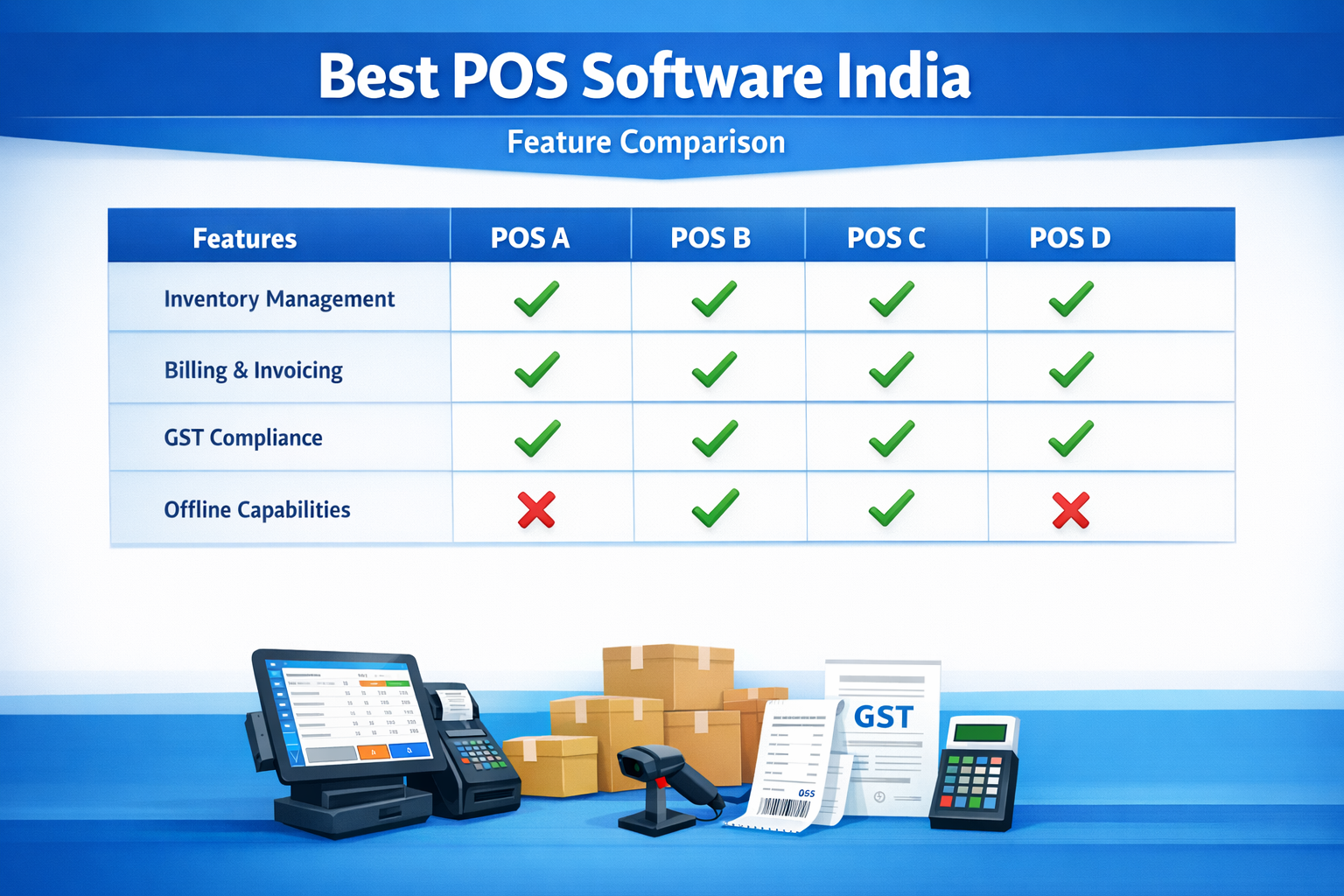
When comparing these top 10 POS software India options, use this systematic checklist to evaluate which solution best fits your specific business needs rather than simply choosing the most popular or cheapest option.
Industry Fit: Does the software cater specifically to your business type? Retail POS systems emphasize inventory and variants, while restaurant systems focus on table management and kitchen communication. Using industry-specific software ensures you get relevant features rather than paying for functionality you'll never use. Marg and RetailGraph excel for retail; Petpooja and Posist dominate restaurants; Ginesys and GOFRUGAL serve both with separate modules.
Feature Requirements: List your must-have versus nice-to-have features. Essential features might include GST-compliant invoicing, inventory tracking, multi-payment support, and offline mode. Nice-to-have features could be customer loyalty programs, advanced analytics, or e-commerce integration. Don't pay for enterprise features if you run a small single-location shop. Vyapar offers essential features affordably; Lightspeed and Shopify POS provide comprehensive capabilities at higher costs.
Scalability: Even if you operate one location today, can the system grow with you? Adding locations, users, or transaction volume should be straightforward and economical. Cloud-based systems like Ginesys, GOFRUGAL, and Posist scale easily across locations. Desktop systems like Marg require more technical setup for multi-location scenarios but work fine for single locations.
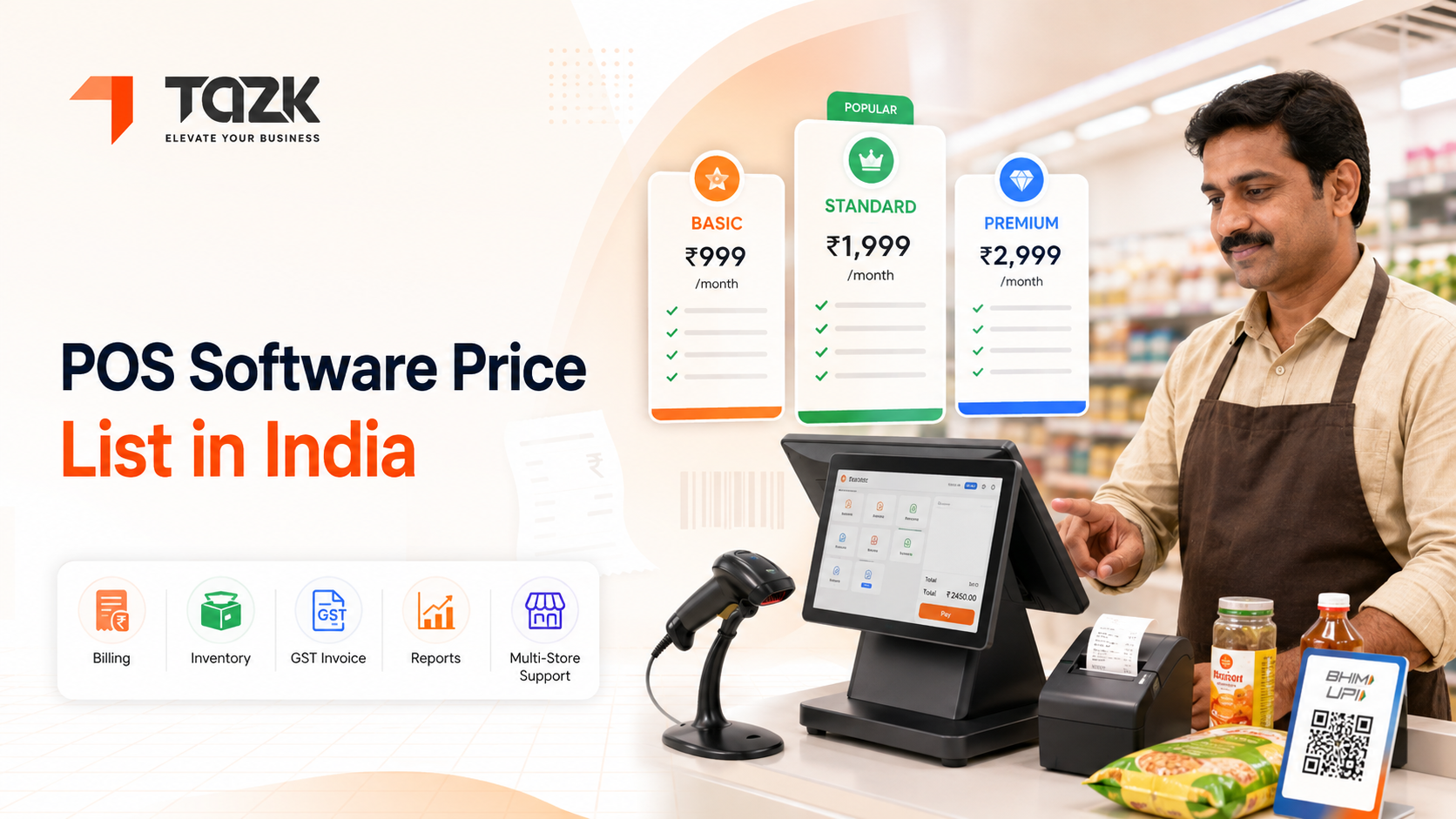
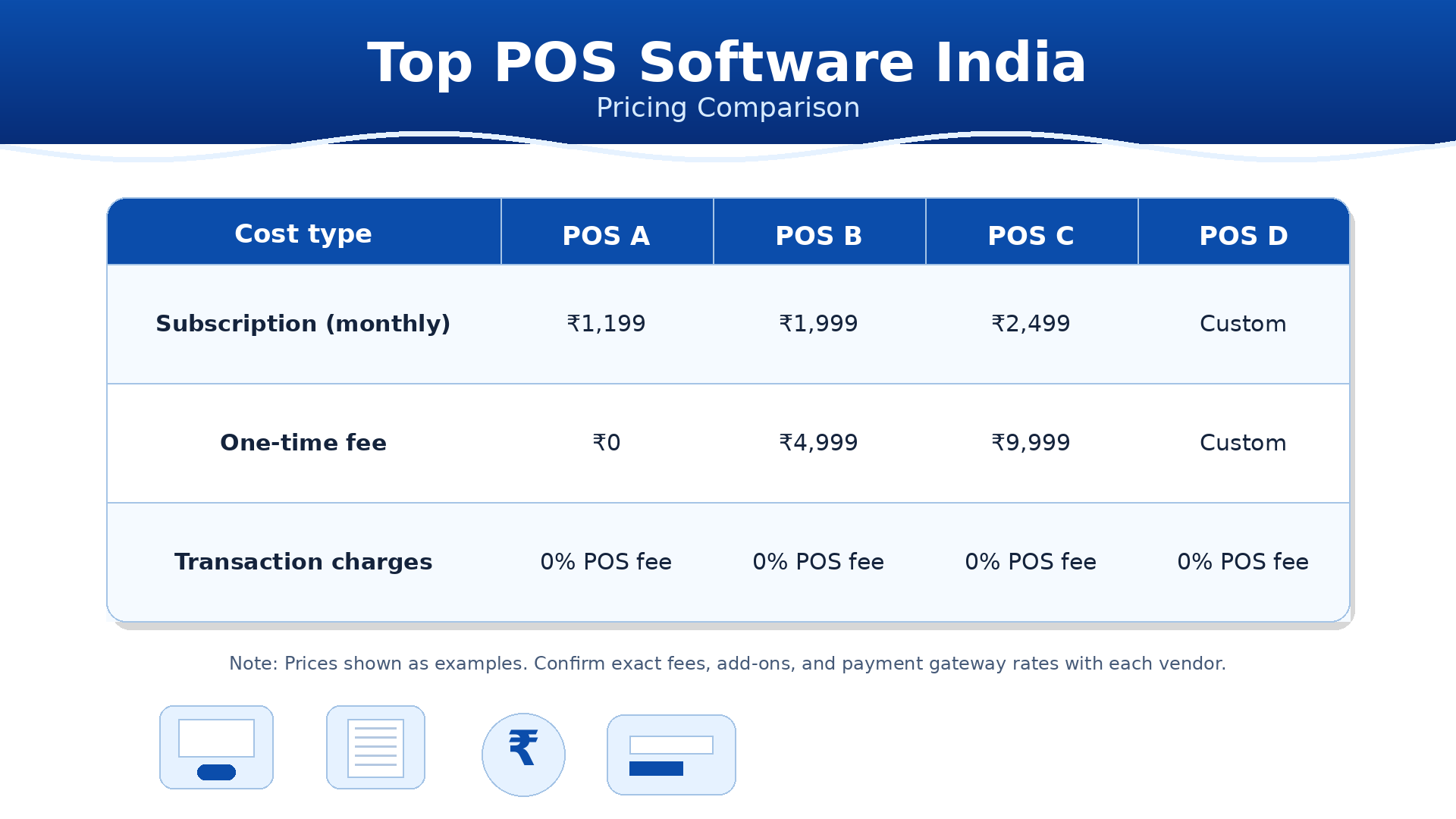
Pricing Model: Decide between subscription and one-time purchase based on cash flow and preferences. Subscriptions (₹1,000-₹5,000 monthly) require less upfront capital and include updates, but create ongoing expenses. One-time purchases (₹15,000-₹54,000) have higher initial costs but no mandatory recurring fees. Calculate three-year total cost of ownership to compare fairly. For detailed pricing information on all these solutions, refer to our detailed POS software pricing breakdown
Ease of Use: Request demos and actually test the interface. Can your staff learn it quickly? Intuitive systems reduce training time and minimize errors. Vyapar and Shopify POS are extremely user-friendly; Marg has a steeper learning curve but offers deeper functionality once mastered.
Integration Capabilities: List other software you use—accounting systems like Tally, e-commerce platforms, email marketing tools, or payment gateways. Verify the POS integrates seamlessly with these tools. Shopify POS obviously integrates perfectly with Shopify stores. Ginesys and Lightspeed offer extensive integration libraries. Marg integrates strongly with accounting but less so with modern marketing tools.
Offline Functionality Test how well the system works without internet. In India, this isn't optional—it's essential. All top India-focused solutions (Vyapar, Marg, GOFRUGAL, RetailGraph) offer robust offline modes. International platforms (Lightspeed, Shopify POS) provide offline billing but with more limited functionality.
Customer Support: Research support availability—hours, languages, response times, and local presence. Systems with strong Indian customer bases (Marg, Vyapar, GOFRUGAL) typically offer better local-language support. International platforms may have support primarily during US or European business hours.
Hardware Compatibility: Verify the system works with hardware you already own or plan to purchase. Some systems require proprietary hardware; others work with generic barcode scanners and printers. Pine Labs Plural works best with Pine Labs terminals. Most others support standard hardware, saving costs.
Vendor Reputation: Research how long the vendor has operated, their customer base size, user reviews, and financial stability. Marg has 30+ years of history; Vyapar is newer but growing rapidly. Check reviews beyond the vendor's website—look for honest feedback on Google, Facebook groups, and industry forums.
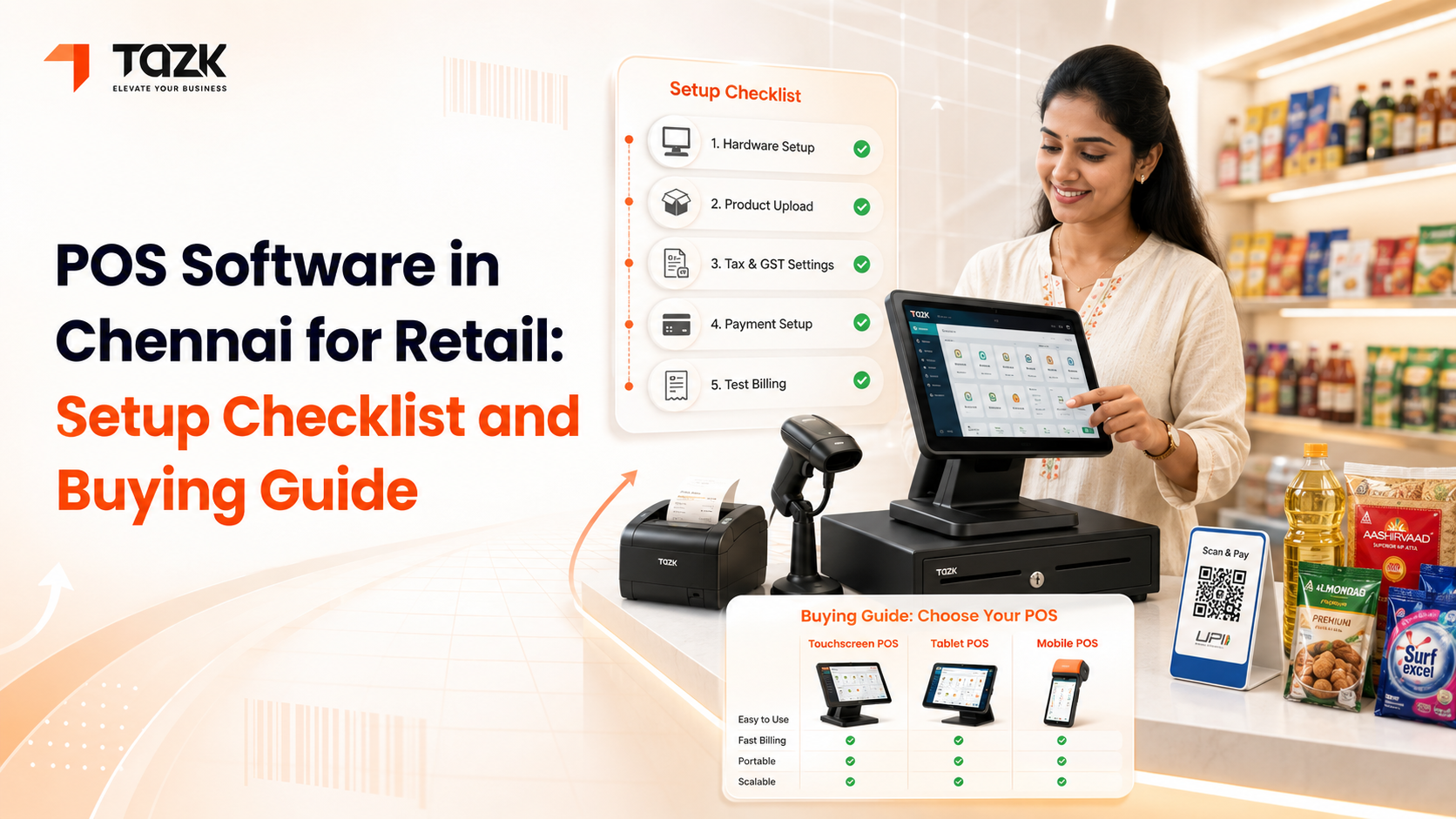
If you're specifically based in Chennai and want location-specific vendor recommendations and implementation support, check out our POS implementation guide for Chennai retailers that covers local vendors, service providers, and implementation best practices.
Making Your Final Decision
After reviewing the top pos software india options and working through the comparison checklist, narrow your choices to two or three finalists that meet your requirements and budget. Request detailed demos from each finalist—not just vendor presentations, but hands-on testing where you actually process transactions with your products, manage inventory, and generate reports.
Involve your team in the evaluation process. The people who will use the system daily—cashiers, inventory managers, and supervisors—often identify practical issues that owners miss. Their buy-in during selection leads to smoother implementation and better adoption. Run a pilot test if possible, using the system for actual transactions alongside your current method for a week or two.
Review contracts carefully before committing. Understand what's included in the base price versus add-on costs, data ownership and portability if you switch vendors later, cancellation terms and any lock-in periods, training and implementation support provided, and upgrade policies and future cost implications.
Consider starting with a smaller implementation to test the system before full commitment. Use it at one location or for one product category first. This de-risks the decision—if the system doesn't work as expected, you've limited your investment and disruption.
Conclusion
The top 10 POS software in India for 2026 each bring unique strengths to different business scenarios. Marg remains the trusted choice for traditional retail with complex inventory needs. Vyapar offers unbeatable value for small businesses prioritizing affordability and mobile access. Ginesys and Lightspeed serve fashion and lifestyle retail with sophisticated omnichannel capabilities. GOFRUGAL provides versatility across retail and restaurants with industry-specific modules. Shopify POS creates perfect unity between online stores and physical retail. Petpooja and Posist dominate the restaurant sector with comprehensive hospitality features. RetailGraph specializes in grocery and FMCG challenges. Pine Labs Plural integrates payment processing with POS management seamlessly.
The best POS software in India for your business isn't necessarily the highest-rated or most popular overall—it's the one that fits your specific industry, matches your budget, scales with your growth plans, and works reliably in your operating environment. Use the comparison checklist systematically, test your finalists thoroughly, and involve your team in the decision.
Remember that implementing POS software is an investment in your business infrastructure that pays dividends through improved efficiency, better inventory control, enhanced customer service, and data-driven decision making. Taking the time to choose correctly saves you from the expensive mistakes of selecting the wrong system and needing to switch later.
Ready to transform your business operations with the right POS system? Explore our complete POS solution designed specifically for Indian businesses, combining the best features you've seen in this comparison with local support and competitive pricing.
Ready to upgrade your retail billing?
Tazk POS handles billing, inventory, GST invoices, and multi-store management. Free plan available — no credit card required.
Free plan available. No credit card required. Go live in hours.