Best POS & Billing Software for Retailers in Coimbatore: A 2026 Buying Guide
12 min read | By Lokesh A
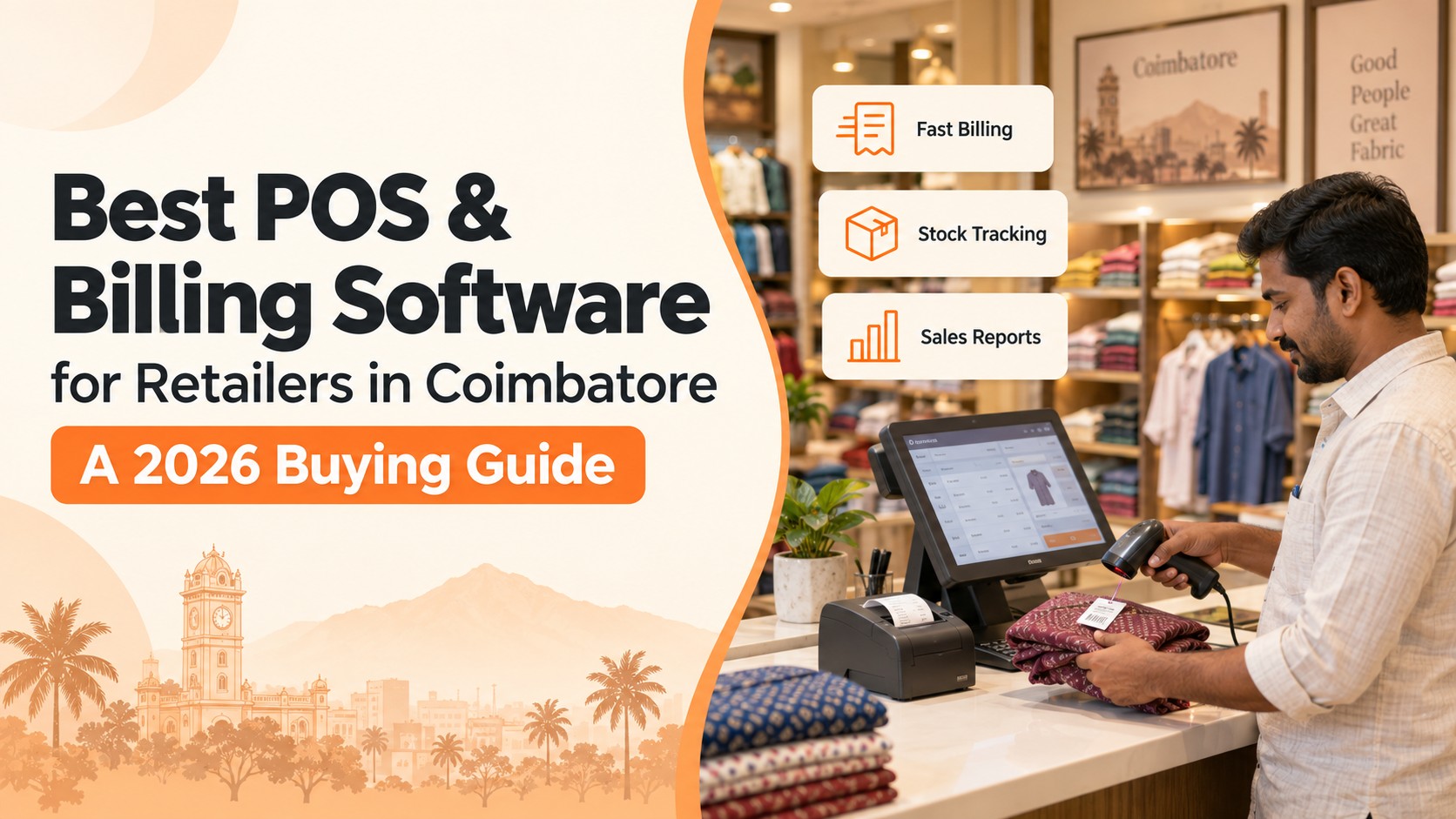
Table Of Contents
Social Media




Why Coimbatore isn't just "another Tamil Nadu city"
If you run a shop in Coimbatore, you already know this. But it's worth saying clearly, because most billing software isn't built with it in mind.
Coimbatore isn't Chennai with smaller crowds. It has its own retail personality. There's a huge textile and garment trade, strong hardware and engineering goods markets, and a growing number of modern supermarkets. All of this sits alongside traditional family-run shops that have been open for decades.
That mix creates specific billing needs. A textile shop selling fabric by the metre has different GST rules than a shop selling readymade shirts. A hardware store tracking hundreds of small SKUs needs fast barcode lookup. A supermarket needs quick checkout during evening rush hour. Generic billing software, built for "any shop, anywhere," often handles none of these particularly well.
This guide walks through what actually matters when choosing POS software in Coimbatore in 2026 — with real numbers, not just marketing claims.
What "GST-Ready" Actually Needs to Mean for Coimbatore Retailers
Here's something that trips up a lot of shop owners: GST rules for textiles and garments aren't one flat rate. Since India's GST 2.0 reform took effect on 22 September 2025, the rules got simpler — but they're still easy to bill incorrectly if your software doesn't handle them automatically.
- Fabric and cotton textiles are taxed at a flat 5% GST, whether the fabric is pure cotton or blended.
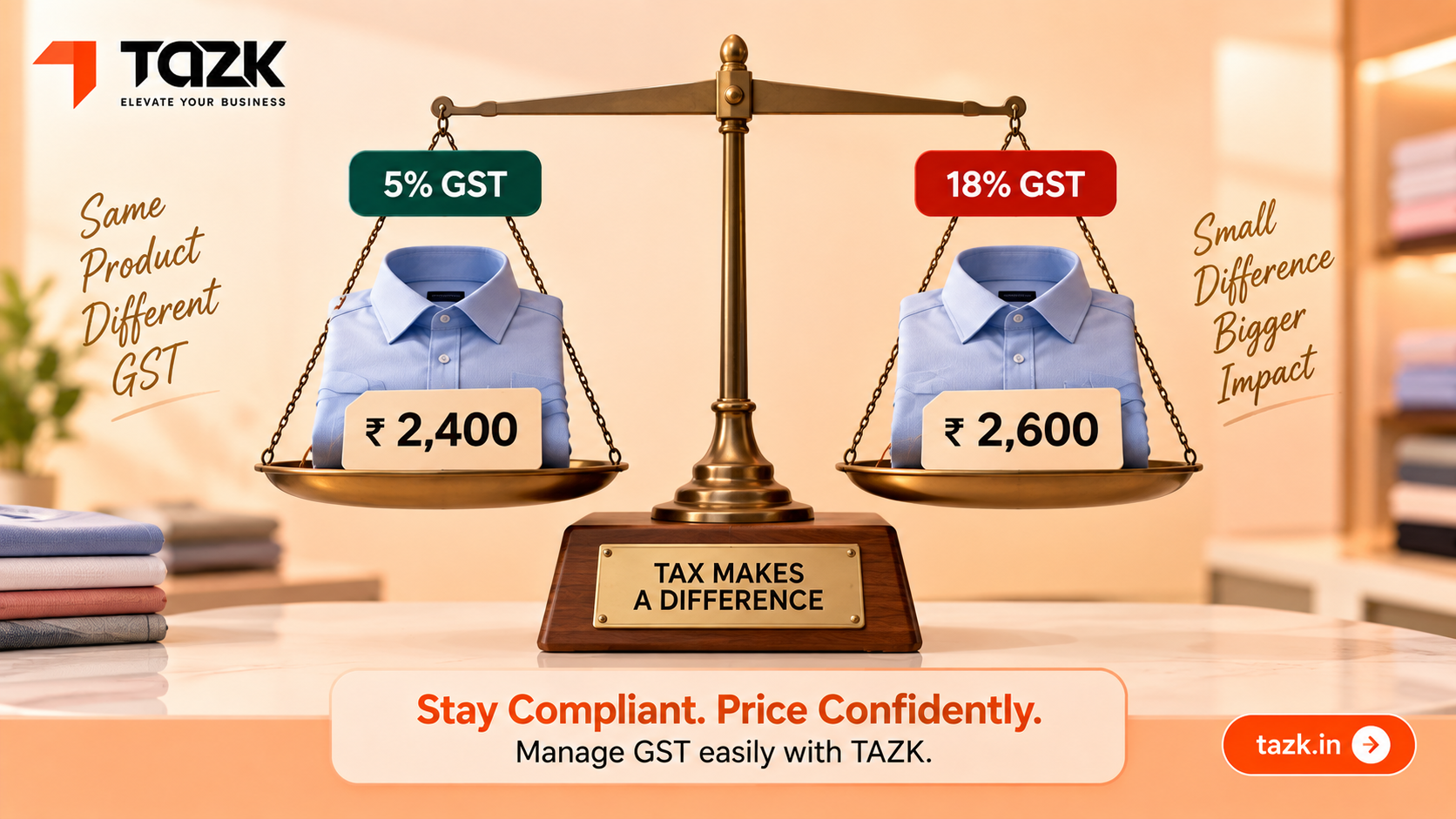
- Readymade garments follow a price-based rule, not a category-based one: 5% GST if the piece sells for up to ₹2,500, and 18% GST if it sells above ₹2,500 (source: Busy, New GST in Garments 2026).
Think about what that second rule really means at the counter. A shopkeeper selling a shirt for ₹2,400 charges 5% GST. The same shopkeeper selling a similar shirt for ₹2,600 must charge 18% GST — more than three times the rate — because of a ₹200 price difference. If your billing software applies GST by product category instead of by actual selling price, you will bill some items wrong without ever realising it.
There's a second change worth knowing about. From April 2026, textile businesses with turnover above ₹5 crore must generate e-invoices through the government's Invoice Registration Portal (IRP) (source: TaxGarden, Textiles Under GST 2026). If you're a growing textile wholesaler approaching that threshold, your billing system needs to be ready for this before it becomes mandatory for you, not after.
Coimbatore's Other Big Trade: Hardware, Engineering Goods, and Spare Parts
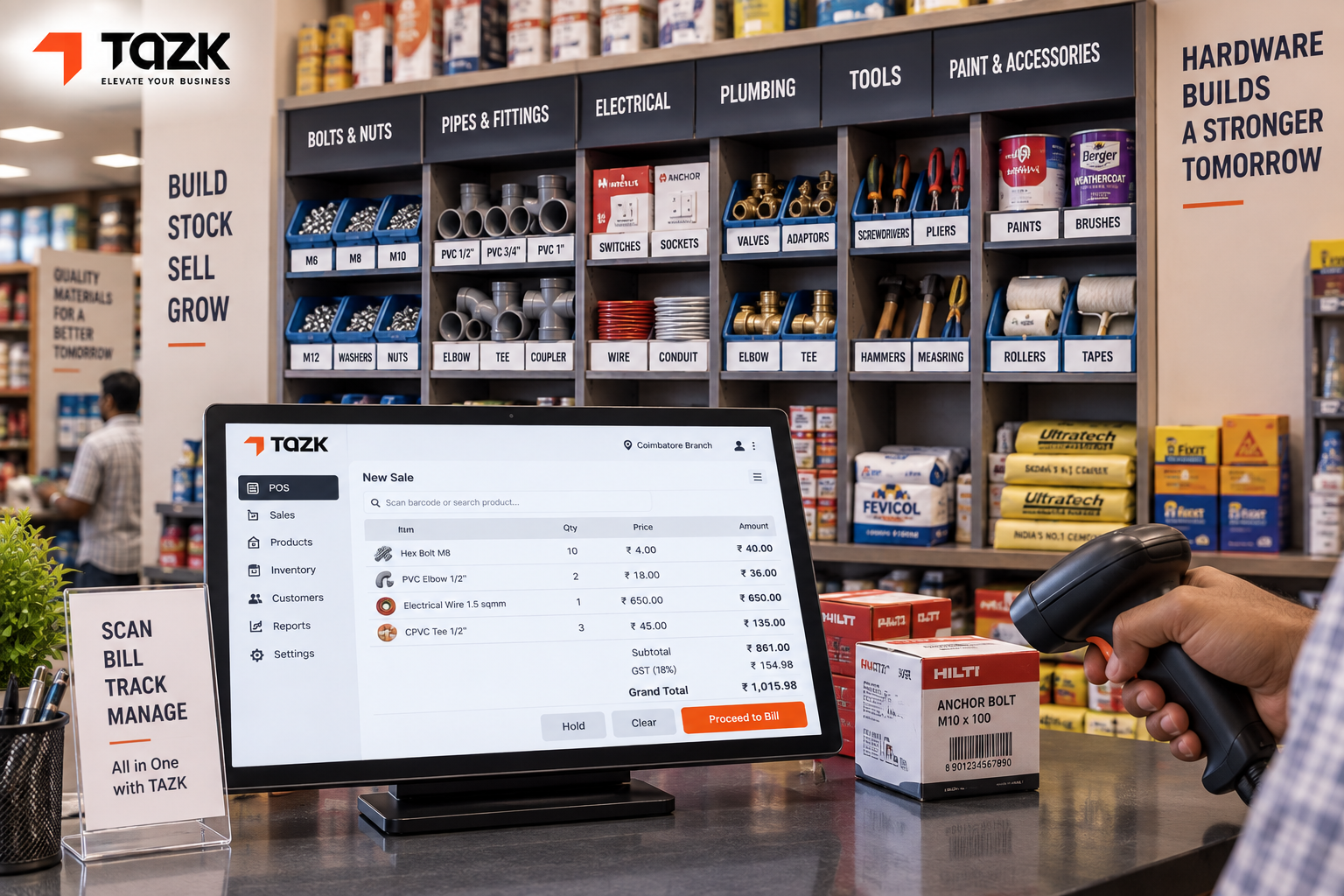
Textiles get most of the attention, but Coimbatore is also one of South India's major hubs for hardware, pumps, motors, and engineering spare parts. This trade has its own billing challenges that are easy to overlook.
A hardware shop or spares dealer often stocks thousands of small, similarly-named items — different sizes of the same bolt, different models of the same pump part. Two problems show up here again and again:
- Barcode and part-number lookup needs to be genuinely fast, because a mechanic or contractor waiting at the counter won't wait long for a slow search through a cluttered product list.
- Unit of measurement flexibility matters. Some items sell by the piece. Others sell by weight. Others sell by length of pipe or wire. A system that only handles one unit type forces staff into manual workarounds — the same problem textile shops face with fabric versus garments.
If your shop deals in engineering goods rather than textiles, the underlying lesson is the same. Generic billing software built around a single, simple retail model will always feel slightly wrong for a business that doesn't fit that mold.
What Real Coimbatore Business Owners Actually Look For
Beyond GST, here's what comes up again and again from shop owners in the city.
1. Speed at the counter during peak hours. Coimbatore's supermarkets and busy textile showrooms see genuine rush-hour crowds. Slow billing software doesn't just annoy customers — it directly costs sales when a queue gets long enough that people leave.
2. Support that actually understands the local market. A shop owner calling for help at 7 PM on a Saturday wants someone who understands Tamil Nadu's GST quirks. They want a quick answer — not a generic support ticket that takes a day to answer.
3. Barcode and inventory that scales with SKU count. A hardware shop or supermarket might carry thousands of individual items. Billing software needs to look up and bill these instantly, not lag as inventory grows.
4. Multi-user access without extra licensing headaches. Family-run businesses in Coimbatore often have two or three people billing at once, sometimes across a shop and a small warehouse. Software priced or restricted per device can quietly become expensive.
We spoke with Priya Subramani, a business owner in Coimbatore who switched her operations onto a single connected platform. Her experience was straightforward. Setup took about eight working days, with two short training calls. By her own account, the biggest change wasn't the billing screen itself. It was finally seeing sales, staff, and stock in one place instead of three disconnected tools.
Common Mistakes Coimbatore Retailers Make When Choosing POS Software
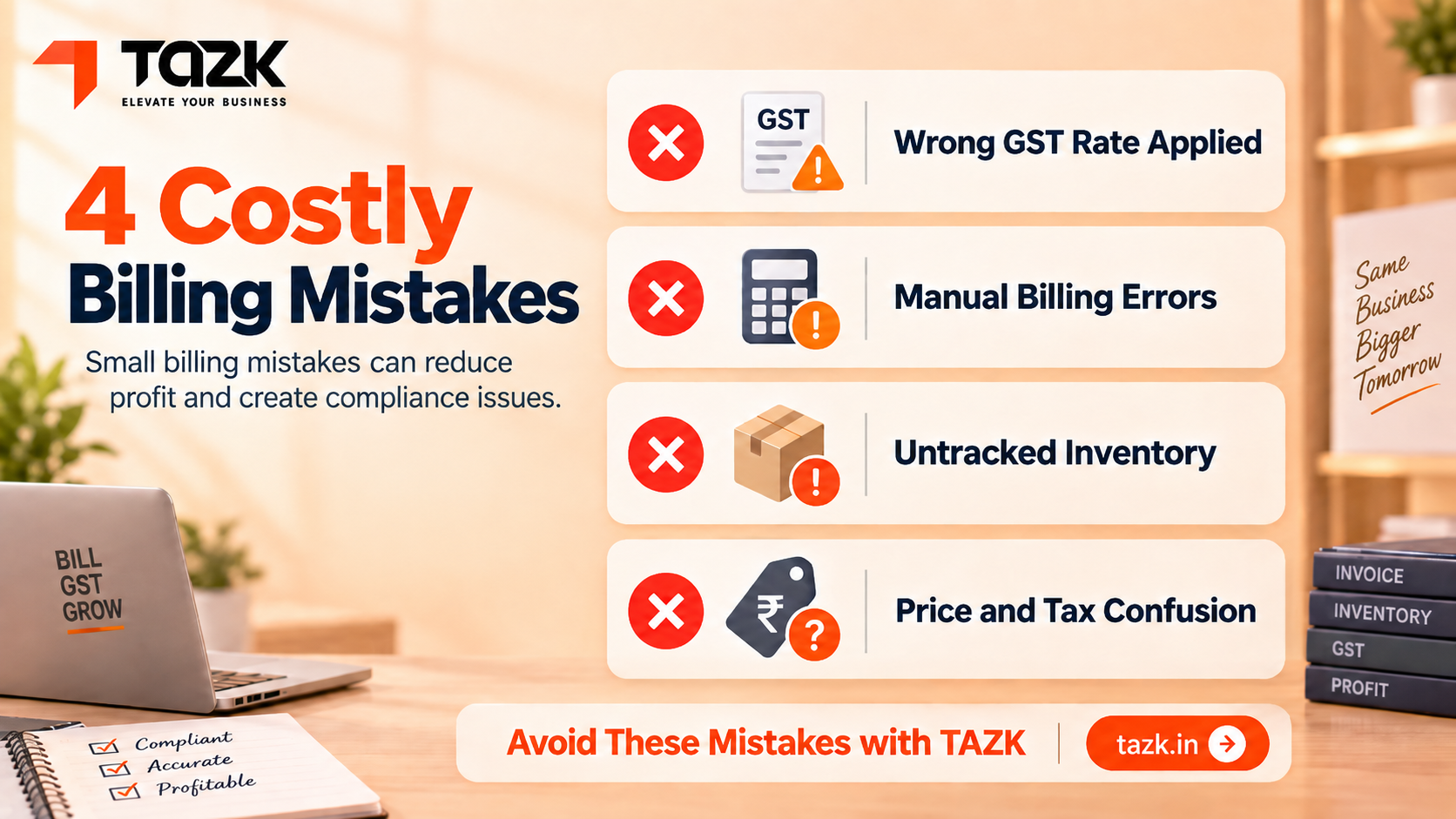
Mistake 1: Choosing based on the cheapest sticker price alone. A low upfront cost sometimes hides extra charges for GST updates, customer support, or additional billing counters — costs that only appear after you've already committed.
Mistake 2: Assuming a Chennai-built system automatically understands the local trade mix. Some billing tools are designed heavily around retail categories that are common elsewhere but rare in Coimbatore's own trade mix — and struggle with things like fabric sold by length rather than by piece.
Mistake 3: Not testing barcode speed with your real inventory size. A demo with twenty sample products can feel fast. The real test is your actual few-thousand-item catalogue, under real billing pressure.
Mistake 4: Ignoring what happens when the internet drops. Coimbatore, like much of Tamil Nadu, still experiences occasional connectivity gaps. A billing system that stops working the moment Wi-Fi drops isn't just inconvenient — it stops your counter completely.
Growing From One Store to a Few
Many successful Coimbatore retailers don't stay single-location for long. A textile shop doing well near Town Hall often opens a second branch in RS Puram, or expands toward nearby textile hubs like Tiruppur or Erode.
This is where billing software choice matters beyond day-to-day convenience. A system built only for a single counter tends to show its limits the moment a second location opens — separate stock counts that don't talk to each other, separate sales reports that need manual combining, and no easy way to see which branch is actually performing better this month.
If there's a real chance you'll open a second location within the next year or two, it's worth choosing software that already supports multiple stores from one login, even if you only need one counter today. Switching systems later, once staff are trained and years of sales history exist in the old one, is a far bigger project than starting with the right foundation from day one.
A Practical Checklist Before You Buy
Use this when evaluating any POS system for a Coimbatore business:
1. Does it apply GST automatically by selling price, not just by product category?
2. Can it handle fabric sold by the metre as easily as garments sold by the piece?
3. Does billing stay fast with your real product count, not a small demo catalogue?
4. What happens to billing during an internet outage — does it stop, or keep working?
5. Is support available in both Tamil and English, during your actual business hours?
6. Can multiple staff bill at once without per-device pricing surprises?
7. How long does setup actually take, with your real data imported?
Tazk's POS module is built around exactly this checklist. It applies GST-ready billing correctly by price and category. Barcode scanning stays fast as your catalogue grows. And support is available in both Tamil and English.
A Realistic Example
Picture a family-run textile shop near Town Hall, selling both fabric by the metre and a growing range of readymade garments.
Before switching systems, staff manually checked each garment's price to decide which GST rate to apply, occasionally getting it wrong during busy Saturday afternoons — a genuine risk during any future GST audit. Fabric sales, priced per metre, didn't fit neatly into their old software's per-piece billing logic either, so staff worked around it with manual adjustments and a second, separate register just for fabric.
After moving to a system built to handle both pricing models correctly, the fix wasn't dramatic — it was quiet. GST rates applied themselves correctly by price point, without anyone checking each item by hand. Fabric-by-the-metre billing worked the way the business actually operated, instead of forcing the business to work around the software. The second register disappeared, and with it, the small daily task of reconciling two sets of numbers at closing time.
What's Changing Next
GST compliance checks are becoming more automated on the government's side too. As e-invoicing thresholds continue to be reviewed, more Coimbatore textile and garment businesses will eventually fall under mandatory e-invoicing — worth preparing for now rather than scrambling later.
Digital payment adoption keeps climbing in Tier 2 cities like Coimbatore, meaning POS systems need to handle UPI, cards, and cash equally smoothly, with clean reconciliation across all three at day's end.
Local-language support is becoming a genuine differentiator, not a bonus feature. As more billing software vendors compete for the same Tamil Nadu retail market, support quality in Tamil is increasingly a real factor in which systems retailers actually stick with.
Coimbatore's retail mix — heavy on textiles, hardware, and supermarkets — needs billing software that understands the actual trade, not a generic template. Get the GST logic, the local support, and the connectivity resilience right, and billing stops being something your staff work around every day.
Try Tazk POS free — GST-ready billing, live in a day, support in Tamil & English. Start a free trial or book a demo today. Visit tazk.in to see all six connected modules.
Related reading on the Tazk blog
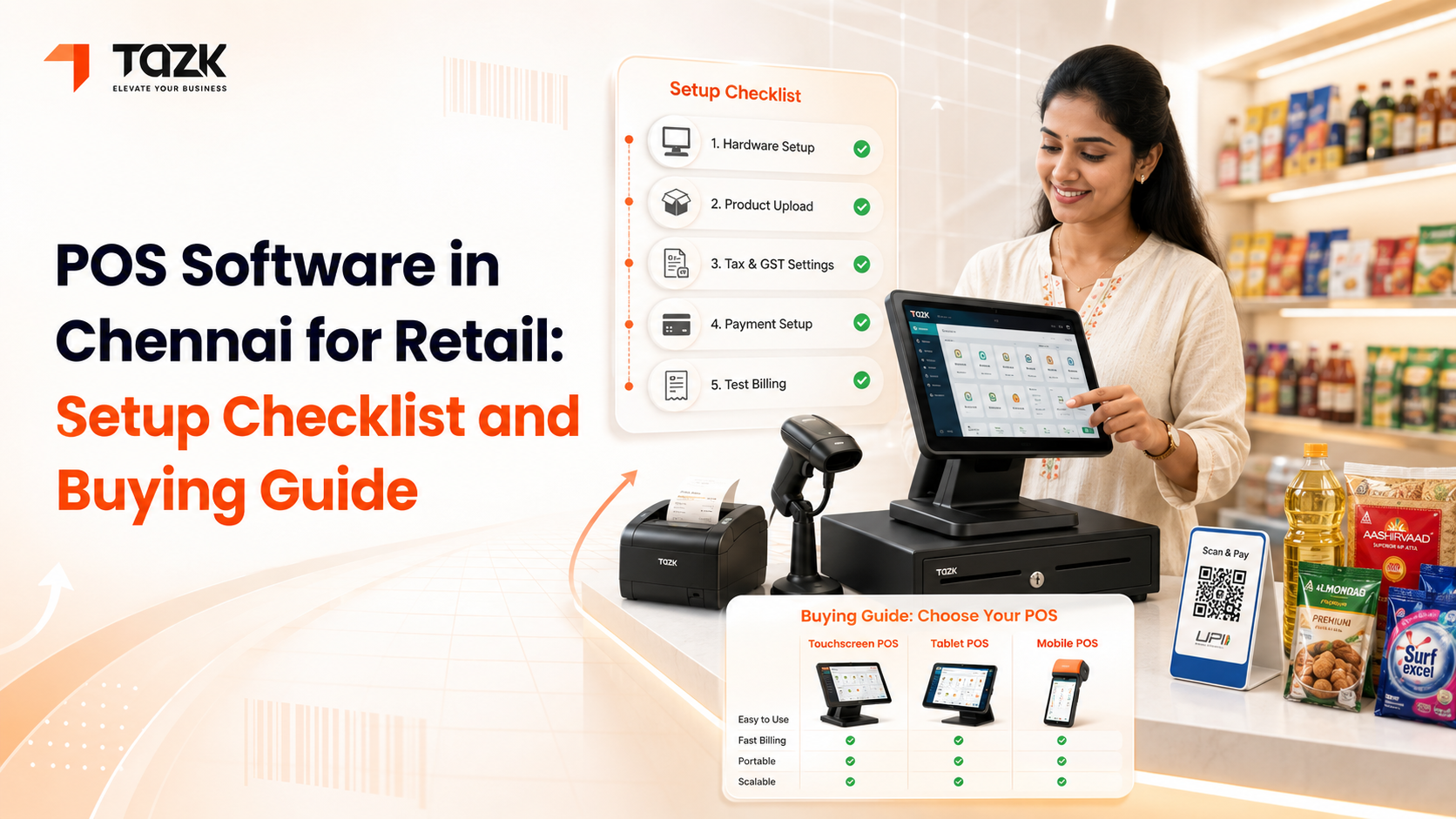
- POS Software in Chennai: Retail Setup Guide 2026
- Top 10 POS Software in India (2026): Comparison Checklist
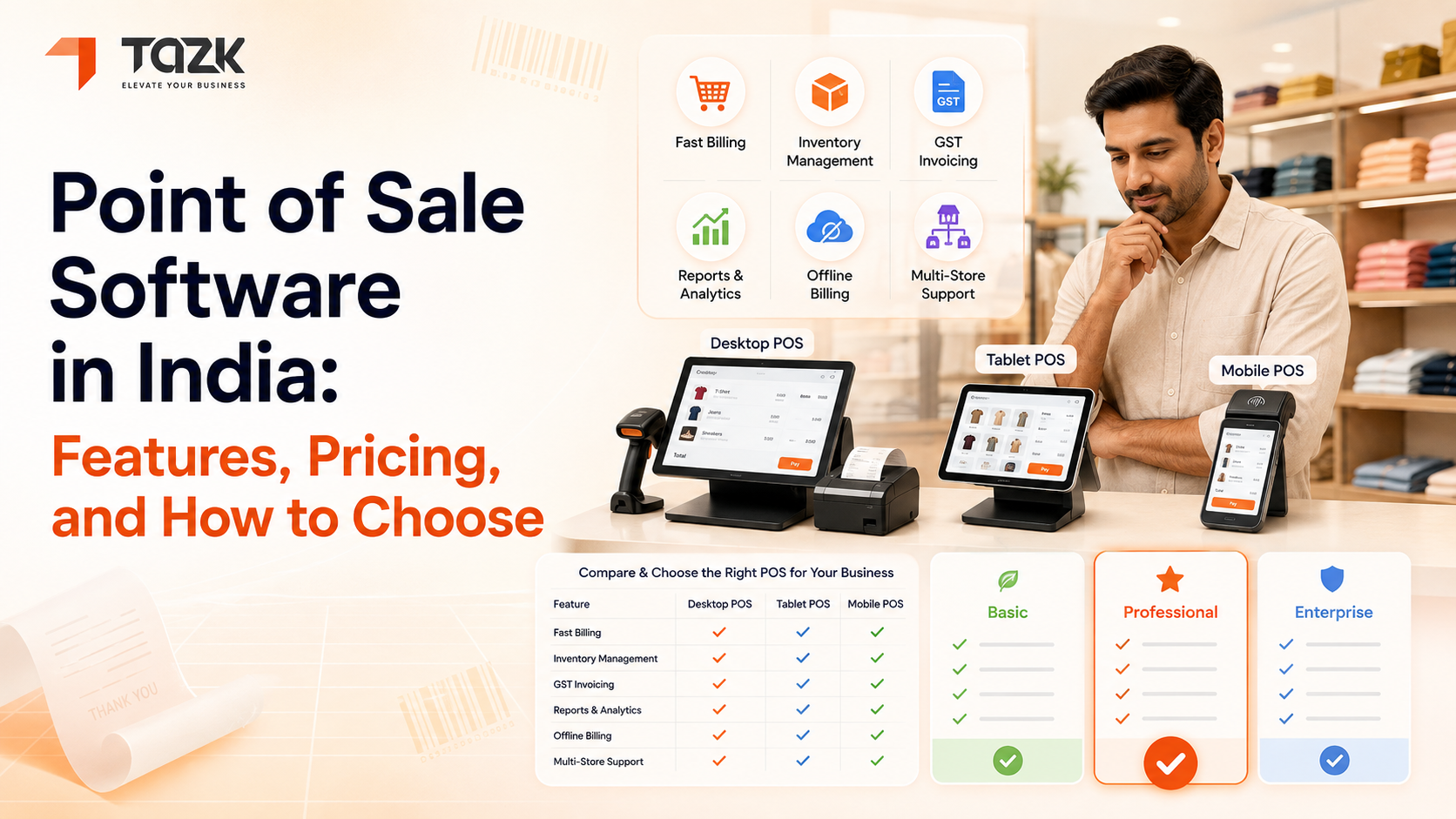
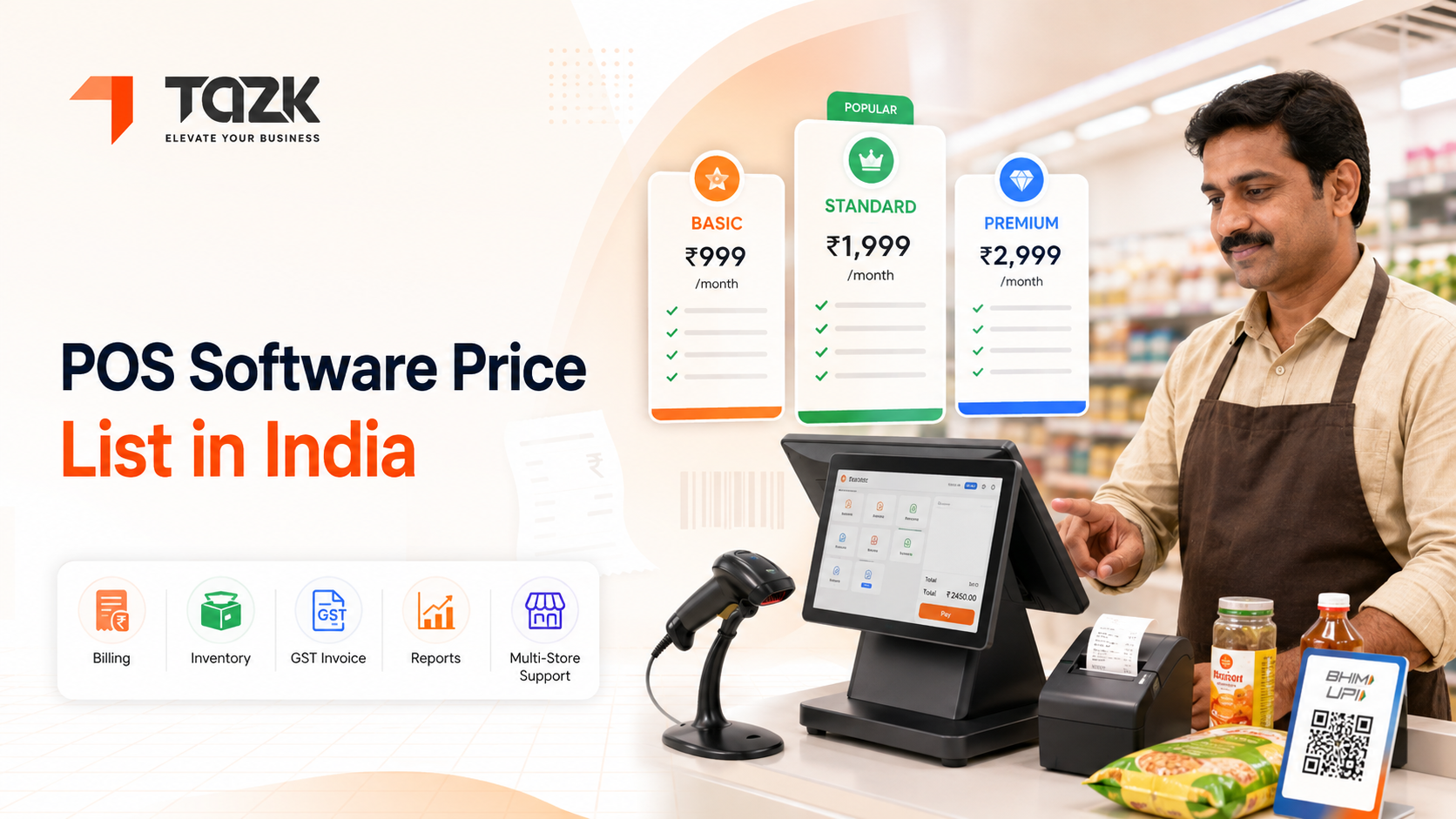
- POS Software Price List in India: Costs, Plans, and Examples
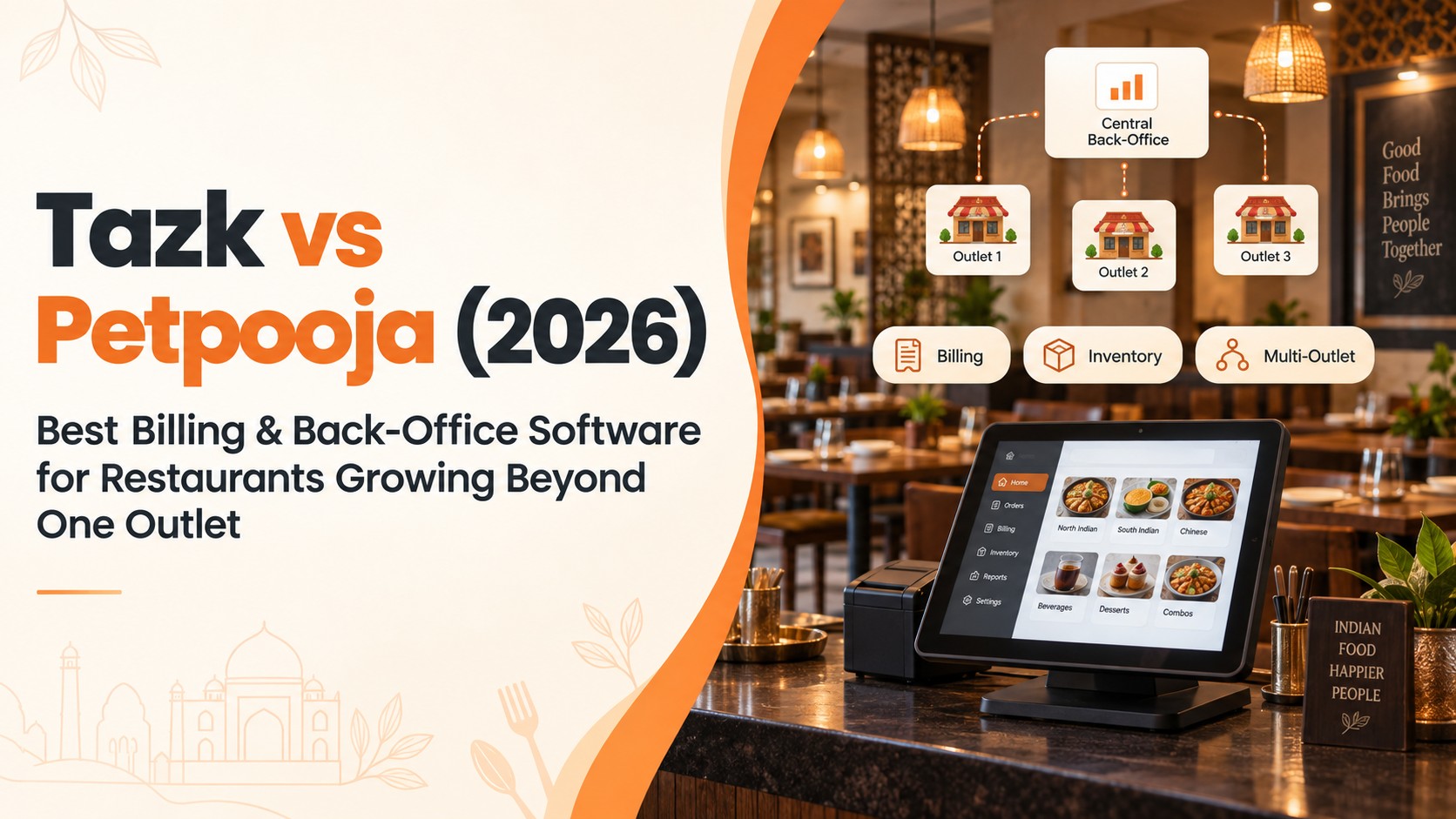
- Tazk vs Zoho vs Vyapar vs Tally
External sources referenced in this article
Ready to upgrade your retail billing?
Tazk POS handles billing, inventory, GST invoices, and multi-store management. Free plan available — no credit card required.
Free plan available. No credit card required. Go live in hours.