POS Software Price List in India: Costs, Plans, and Examples
15 min | By Lokesh A
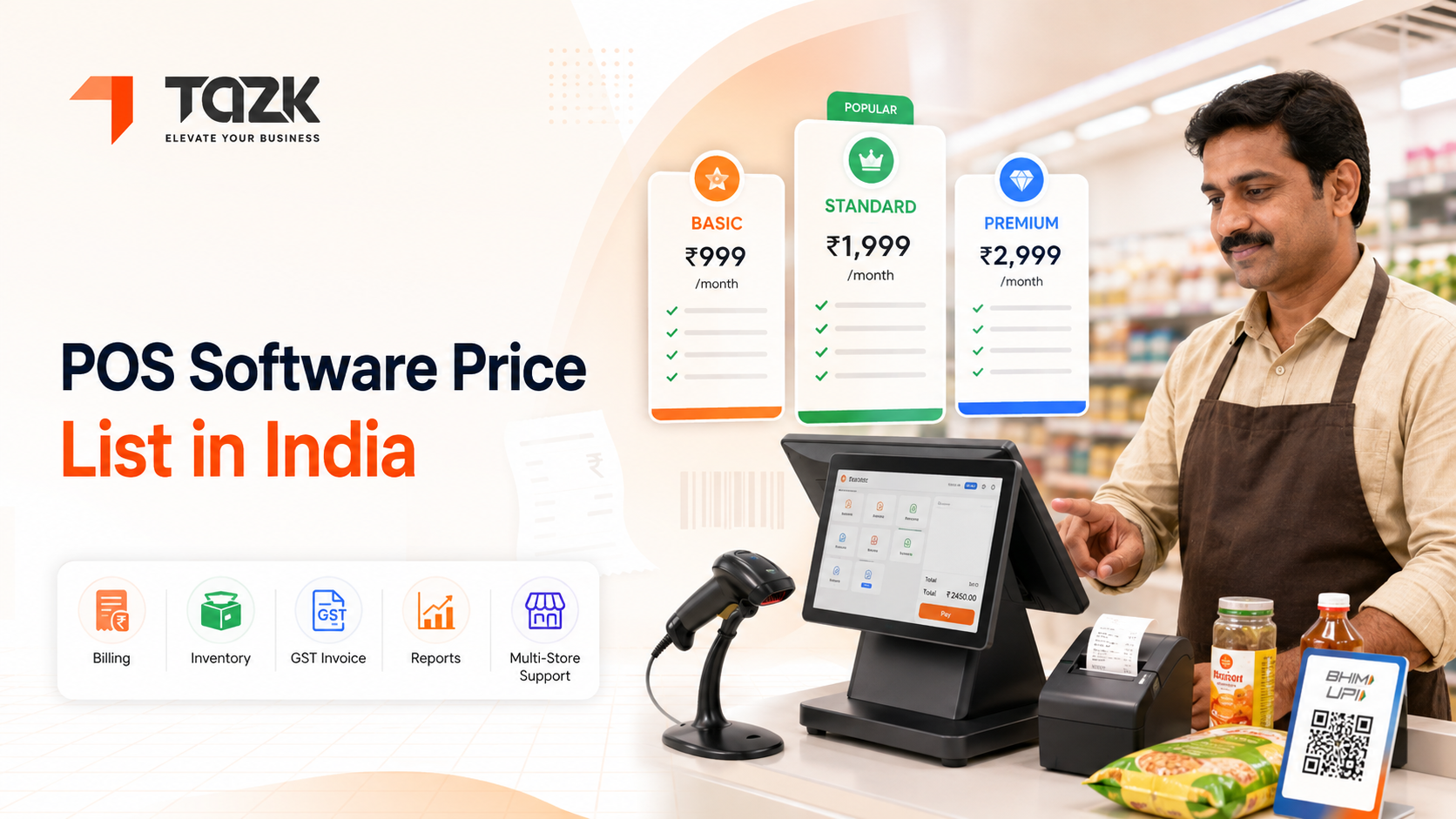
Table Of Contents
Social Media




Understanding the true cost of POS software in India goes far beyond the advertised monthly subscription fee or one-time purchase price. Between software licenses, hardware investments, implementation charges, training costs, payment gateway fees, and ongoing maintenance, the total investment can vary dramatically from initial expectations. Business owners often discover hidden expenses only after committing to a system, leading to budget overruns and buyer's remorse.
This comprehensive POS software price list breaks down exactly what you'll pay for popular solutions across India, including transparent pricing for subscriptions, one-time purchases, hardware requirements, and those easily overlooked costs that add up quickly. Whether you're budgeting for your first POS system or comparing options to upgrade from an outdated solution, understanding the complete financial picture helps you make informed decisions and avoid expensive surprises. For broader context on how pricing fits into overall POS selection criteria, refer to our complete guide to choosing point of sale software.
Understanding POS Software Pricing Models
POS software vendors in India use three primary pricing structures, each with distinct advantages and considerations for different business situations. Understanding these models helps you compare options fairly and choose what aligns with your financial planning.
Subscription-based pricing dominates the cloud POS market where you pay monthly or annual fees for continued access to software and services. This model typically includes software updates, cloud storage, customer support, and access to new features as they're released. Monthly subscriptions in India generally range from ₹999 to ₹7,500 per location depending on features, business size, and vendor. Annual subscriptions offer discounts of 15-25% compared to paying monthly—a ₹2,000 monthly plan might cost ₹20,400 annually instead of ₹24,000, saving ₹3,600.
The subscription model requires minimal upfront investment, making it accessible for startups and small businesses with limited capital. You're never stuck with outdated software since updates deploy automatically. However, you're committed to ongoing payments for as long as you use the system, and costs accumulate significantly over years. A ₹2,500 monthly subscription costs ₹30,000 annually or ₹150,000 over five years—more than most one-time purchase options.
One-time purchase pricing involves paying a larger upfront amount to own the software permanently. These licenses typically range from ₹15,000 to ₹75,000 in India depending on features and user count. You own the software forever without mandatory recurring payments, though vendors usually offer optional annual maintenance contracts (15-20% of purchase price) that provide updates and support. This model appeals to businesses with available capital that prefer avoiding ongoing expenses and want full control over when and whether to upgrade.
The challenge with one-time purchases is that major version upgrades often cost extra—you might pay ₹30,000 for the software, then need to pay ₹10,000-₹15,000 for the next major version in two or three years. Cloud features like remote access and multi-location management are sometimes limited or absent in one-time purchase systems. However, for single-location businesses planning to use the same system for many years, one-time purchases often prove more economical than subscriptions over the long term.
Freemium and transaction-based models offer alternatives to standard pricing. Freemium models provide basic features free with limitations on transactions, users, or features, then charge for premium capabilities. Vyapar, for example, offers free invoicing with paid upgrades for advanced inventory and multi-user access. This lets you test systems risk-free before committing financially. Transaction-based pricing charges a percentage or fixed amount per sale instead of flat fees—some payment processors bundle free POS software but charge ₹2-₹5 per transaction or 1-2% of sale value. This works for very low-volume businesses but becomes expensive as sales grow.
Detailed POS Software Price List: Leading Vendors
Here's a comprehensive breakdown of what popular POS solutions actually cost in India, including both advertised prices and typical total investments.
Marg ERP Pricing: One-time purchase model starting at ₹18,000 for Marg Pharmacy or Marg Retail software with basic features suitable for small single-location stores. Mid-range versions cost ₹30,000-₹45,000 with advanced inventory management, accounting integration, and multi-user access. Enterprise versions reach ₹54,000+ for wholesale distribution features and multi-godown management. Annual maintenance contracts (AMC) cost 15-18% of license fees—approximately ₹3,000-₹9,000 yearly depending on version. Hardware requirements add ₹25,000-₹50,000 for desktop computer, printer, scanner, and UPS. Total first-year investment: ₹43,000-₹104,000.
Vyapar Pricing: Freemium model with basic features permanently free for unlimited invoicing, inventory tracking, and expense management with some limitations. Premium plans cost ₹4,999 annually (approximately ₹415 monthly) for single-user access with unlimited transactions and cloud backup. Multi-user premium plans cost ₹9,999 annually (approximately ₹833 monthly) for up to three users. Lifetime plans occasionally offered during promotions at ₹14,999-₹19,999. Works on smartphones and tablets you already own, minimizing hardware costs—add just ₹6,000-₹10,000 for Bluetooth printer if needed. Total first-year investment: ₹4,999-₹19,999.
Ginesys Pricing: Subscription model customized per business, typically starting at ₹2,500-₹3,500 per month per location for retail management with basic features. Fashion retail modules with advanced variant management cost ₹4,000-₹6,000 monthly. Multi-location enterprise implementations with centralized management start around ₹8,000-₹15,000 monthly depending on store count. Annual subscriptions offer approximately 20% discount. Implementation charges typically ₹25,000-₹75,000 based on complexity. Hardware requirements ₹35,000-₹60,000 per location. Total first-year investment: ₹85,000-₹270,000 for single location.
GOFRUGAL Pricing: Subscription plans start at ₹1,499 per month for basic retail POS with inventory and billing. Standard retail plans cost ₹2,499 monthly with loyalty programs and advanced reporting. Restaurant modules priced ₹1,999-₹2,999 monthly with KOT and table management. Enterprise plans for multi-location chains customized based on requirements. Annual subscriptions provide approximately 20% savings. On-premise licenses available from ₹25,000 for single location. Hardware costs ₹30,000-₹55,000 depending on configuration. Total first-year investment: ₹48,000-₹110,000 subscription model.
Lightspeed Retail Pricing: Tiered subscription in USD starting at $69 monthly (approximately ₹5,800) for basic plan with one register, inventory management, and reporting. Standard plan at $119 monthly (approximately ₹10,000) adds advanced reporting and loyalty. Advanced plan at $199 monthly (approximately ₹16,700) includes multi-location management and e-commerce integration. Hardware bundles with iPad, printer, and scanner start around ₹65,000. Currency fluctuations impact pricing since billed in USD. Total first-year investment: ₹135,000-₹265,000.
Pine Labs Plural Pricing: Pricing typically bundled with Pine Labs payment terminals. Software subscriptions range ₹1,500-₹4,000 monthly depending on features and transaction volume. Often combined with terminal rental (₹500-₹1,000 monthly) or terminal purchase (₹12,000-₹25,000). EMI and loyalty features may have additional charges. Implementation usually included with terminal deployment. Total first-year investment: ₹30,000-₹73,000 with terminal rental; ₹42,000-₹73,000 with terminal purchase.
Shopify POS Pricing: Subscription includes online store and POS starting at $89 monthly (approximately ₹7,500) for Basic plan with standard POS features. Shopify plan at $299 monthly (approximately ₹25,000) adds advanced POS reports and unlimited staff accounts. iPad or tablet required (₹25,000-₹45,000), plus card reader (₹2,500-₹5,000) and receipt printer (₹8,000-₹12,000). Transaction fees apply: 2% for using external payment gateway or 1.7-1.9% with Shopify Payments. Total first-year investment: ₹125,000-₹345,000.
Petpooja Pricing: Restaurant-focused subscriptions starting at ₹999 monthly for small cafés with basic KOT and billing. Standard restaurant plans cost ₹1,999-₹2,999 monthly with table management, delivery integration, and recipe management. Multi-location chains pay ₹3,999+ monthly per location. One-time purchase options available from ₹29,999. Hardware bundles including KOT printers and tablets cost ₹35,000-₹60,000. Total first-year investment: ₹47,000-₹108,000 subscription; ₹64,999-₹89,999 one-time purchase.
Posist Pricing: Customized restaurant subscription typically starting at ₹2,499 per month per location for basic features. Multi-location management and franchise features cost ₹4,000-₹7,000 monthly per location. Enterprise implementations for large chains priced based on requirements. Implementation and training usually included. Hardware requirements ₹40,000-₹70,000 per location for tablets, KOT printers, and customer displays. Total first-year investment: ₹70,000-₹154,000 per location.
RetailGraph Pricing: Grocery-focused subscriptions starting around ₹1,999 monthly for single-location stores. Supermarket modules cost ₹2,999-₹4,999 monthly with advanced inventory and wholesale management. Enterprise chains priced based on store count and volume. On-premise licenses available from ₹35,000. Weighing scale integration may require specific hardware (₹15,000-₹30,000). Standard POS hardware costs ₹25,000-₹45,000. Total first-year investment: ₹49,000-₹134,000.
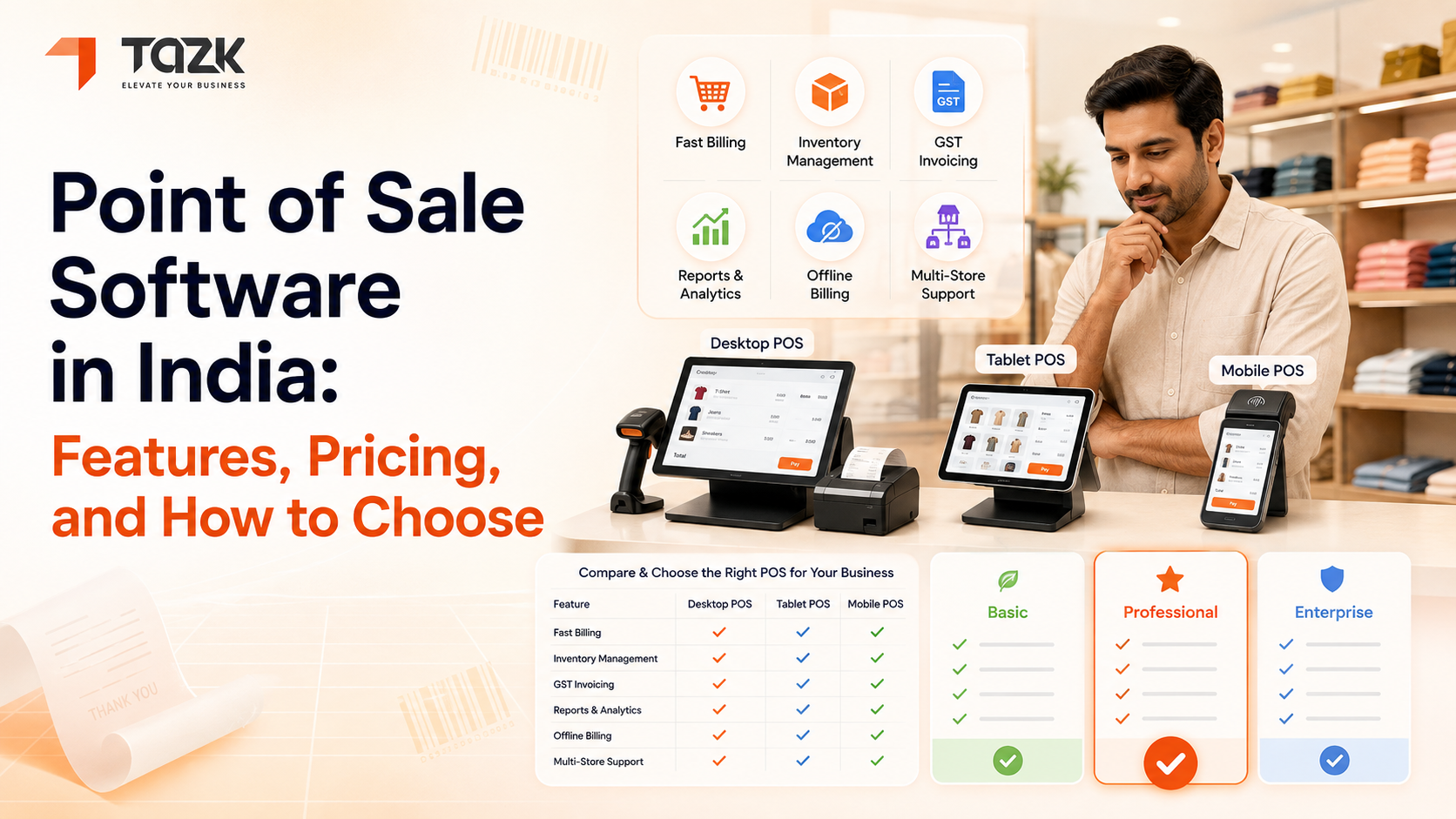
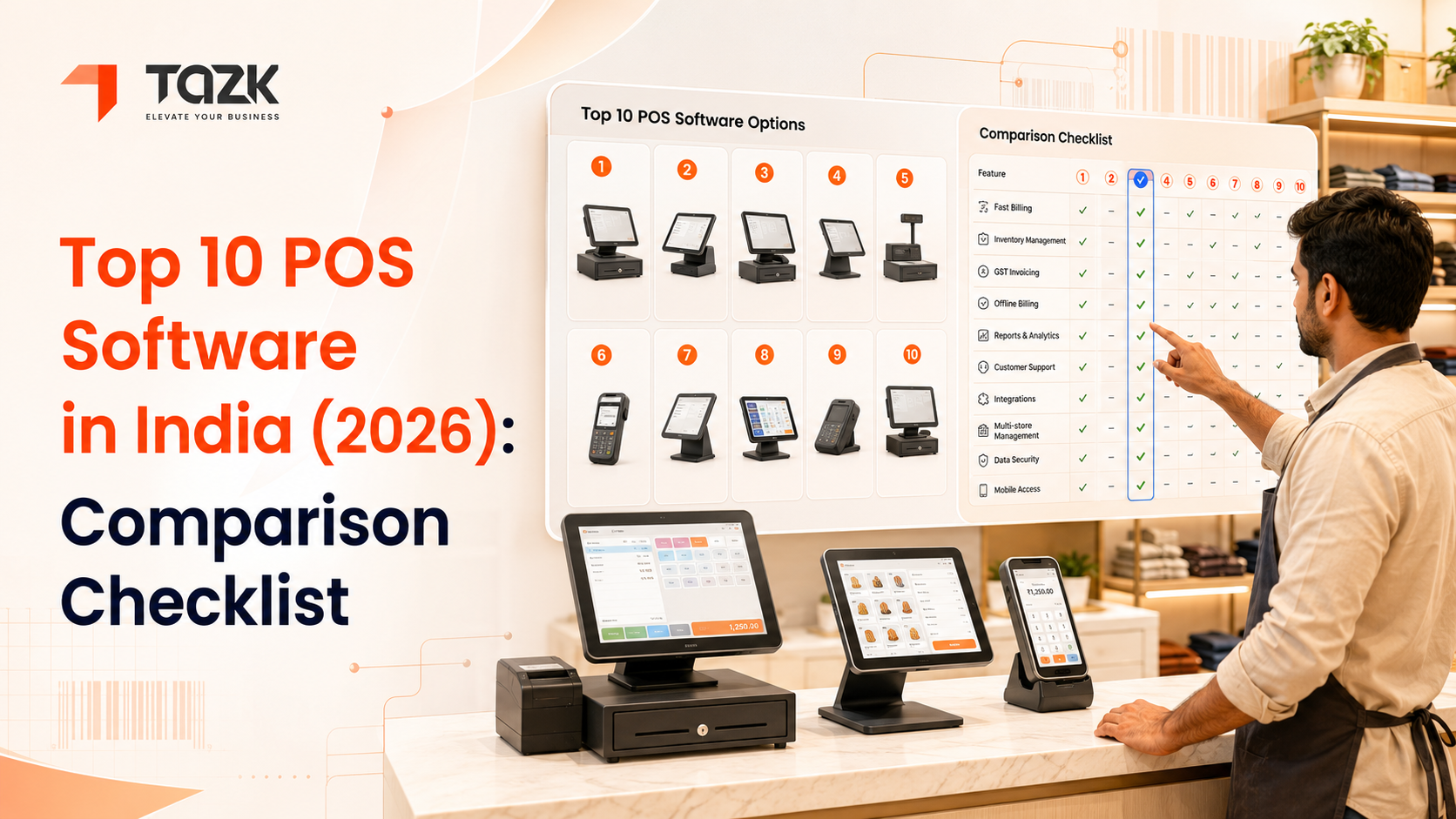
For detailed feature comparisons to understand what you're getting at these price points, check out our detailed comparison of top 10 POS software in India.
Hardware Costs Breakdown
Software pricing represents only part of your total POS investment—hardware requirements add substantial costs that vary based on business type and desired setup quality.
Computer or Tablet (₹15,000-₹60,000): Your central processing unit runs the POS software. Budget Android tablets start around ₹15,000-₹20,000, suitable for small businesses with light usage. iPads range ₹25,000-₹45,000, offering better performance and longevity. Touchscreen all-in-one POS terminals designed for retail environments cost ₹30,000-₹60,000 with better durability for high-transaction-volume businesses. Traditional desktop computers with monitors work fine for stationary setups at ₹25,000-₹40,000.
Receipt Printer (₹5,000-₹15,000): Thermal printers that use heat-sensitive paper are industry standard. Basic 2-inch thermal printers cost ₹5,000-₹8,000, adequate for small shops. Professional models with auto-cutters, faster printing, and longer duty cycles run ₹10,000-₹15,000. Dot-matrix printers for multi-part receipts cost ₹8,000-₹12,000 but are becoming obsolete. Budget extra for thermal paper rolls—approximately ₹500-₹1,000 monthly depending on transaction volume.
Barcode Scanner (₹2,000-₹15,000): Handheld corded scanners start at ₹2,000-₹3,000 for basic models adequate for low-volume scanning. Quality scanners that reliably read damaged or poorly printed barcodes cost ₹5,000-₹8,000. Wireless Bluetooth scanners providing mobility range ₹6,000-₹15,000. Presentation scanners that read barcodes automatically when items pass in front cost ₹12,000-₹25,000, useful for high-volume supermarkets.
Cash Drawer (₹3,000-₹10,000): Manual cash drawers with key locks start at ₹3,000-₹5,000. Electronic drawers that integrate with POS software and open automatically when printing receipts cost ₹5,000-₹10,000. Heavy-duty models for high-cash-volume businesses range ₹8,000-₹15,000. Consider drawer size based on denominations you handle—larger drawers cost more but accommodate more cash and coins comfortably.
Payment Terminal (₹5,000-₹25,000 or rental): Modern Android-based terminals handling chip cards, contactless payments, and integrating with POS software cost ₹12,000-₹25,000 to purchase. Basic terminals start around ₹5,000-₹8,000 but may lack advanced integration. Many businesses rent terminals from payment processors for ₹500-₹1,500 monthly, avoiding upfront costs but paying more long-term. UPI QR code is free but lacks integration with POS for automatic reconciliation.
Additional Hardware: Restaurants need Kitchen Order Ticket (KOT) printers at ₹8,000-₹15,000 per kitchen station. Customer-facing displays showing items and prices cost ₹8,000-₹18,000. Label printers for barcode generation range ₹8,000-₹20,000. Weighing scales with barcode printing for grocery stores cost ₹15,000-₹35,000. UPS/inverter backup for power protection costs ₹3,000-₹12,000 depending on capacity.
Minimum Hardware Investment: Small retail shop can start with tablet (₹15,000), basic printer (₹6,000), and simple scanner (₹2,500) for approximately ₹23,500 total. Professional Setup: Quality touchscreen terminal (₹45,000), professional printer (₹12,000), reliable scanner (₹7,000), integrated cash drawer (₹8,000), and payment terminal (₹15,000) totals approximately ₹87,000 providing better durability and performance.
Hidden Costs and Additional Fees
Beyond advertised software and hardware prices, several additional costs significantly impact your total POS investment. Understanding these hidden expenses prevents budget surprises.
Implementation and Setup Charges (₹5,000-₹75,000): Many vendors charge separately for installation, initial configuration, and data migration. Simple cloud POS installations might be free or cost ₹5,000-₹10,000. Complex enterprise implementations with customization and multi-location setup range ₹25,000-₹75,000 or more. Implementation typically includes software installation, data migration from existing systems, hardware setup, initial inventory upload, and system configuration for your business rules.
Training Costs (₹2,000-₹25,000): Comprehensive staff training ensures smooth adoption. Basic training might be included free or cost ₹2,000-₹5,000 for a few hours of instruction. Extensive training for multiple staff members across various roles costs ₹10,000-₹25,000. Some vendors provide video tutorials and documentation only, requiring self-training. Budget time for training even if monetary cost is low—poorly trained staff struggle with systems, slowing operations and frustrating customers.
Payment Gateway Charges (1-2% per transaction): Accepting digital payments involves payment processor fees separate from POS software costs. Credit/debit card transactions typically cost 1.5-2% of transaction value plus ₹2-₹3 per transaction. UPI payments through business accounts cost approximately 1% with some processors. These charges accumulate significantly—₹10 lakh monthly card sales generate ₹15,000-₹20,000 in payment processing fees annually totaling ₹1.8-₹2.4 lakh.
Annual Maintenance and Support (₹3,000-₹15,000): One-time purchase software often requires annual maintenance contracts for updates and support, typically 15-20% of original license cost. A ₹30,000 software license needs ₹5,000-₹6,000 annual maintenance. Subscription models include this in monthly fees, but premium support (faster response times, dedicated account managers) sometimes costs extra.
Customization and Integration Costs (₹10,000-₹100,000+): Connecting POS with accounting software, e-commerce platforms, or other business tools may require paid integrations. Simple pre-built integrations cost ₹5,000-₹15,000 one-time. Custom integrations for specialized requirements range ₹25,000-₹100,000+ depending on complexity. Custom reporting, invoice designs, or workflow modifications also incur additional charges.
Data Storage and Backup (₹0-₹5,000 annually): Cloud POS subscriptions typically include reasonable storage, but very high-transaction-volume businesses might exceed limits and pay overage charges. Local backup solutions for on-premise systems cost ₹2,000-₹5,000 annually for cloud backup services or external storage devices.

Alt text - Iceberg diagram showing visible and hidden costs
Hardware Maintenance and Replacement: Receipt printers need printhead replacement every 1-2 years (₹2,000-₹4,000). Thermal paper costs ₹500-₹1,500 monthly. Barcode scanners and cash drawers last several years but eventually need replacement. Budget approximately ₹5,000-₹10,000 annually for hardware maintenance and consumables.
Internet and Connectivity Costs (₹500-₹2,000 monthly): Cloud POS requires reliable internet—dedicated business broadband costs ₹800-₹2,000 monthly depending on speed and backup connections. Mobile data backup through dongles or hotspots adds ₹300-₹800 monthly. These costs exist regardless of POS but factor into total technology expenses.
Software Upgrade Costs (₹5,000-₹20,000): One-time purchase software may charge for major version upgrades every 2-3 years. Subscription models include all upgrades automatically. When evaluating total cost of ownership, factor in periodic upgrade expenses for perpetual license software.
Pricing Examples by Business Size and Type
Understanding how total costs accumulate for different business scenarios helps you budget realistically for your specific situation.
Small Retail Shop (500-1,000 sq ft, single location): Vyapar Premium at ₹4,999 annually, basic hardware (tablet ₹15,000, printer ₹6,000, scanner ₹2,500) totaling ₹23,500, one-time implementation ₹5,000. First-year total: ₹33,499. Ongoing annual cost: ₹4,999 + ₹3,000 consumables = ₹7,999. This budget setup handles essential POS functions for small businesses prioritizing affordability.
Medium Retail Store (1,500-3,000 sq ft, single location): GOFRUGAL Retail Standard at ₹2,499 monthly (₹29,988 annually), professional hardware (touchscreen terminal ₹45,000, printer ₹12,000, scanner ₹7,000, cash drawer ₹8,000) totaling ₹72,000, implementation and training ₹15,000. First-year total: ₹116,988. Ongoing annual cost: ₹29,988 + ₹8,000 maintenance/consumables = ₹37,988. This mid-range investment provides comprehensive retail management with room to grow.
Restaurant/Café (50-seat capacity): Petpooja Standard at ₹2,499 monthly (₹29,988 annually), restaurant hardware (tablet ₹25,000, receipt printer ₹10,000, KOT printer ₹12,000) totaling ₹47,000, delivery platform integration ₹10,000, training ₹8,000. First-year total: ₹94,988. Ongoing annual cost: ₹29,988 + ₹6,000 consumables = ₹35,988. Restaurant POS with kitchen integration and delivery platform connectivity.
Fashion Boutique with Online Store: Shopify POS Basic at $89 monthly (₹90,000 annually), iPad and accessories ₹45,000, printer ₹10,000, scanner ₹6,000, implementation ₹12,000. First-year total: ₹163,000. Ongoing annual cost: ₹90,000 + transaction fees (1.9% on digital sales) + ₹5,000 consumables. Unified online-offline management justifies higher investment for omnichannel businesses.
Multi-Location Retail Chain (3 stores): Ginesys Standard at ₹3,500 per location monthly (₹126,000 annually for 3 locations), hardware per location ₹50,000 (₹150,000 total), centralized implementation ₹50,000, comprehensive training ₹25,000. First-year total: ₹351,000. Ongoing annual cost: ₹126,000 + ₹15,000 maintenance/consumables = ₹141,000. Enterprise features and centralized management justify premium pricing for multi-location operations.
Grocery Store/Supermarket: RetailGraph Supermarket at ₹3,499 monthly (₹41,988 annually), weighing scale with printer ₹25,000, touchscreen POS ₹40,000, barcode scanner ₹6,000, receipt printer ₹10,000, cash drawer ₹7,000, totaling ₹88,000 hardware, implementation ₹18,000. First-year total: ₹147,988. Ongoing annual cost: ₹41,988 + ₹12,000 consumables (high thermal paper usage) = ₹53,988. Grocery-specific features like weighted items and perishables tracking justify specialized POS investment.
Regional Pricing Variations and Local Considerations
POS software pricing and associated costs vary somewhat across different regions of India based on local market conditions, competition, and business environment factors.
Metro cities like Mumbai, Delhi, Bangalore, and Chennai typically see higher implementation and training costs due to increased labor expenses—₹15,000-₹25,000 versus ₹8,000-₹15,000 in tier-2 cities. However, metros have more vendor competition often resulting in better subscription discounts and promotional offers. Hardware costs remain relatively consistent nationally due to e-commerce availability, though local computer markets in tier-1 cities may offer slightly lower prices due to volume.
Tier-2 and tier-3 cities often have fewer local POS implementation partners, potentially requiring vendors to travel from major cities for setup—increasing implementation charges by ₹5,000-₹10,000 for travel expenses. However, some vendors offer remote implementation, mitigating this cost. Local language support becomes more critical in smaller cities where staff may not be comfortable with English—ensure your chosen POS supports regional languages without extra charges.
Internet reliability impacts which pricing models make sense. Areas with consistent broadband can confidently use cloud subscription POS, while locations with frequent connectivity issues might prefer one-time purchase on-premise systems despite higher upfront costs. The offline capability becomes non-negotiable rather than optional, potentially limiting vendor choices.
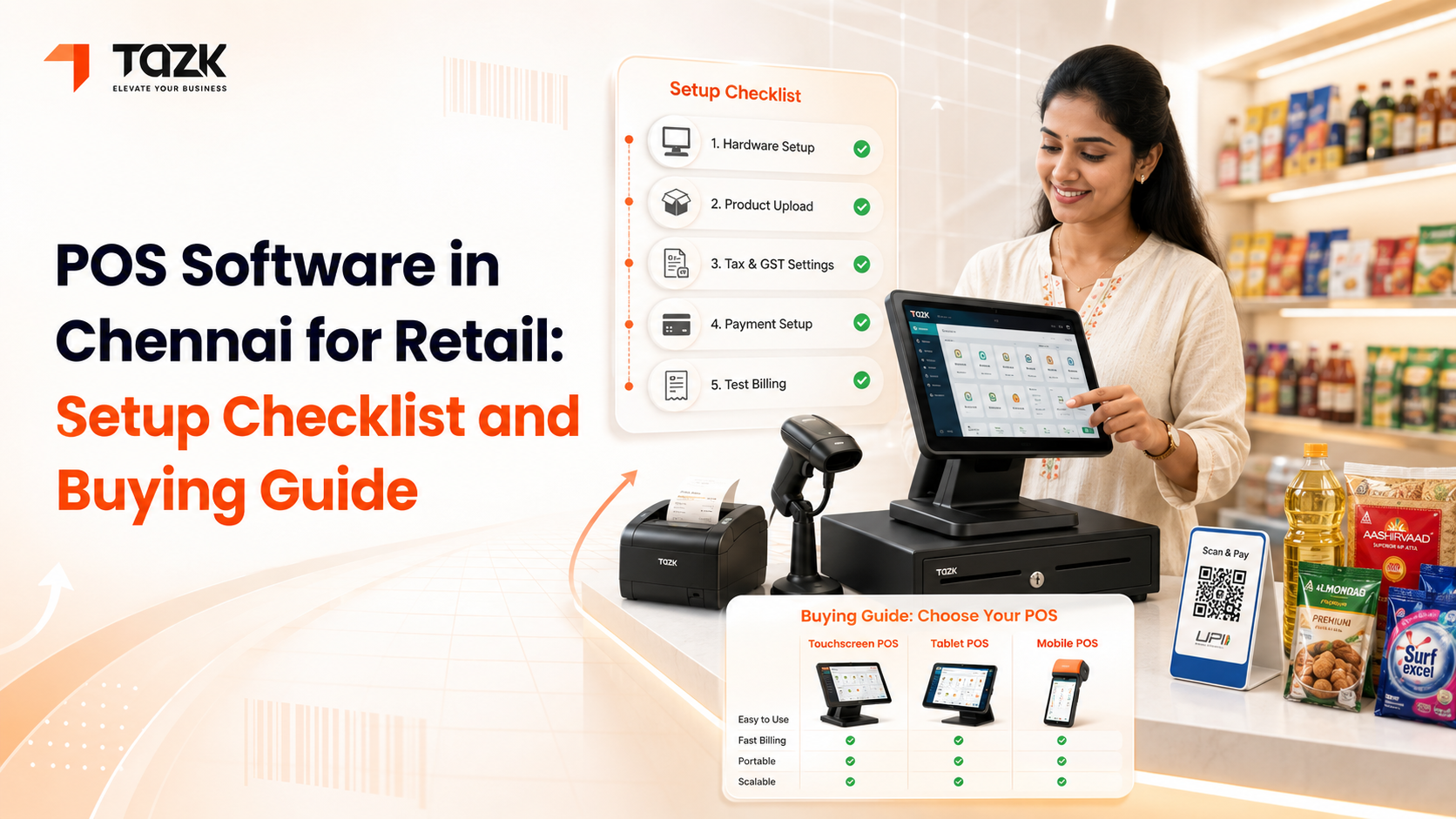
For businesses specifically in Chennai and surrounding Tamil Nadu regions, our implementation guide for Chennai-based retailers provides location-specific vendor recommendations, local implementation partners, and regional pricing insights that can help you get better deals and support.
How to Evaluate Total Cost of Ownership
Rather than just comparing monthly subscription fees or one-time purchase prices, calculate the true three-year or five-year total cost of ownership to understand your actual investment.
Three-Year Cost Calculation Example for Subscription POS: Software subscription ₹2,500 monthly × 36 months = ₹90,000. Hardware one-time ₹50,000. Implementation one-time ₹12,000. Payment gateway fees ₹1,500 monthly × 36 months = ₹54,000 (assumes ₹1 lakh monthly digital sales). Consumables ₹500 monthly × 36 months = ₹18,000. Three-year total: ₹224,000 or approximately ₹74,667 annually.
Three-Year Cost Calculation for One-Time Purchase POS: Software one-time purchase ₹30,000. Annual maintenance ₹5,000 × 3 years = ₹15,000. Hardware one-time ₹50,000. Implementation one-time ₹10,000. Payment gateway fees ₹54,000 (same as above). Consumables ₹18,000. Three-year total: ₹177,000 or approximately ₹59,000 annually.
This example shows the one-time purchase model saves approximately ₹47,000 over three years despite higher upfront investment. However, the subscription model included automatic updates and cloud features that one-time purchase might lack—consider the value of included features beyond just cost.
Key factors in TCO calculation: Software costs (subscription or purchase plus maintenance), hardware investment and replacement cycles, implementation and training, ongoing consumables (paper, labels), payment processing fees, internet and connectivity, support and customization needs, and opportunity cost of staff time managing the system. Cloud systems generally require less IT management time; on-premise systems need more technical attention.
Tips for Negotiating Better POS Software Prices
Most POS software pricing isn't truly fixed—vendors have flexibility to offer discounts, especially for annual commitments, multiple locations, or during promotional periods.
Annual payment discounts: Vendors strongly prefer annual commitments over monthly payments due to reduced churn and guaranteed revenue. Request 20-30% discounts for annual pre-payment—a ₹2,500 monthly plan (₹30,000 annually) might drop to ₹21,000-₹24,000 if paid annually. This discount essentially gives you two to three free months.
Multi-location pricing: If operating or planning multiple locations, negotiate volume discounts. The second and third locations often cost 20-30% less than the first location's pricing. A vendor charging ₹3,000 per location might offer the second location at ₹2,200 and third at ₹2,000, recognizing lower acquisition costs for existing customers.
Bundle hardware with software: Purchasing hardware through your POS vendor rather than separately sometimes yields package discounts of 10-15%. However, compare these bundles against buying hardware independently from computer markets or online—sometimes vendors mark up hardware significantly, negating the bundle discount.
Implementation and training inclusion: Request implementation and training as included services rather than paid add-ons, especially for higher-tier plans. Vendors often waive these fees to close deals or include them for annual commitments. Even if not completely free, negotiate reduced rates.
Promotional timing: POS software companies often run promotions during financial year-end (March), festival seasons (Diwali), or New Year periods. Signing up during these windows can yield 15-25% discounts or additional months free. Follow vendors on social media and subscribe to newsletters to catch these offers.
Request price matching: If seriously considering multiple vendors, let them know. Many vendors will match or beat competitor pricing to win your business. Share competing quotes and ask if they can improve their offer.
Conclusion
This comprehensive pos software price list india reveals that total POS investment extends far beyond advertised subscription or purchase prices. Software costs range from free basic options to ₹7,500+ monthly subscriptions or ₹75,000+ one-time purchases. Hardware adds ₹23,500-₹100,000 depending on configuration quality. Implementation, training, payment processing, and ongoing maintenance contribute additional thousands to annual costs.
For small businesses, entry-level solutions like Vyapar Premium provide adequate functionality at ₹5,000-₹35,000 first-year costs. Medium businesses benefit from comprehensive platforms like GOFRUGAL or Petpooja at ₹95,000-₹120,000 first-year investments. Multi-location enterprises require systems like Ginesys or Lightspeed justifying ₹150,000-₹350,000+ first-year costs per location for sophisticated centralized management.
Calculate three-year or five-year total cost of ownership rather than just comparing monthly fees. Factor in all costs: software, hardware, implementation, training, payment processing, consumables, and maintenance. One-time purchase models often prove more economical long-term for stable single-location businesses, while subscriptions offer lower entry costs and automatic updates favoring growing businesses or those preferring predictable monthly expenses.
The best pos software india price isn't the lowest cost—it's the best value for your specific business requirements. Inadequate software that seems cheap initially costs more through operational inefficiencies, limited capabilities, and eventual replacement needs. Invest appropriately for your business size and growth plans, negotiate annual payment discounts and bundled services, and choose systems offering clear upgrade paths as your needs evolve.
Ready to implement a POS system offering exceptional value for your investment? Explore our competitively priced POS solution designed specifically for Indian businesses, with transparent pricing, no hidden fees, and comprehensive features that scale with your growth.
Ready to upgrade your retail billing?
Tazk POS handles billing, inventory, GST invoices, and multi-store management. Free plan available — no credit card required.
Free plan available. No credit card required. Go live in hours.