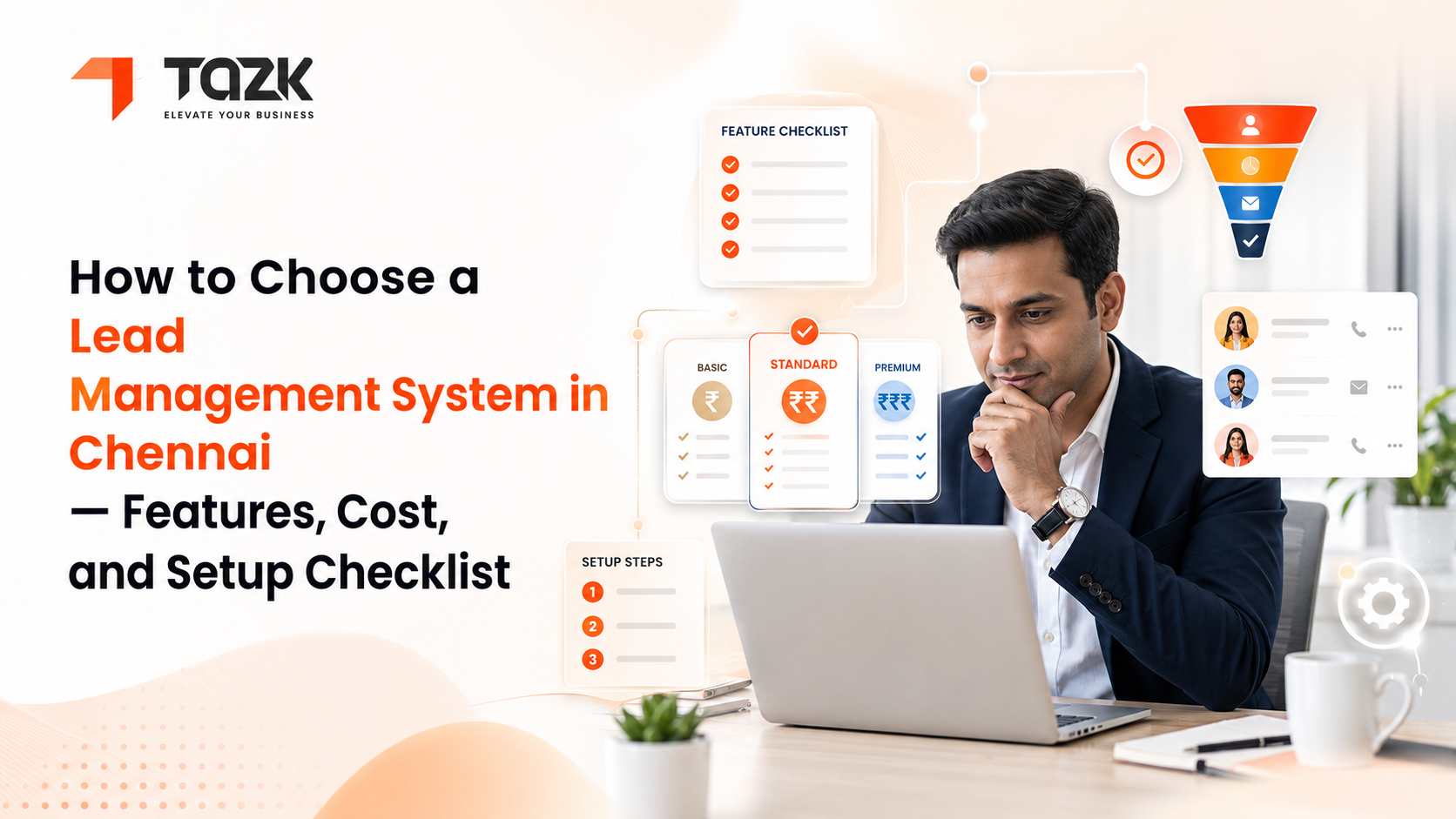
Lead Tracking Software in Chennai: Pipeline Stages, Reports, and Daily Tracking
15 min | By Lokesh A
Table Of Contents
Social Media


Lead Tracking Software in Chennai - Pipeline Stages, Reports, and Daily Tracking for Your Team
There is a moment every sales manager in Chennai eventually faces. The month is ending, the numbers are not where they need to be, and nobody can clearly explain why. Leads came in. The team was busy. Calls were made. But somewhere between enquiry received and deal closed, things fell apart and nobody can point to exactly where.
That moment is a tracking problem, not a sales talent problem. Lead tracking software in Chennai exists precisely to eliminate that blind spot. When your pipeline is visible, your reports are accurate, and your team has a daily tracking rhythm, you stop guessing and start making decisions based on what is actually happening in your sales process.
This guide covers everything a Chennai sales team needs to set up proper lead tracking: how to structure your pipeline stages, which reports actually matter, what a daily tracking routine looks like in practice, and how to use data from your software to improve conversion rates over time. Whether you are a 5-person startup in Sholinganallur or a 50-person sales floor in Guindy, the principles here apply. The only difference is the scale.
Why Most Chennai Sales Teams Are Flying Blind Right Now
Before getting into the solution, it is worth being honest about the problem. Most small and mid-sized businesses in Chennai do not have meaningful visibility into their sales pipeline. They know their revenue numbers. They know roughly how many leads came in last month. But they still cannot answer basic pipeline questions like these:
- How many leads went cold at the proposal stage?
- Which lead source delivers the highest conversion rate?
- Which sales rep has the highest deal velocity?
- How old is the average lead in the pipeline right now?
- What is the most common reason leads are lost?
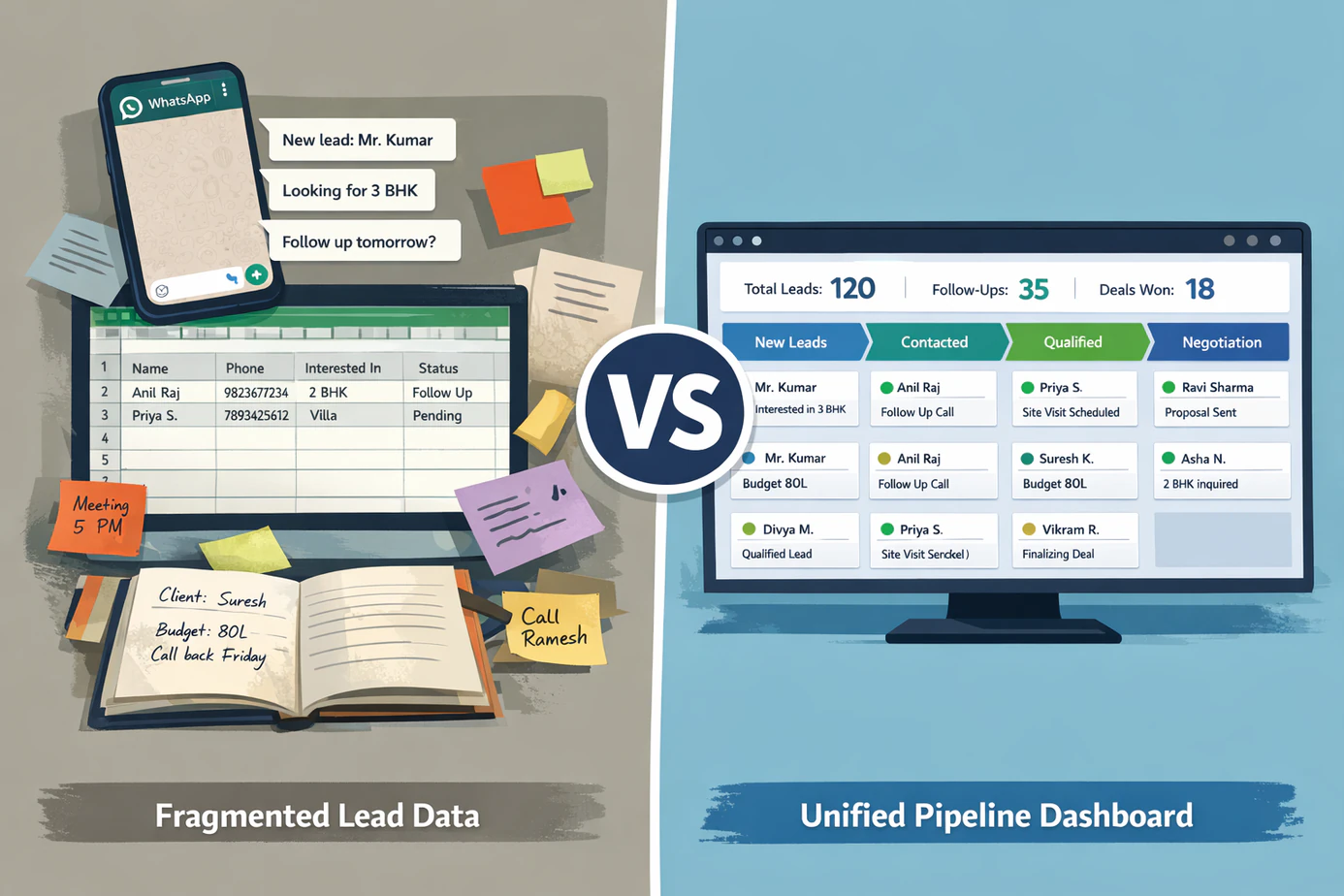
These are not difficult questions. They are foundational questions that any well-run sales operation should be able to answer in minutes. The fact that most Chennai businesses cannot answer them is not because they lack the data. It is because the data is scattered across WhatsApp chats, individual Excel files, and the memory of individual reps. lead management and tracking software in India solves this by creating a single, structured source of truth for every lead in your pipeline. Every action is logged, every stage transition is recorded, and every report pulls from the same dataset. Managers can see the full picture. Reps can see their own workload clearly. And the business can make strategic decisions based on real pipeline data rather than end-of-month gut feelings.
What Good Lead Tracking Software in Chennai Actually Does
The market is crowded with tools that technically qualify as lead tracking software, but they differ enormously in what they can actually do for a sales team. Here is what genuinely useful functionality looks like.
Full Pipeline Visibility Across All Stages
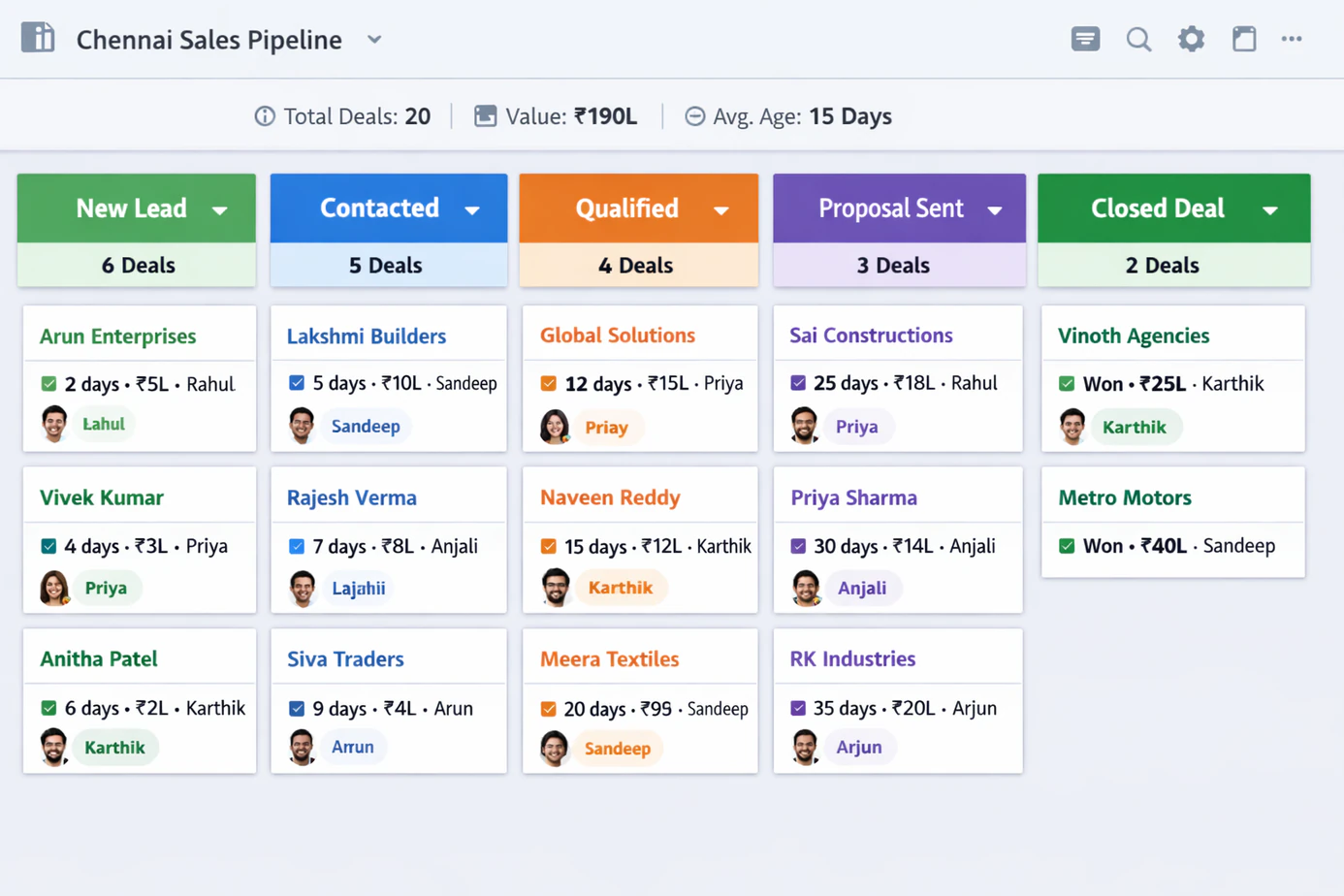
Your tracking software should give every person on the team, rep and manager alike, a clear view of where every lead sits at any given moment. This is not just a list of lead names. It is a visual pipeline that shows how many leads are at each stage, how long they have been there, and which ones need action today. Good best lead tracking software in India gives you both a Kanban-style board view that is easy to scan for movement and a list view that is easier to filter and sort at scale. Both views should update in real time so that when a rep moves a lead from Proposal Sent to Negotiation, the manager sees it immediately without waiting for a status meeting.
Activity Tracking Across Every Channel
Tracking a lead stage in the pipeline is table stakes. What separates great tracking software from basic tools is the ability to log and view activity tracking for every call made, every meeting held, every WhatsApp message sent, and every email opened, all tied to the specific lead record. When a rep picks up a lead that a colleague was working on, they should be able to see every touchpoint in the history. When a manager wants to understand why a deal went cold, they should be able to look at the activity log and see exactly what happened instead of relying on recollection. Activity tracking also creates accountability without turning the system into surveillance.
Duplicate Lead Control
In Chennai businesses that receive leads from multiple sources such as website forms, JustDial, Google Ads, trade shows, and referrals, the same prospect often enters the system more than once. Without duplicate lead control, the same person gets called by two different reps, which looks unprofessional and creates internal confusion. Good tracking software detects potential duplicates based on phone number, email, or name match and flags them for review before they create workflow problems. This becomes especially important for high-volume teams running several lead generation campaigns at the same time.
Lost Reason Tracking
Every lost deal is a learning opportunity, but only if you record why it was lost. Lost reason tracking means that when a rep marks a lead as lost, the system requires them to select or enter a reason such as price was too high, the prospect chose a competitor, the timeline changed, the budget was cut, or the lead was never qualified properly in the first place. Over three to six months, this data tells you things that no amount of sales training can reveal. If a large share of lost deals are going to a competitor on price, that is a pricing strategy conversation. If lost deals are being marked as unqualified late in the cycle, that is a qualification process conversation.
Deal Velocity Tracking
Deal velocity measures how fast leads are moving through your pipeline from first contact to close. A high deal velocity usually means your team is qualifying quickly, presenting effectively, and closing without unnecessary delays. A low deal velocity, or a velocity trend that is slowing down over time, is a signal that something in the process needs attention. This metric is especially useful for Chennai businesses with seasonal sales cycles. Knowing that deal velocity naturally slows in the weeks around Pongal or at the end of a financial quarter helps you plan staffing, follow-up intensity, and pipeline targets accordingly.
How to Set Up Pipeline Stages for Your Chennai Business
Pipeline stages are the backbone of your lead tracking system. Get them right and your entire operation becomes clearer. Get them wrong and you end up with stages nobody uses, leads getting stuck in meaningless categories, and reports that do not reflect reality.
For B2B Services and Technology Companies
- New Lead - The lead has entered the system but has not been contacted yet. This stage should stay near empty because leads should move out of it within your SLA window.
- Contacted - First contact has been made. The rep has spoken to the prospect or left a meaningful message.
- Qualified - The rep has confirmed a genuine need, budget range, and decision timeline.
- Proposal Sent - A formal proposal, quotation, or demo has been provided. Deals that sit here too long are at risk.
- Negotiation - The prospect is engaged and discussing pricing, terms, or scope. These are your hottest deals.
- Closed Won - The deal is confirmed and payment or contract execution is in progress.
- Closed Lost - The deal did not convert, and the system should require a lost reason before closure.
For Real Estate and High-Consideration B2C
The stages are similar, but the timeline is longer and the nurturing requirement is higher. Consider adding Site Visit Scheduled and Site Visit Completed between Qualified and Proposal Sent because the physical visit is a critical milestone in Chennai real estate sales.
For Education and Training Businesses
Add Counselling Session Scheduled and Application In Progress to reflect the multi-step enrolment process. The move from Interested to Enrolled typically involves multiple conversations, family discussions, and financial considerations, so the pipeline should reflect those milestones instead of collapsing them into a vague in progress stage.
The key principle across all contexts is simple: every stage should represent a specific, verifiable action or milestone, not a general sense of where things stand. In progress is not a stage. Proposal Sent is a stage.
The Reports That Actually Matter for Chennai Sales Teams
Reports are only valuable if they answer questions your team is actually asking. Here are the reports that deliver real insight for Chennai sales operations and what each one tells you.
Stage-Wise Conversion Rate Report
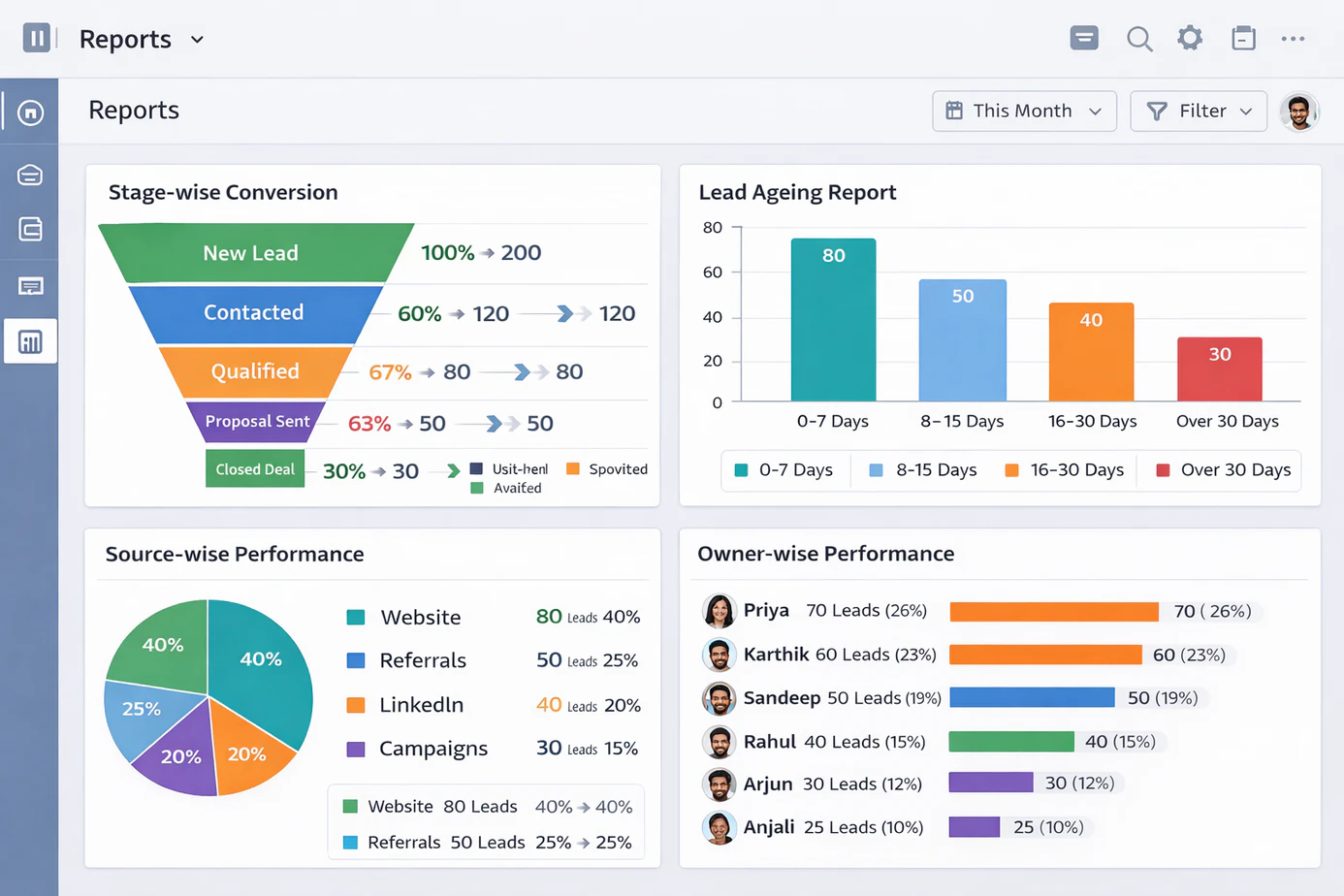
This report shows what percentage of leads successfully move from each stage to the next. If your conversion rate from Contacted to Qualified is healthy but your conversion from Proposal Sent to Negotiation is weak, the bottleneck is clearly in proposal quality, follow-up, or lead quality entering that stage. Stage-wise conversion data gives you a precise target for improvement. Instead of telling the team to close more deals, you can identify the exact stage that needs work.
Lead Ageing Report
The lead ageing report shows how long each lead has been sitting at its current stage. Any lead that has been in the same stage longer than your expected deal cycle is either stuck, forgotten, or quietly dead and needs attention. For Chennai sales managers, this is often the most valuable daily report available. A quick scan of leads that have been in Proposal Sent for more than 10 days without activity tells you exactly who to coach and which deals need rescue before they go cold.
Source-Wise Performance Report
Not all lead sources are equal. A source-wise performance report shows you lead volume, conversion rate, average deal size, and average time to close by source. This report often reveals surprising patterns. A source that generates a high volume of leads may still be a poor investment if conversion is low. Another source may generate fewer leads but convert at three times the rate, making it the better use of your budget. For Chennai businesses running Google Ads, JustDial, Facebook, referrals, and event campaigns at the same time, this report becomes the foundation of smart marketing allocation.
Owner-Wise Performance Report
The owner-wise performance report shows each rep's key metrics: leads assigned, leads converted, conversion rate, average first response time, average deal velocity, and follow-up activity volume. This is not a surveillance report. Used well, it becomes a coaching report. It shows which reps need support, where workload is uneven, and what your best performers are doing differently from the rest of the team.
Lost Reason Analysis Report
Aggregating lost reason tracking into a monthly report gives you a clear picture of where the sales process is breaking down. After three to six months of consistent usage, patterns appear that are impossible to see one lead at a time. Common patterns for Chennai businesses include pricing pressure from local competitors, timeline mismatch, product fit issues, and qualification failures where the lead was never a genuine fit from the start. Each pattern points to a specific action such as a pricing review, a product roadmap conversation, or a qualification script update.
The Daily Tracking Routine: What Your Team Should Do Every Morning
One of the most common mistakes businesses make after implementing lead tracking software is treating it as a reporting tool rather than a daily operations tool. The software should be the first thing your team opens every morning and the last thing they update every evening.
For Sales Reps - The Morning Routine (15 Minutes)
- Open the task queue for the day. Start with overdue follow-ups, then same-day SLA leads, then scheduled follow-ups.
- Check the lead ageing report and filter for leads with no activity in the last three days. Add those at-risk leads to your call list even if there is no task scheduled.
- Review new leads assigned overnight and confirm every one of them has a first-contact task scheduled inside the SLA window.
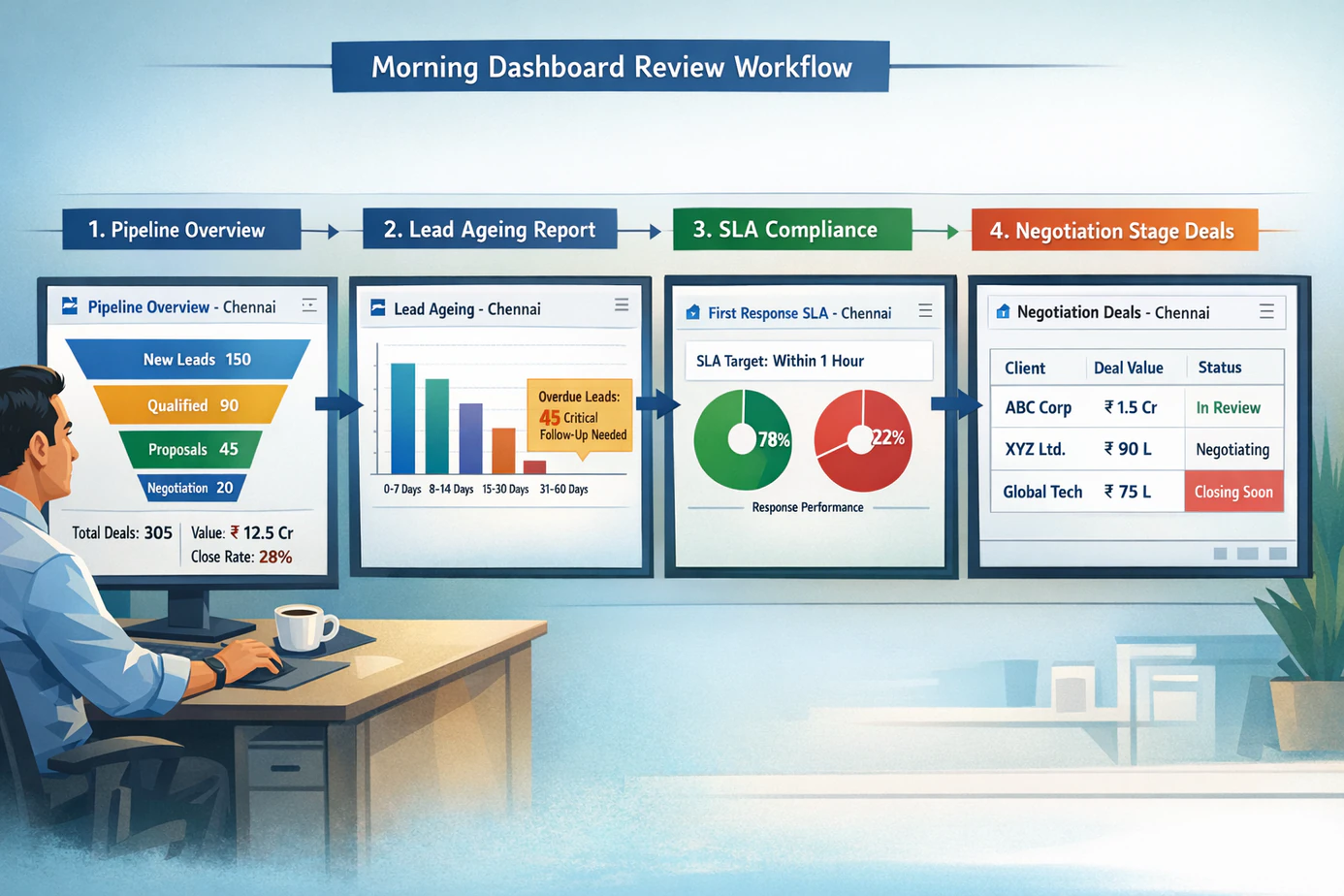
For Sales Managers - The Morning Dashboard Review (20 Minutes)
- Open the pipeline overview and look at total pipeline value by stage. Has it grown or shrunk since yesterday?
- Review the lead ageing report team-wide and flag leads that have been sitting longer than the expected cycle time.
- Check first response time and SLA compliance from yesterday. If leads sat uncontacted beyond the threshold, identify which leads and which reps need coaching.
- Review deals in Negotiation and decide whether any of them need manager involvement, price approval, a senior call, or a custom proposal.
For the Weekly Team Review (45 Minutes)
Once a week, Friday afternoon works well for many Chennai sales teams, run a focused pipeline review with the team. Go through the stage-wise conversion report, the source-wise performance report, and the owner-wise performance data. Celebrate what is working. Identify one or two specific things to change in the coming week. Keep it focused and constructive.
Choosing the Best Lead Tracking Software in India for a Chennai Team
The market for best lead tracking software in India has grown significantly over the past few years, with both global platforms and India-specific tools competing for attention. Here is how to evaluate your options specifically for a Chennai sales context.
Does It Handle Indian Lead Sources Natively?
Chennai businesses generate leads from sources that are specific to the Indian market, including JustDial, IndiaMart, Sulekha, 99acres, MagicBricks, and regional portals. A platform built mainly for Western markets may not integrate with those sources natively, which creates manual work, delays, and data gaps. Always verify that the platforms you are evaluating support the lead sources your business actually uses.
Does the Mobile App Support Field Teams?
Many Chennai sales operations involve reps who are out of the office for site visits, client meetings, trade shows, and corporate park visits. A tracking system that works only on desktop defeats the purpose for field-heavy teams. Look for platforms where the mobile app supports full pipeline updates, activity logging, follow-up task management, and lead history, not just read-only viewing. Reps should be able to update a lead stage from a client office in Tidel Park or log a call from the car park at Olympia Tech Park.
How Does It Handle Duplicate Leads at Scale?
If your team is running multiple campaigns simultaneously, duplicate lead control becomes critical. During demos, test how the platform handles duplicates by creating the same phone number from two different sources within the same hour. You want to see whether duplicates are flagged, merged, or left for reps to discover after confusion has already started.
What Does the Reporting Suite Actually Show?
During demos, ask to see the specific reports mentioned in this guide: stage-wise conversion rate, lead ageing, source-wise performance, owner-wise performance, and lost reason analysis. If any of these are missing, hidden behind a higher plan, or only available through manual export, factor that into your decision because these are the reports managers rely on every day.
Is Indian Currency, Timezone, and Language Supported?
This sounds basic, but it matters more than many teams expect. Reports showing deal values in USD, timezones defaulting to another region, or support teams responding on mismatched working hours create friction every single day. Platforms built for or optimized for the Indian market handle these details correctly by default.
How Deal Velocity Data Can Transform Your Pipeline Strategy
Deal velocity deserves its own section because most Chennai sales teams still do not track it at all, and it may be the single most actionable metric available to a sales manager. Deal velocity is calculated by combining four factors: the number of opportunities in your pipeline, the average deal size, the conversion rate, and the average time to close. An increase in any of these four factors improves velocity. A decrease in any of them slows it down.
What makes this metric powerful is that it tells you which lever to pull. If your deal velocity is low because average time to close is too long, the fix is in follow-up discipline and negotiation. If it is low because conversion is poor, the fix is in qualification and proposal quality. If it is low because you simply have too few opportunities, the fix is in lead generation. For a Chennai sales manager looking at the end of a quarter, deal velocity shows whether you are on track to hit your number and, if not, where to intervene.
Connecting Lead Tracking to Your Full Sales System
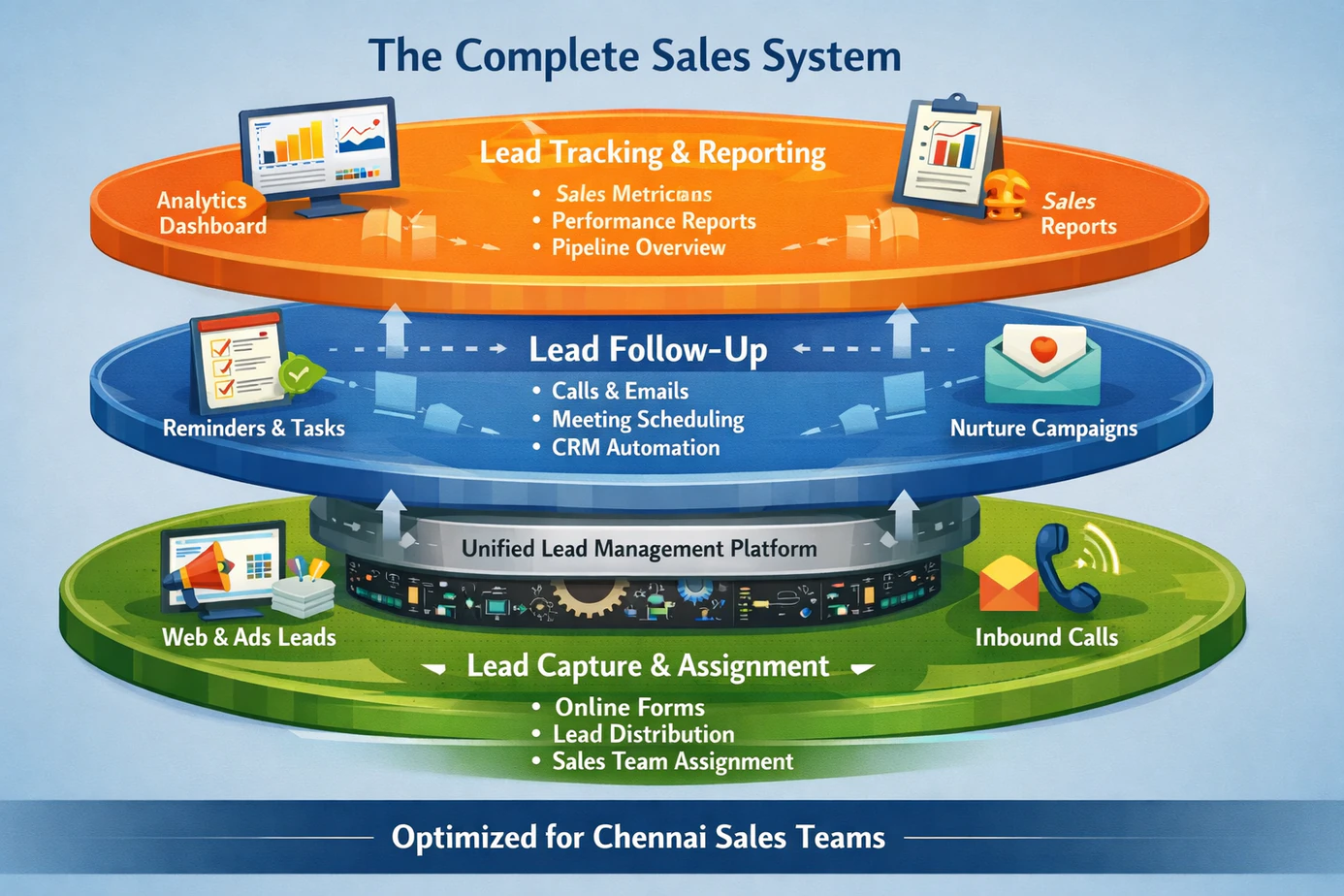
Lead tracking is one layer of a complete sales infrastructure. At the foundation, your system needs to capture leads consistently from all your sources and route them to the right rep. That is the core job of a well-configured lead management system in Chennai, getting every lead into one place with the right ownership from the start. On top of that, your team needs a structured approach to follow-up. The schedules, reminders, templates, and SLA rules inside lead follow up software in Chennai are what keep leads moving through the stages you are now tracking.
Once leads are being tracked well and followed up consistently, the question becomes who owns the lead at every stage and what happens when it converts. That clarity comes from having proper CRM lead management with clear ownership rules so that handovers are documented, responsibility is visible, and nothing falls between the cracks near the finish line. Teams that connect capture and assignment, follow-up, and tracking through a single lead management and tracking software platform consistently outperform teams trying to stitch separate tools together.
Conclusion
Lead tracking software is not just a reporting layer. For Chennai sales teams, it becomes the operating system that makes pipeline movement visible, follow-up measurable, and performance coachable. When you can see where leads are stuck, how quickly reps respond, which sources convert, and why deals are being lost, sales management stops being guesswork.
The practical path is straightforward: define stages that reflect real milestones, make daily tracking part of the morning routine, review the handful of reports that actually matter, and use deal velocity plus lost-reason data to improve the process over time. Whether you are running a small inside-sales team or a larger Chennai field-sales operation, the same principles apply.
Ready to bring full pipeline visibility and structured daily tracking to your sales team? Explore lead management and tracking software built for Chennai businesses that are serious about growth.